

NAB Show Preview: How creator workflows are reshaping broadcast production
Weekly insights on the technology, production and business decisions shaping media and broadcast. Free to access. Independent coverage. Unsubscribe anytime.
The line between the creator economy and professional broadcast production has been narrowing for several years, especially as YouTube has become one of the primary delivery platforms for video content.
At the 2026 NAB Show, that convergence is expected to be one of the more concrete conversations on the exhibit floor – not as an abstract trend, but as a practical matter of tooling, crew structure and how content moves from production to distribution.
The question facing broadcasters is no longer whether to pay attention to how independent creators work. It is which parts of that model translate to professional environments, and at what cost to quality or reliability.
When faster is the standard
Speed has become a production requirement in ways it was not a decade ago. Social platforms have conditioned audiences to expect content quickly, and broadcasters are under pressure to keep pace across more channels with the same or fewer resources.
“Production teams are increasingly adopting workflows that prioritize speed, smaller crews, even incorporating tools people already have in their pocket, like phones. This model that was once held by freelancers or small budget crews has been making its way into high production value events,” said Bob Caniglia, director of sales operations for the Americas at Blackmagic Design. “Image quality still matters, but how easily tools fit into fast moving workflows that enable more content to be created and distributed in real time is what people will be paying attention to at NAB.”
That pressure extends into how platforms handle the content once it exists. For companies working at the intersection of streaming and social discovery, the turnaround expectation has compressed significantly.
“The creator economy is no longer a peripheral experiment; it is the new discovery layer for mainstream broadcasting. By leveraging vertical short-form videos as the ‘connective tissue’ of the viewing experience, media companies can use Generative AI to turn social signals into production assets in under 60 seconds. This velocity allows broadcasters to meet audiences where they are without compromising on quality or production standards,” said Paul Pastor, chief business officer and co-founder of Quickplay.
Broadcasters are already adapting to vertical video, with Tegna making a major push as part of its app redesign earlier this year. Similarly, the Olympics and other major sporting events have leaned into vertical, turning one moment into highlights custom-formatted for each platform.
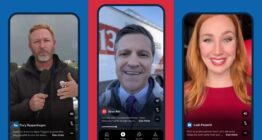
Repurposing content has become a new must-have for broadcasters as viewers continue to second-screen television.
Smaller crews, broader expectations
Alongside the pace issue is a structural one.
Broadcast productions that once required large, specialized crews are increasingly being staffed by smaller teams – a shift driven by budget pressure, technological capability and the influence of creator-style production, where a single operator routinely handles what would have been multi-person roles.
“Small teams now expect to produce multi-camera events, sports coverage, and corporate broadcasts with the same agility creators bring to digital platforms. More and more, customers are asking for help supporting these models, where automation and remote control allow a single operator to manage increasingly complex productions,” said Claudia Barbiero, director of global marketing at PTZOptics.
The practical implications reach into how broadcasters staff secondary or lower-priority productions, the events that need to look professional but don’t carry flagship budgets.
“Creators have been pioneers in producing audience-engaging content with small crews, even just a solo operator, and minimal gear. Some of these solutions also provide the robust reliability that broadcasters require, making them excellent budget-friendly options for broadcasters’ diversifying secondary channels, platforms or projects — such as lower-tier sports matches or backstage interviews at major events — where budgets and personnel are limited,” said Amy Zhou, director of sales at Magewell.
Flexibility in the team, not just the tools
The crew flexibility question is not limited to camera and capture.
Graphics workflows are also adapting to a model where productions draw on shifting combinations of staff and freelancers, often working across multiple projects simultaneously.
“The focus on creativity forces teams to be flexible and agile, allowing teams of staff and freelancers to form for a project, then reform in a completely different way for the next job,” said Miguel Churruca, marketing and communications director at Brainstorm, who noted the importance of collaboration and seamless integration, especially with creative and graphic deliverables.
The common thread across segments is that tools are being evaluated not just on output quality but on how easily they accommodate the way production teams actually work: smaller, faster and less fixed in structure than the traditional broadcast model assumed.
NAB Show 2026 opens April 18, with exhibits running April 19-22 at the Las Vegas Convention Center. Make sure to check out the latest NAB Show News in our dedicated section or visit the NAB Show website to register for the show.

tags
Amy Zhou, Blackmagic Design, Bob Caniglia, Brainstorm, Brainstorm 3D, Brainstorm Multimedia, Claudia Barbiero, Creator Economy, Magewell, Miguel Churruca, NAB Show 2026, NAB Show News, Paul Pastor, PTZOptics, Quickplay
categories
Featured, NAB Show, Online and Digital Production