

CNBC packages 250 years of business history into short-form documentaries
Weekly insights on the technology, production and business decisions shaping media and broadcast. Free to access. Independent coverage. Unsubscribe anytime.
CNBC began planning its coverage of America’s 250th anniversary late last year with a question suited to the network’s audience: How could it examine the country’s history through the lens of business without producing a conventional retrospective?
The result was “America: 250 Years Bold,” an initiative built around short documentaries examining companies, executives and philanthropic institutions that have influenced American economic life.
The project launched in January and will continue beyond the July 4 commemoration, with individual stories appearing across CNBC’s daytime programming, website and social platforms.
Rather than centering the initiative on a single special, CNBC developed a collection of self-contained segments that contribute to a wider editorial framework.
“We were looking to commemorate 250 years of America and specifically the extraordinary engine of opportunity that the country became,” said Ray Parisi, senior executive producer of special projects at CNBC.
That framing led the production team to organize the series around three forms of storytelling: the evolution of long-standing American companies, reflections from current business leaders and the continuing influence of major philanthropic legacies.
Three approaches to business history
The first group examines companies that have operated for much of the country’s history and adapted across multiple generations.

Subjects include Laird & Company, whose distilling history dates to the colonial period, and King Arthur Baking Co. The segments consider how those businesses changed with their industries while maintaining connections to their origins.
A second group features contemporary executives discussing the economic and cultural forces that shaped their careers and companies.
Participants include Bank of America Chairman and CEO Brian Moynihan, BNY Chairman and CEO Robin Vince, Regeneron co-founder, President and CEO Leonard Schleifer, Affirm founder and CEO Max Levchin, United Airlines CEO Scott Kirby, USAA President and CEO Juan Andrade, AT&T Chairman and CEO John Stankey and Ford Foundation President Heather Gerken.
Their interviews address workforce changes, economic resilience, global competition and the conditions that allow companies and entrepreneurs to grow.
The third pillar examines the philanthropic legacies of industrialists and business families including Andrew Carnegie, John D. Rockefeller, Andrew Mellon and Henry Ford.
Those stories look beyond how the individuals accumulated wealth to examine how the institutions they established continue to influence education, research, culture and public life.
“The earliest, most successful entrepreneurs, how they made their wealth, how they shared it and how their philanthropic tailwinds still shape the future of the nation,” Parisi said.
The three categories allow CNBC to connect business history with current conversations about leadership and opportunity without requiring every segment to follow the same structure.
Long-form methods in a short format
Although most installments run about two minutes, Parisi described them as miniature documentaries rather than conventional news packages or promotional vignettes. Each segment has its own narrative arc, with enough historical context to explain the subject without attempting to present a complete company or personal history.
“How much context do people need to easily understand this in a two-minute story with a beginning, middle and end?” Parisi said. “It’s not super different from what we do generally in the long-form storytelling area.”
Parisi’s special projects unit typically produces longer-form work for CNBC. For “250 Years Bold,” the team applied the same reporting and structural principles to shorter pieces.
That meant identifying the central idea of each story, determining what viewers were likely to know already and limiting historical background to what was necessary.

Parisi compared the process to an accordion. The structure can expand or contract depending on the subject, but the basic storytelling requirements remain consistent.
The approach differs from CNBC’s daily news production, where stories are often developed and aired within the same news cycle. The anniversary project provided more time for research, interviews and archival development, even though the completed segments still needed to fit within existing programming.
Built to move across platforms
The production team designed the segments to work across television, digital and social platforms rather than treating online versions as secondary edits of broadcast material.
On television, CNBC has aired the pieces intermittently throughout its daytime schedule. A digital hub collects the stories under the “250 Years Bold” title, allowing viewers to explore the three editorial pillars together.
The videos are also distributed through CNBC and Versant social channels. Featured executives and organizations have shared individual installments through their own accounts, extending distribution beyond the network’s platforms.
“We’ve sort of been platform agnostic,” Parisi said. “We just wanted to share our stories on whatever platform possible to as many interested people with an appetite to hear or see that story.”
The duration and presentation can change by platform, Parisi said, but the editorial premise cannot depend on format alone.
“I don’t care how short or long it is, the stickiness is the story,” Parisi said. “Whether it’s 10 seconds or 60 minutes, whether it’s dense or light, what’s the takeaway?”
That question influenced both subject selection and editing. Each installment needed to leave viewers with a specific piece of history, an explanation of how an institution evolved or an executive perspective that could stand independently of the wider series.
Finding a shared frame
Producing anniversary programming during a politically divided period also required CNBC to define the project’s boundaries. The initiative focuses on business, entrepreneurship, philanthropy and individual opportunity rather than attempting to summarize the full political or social history of the United States.
Parisi described the framework as patriotic, nonpartisan and intended to emphasize shared history.
“I was happy to be involved in a project that was simultaneously patriotic, nonpartisan and unifying,” Parisi said. “I felt like there were not many projects that you could say that about.”
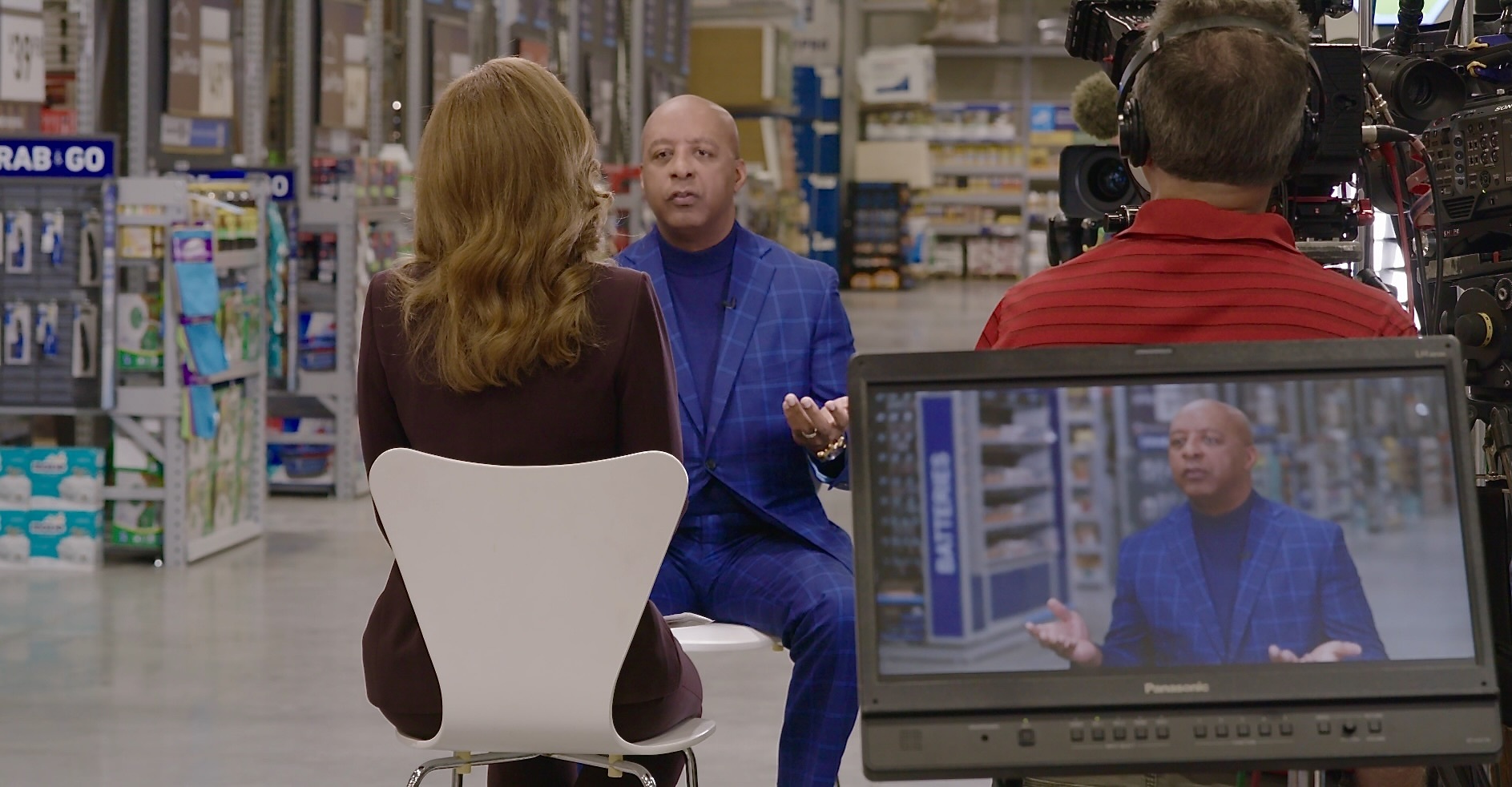
One of the first interviews filmed was with Lowe’s Chairman and CEO Marvin Ellison. Parisi said Ellison’s account helped establish the tone the producers wanted for the executive segments.
Ellison discussed growing up with limited expectations for where his career might lead, benefiting from parents who emphasized education and ultimately becoming a Black executive who has led two companies in the S&P 500.
For Parisi, the interview connected the project’s wider themes of opportunity, leadership and economic mobility through a personal story rather than a broad historical claim.

tags
America 250, CNBC, Ray Parisi
categories
Cable News, Heroes, Online and Digital Production, Programming, Social Media