

Telemundo uses virtual production to move its World Cup studio across 16 host cities
Weekly insights on the technology, production and business decisions shaping media and broadcast. Free to access. Independent coverage. Unsubscribe anytime.
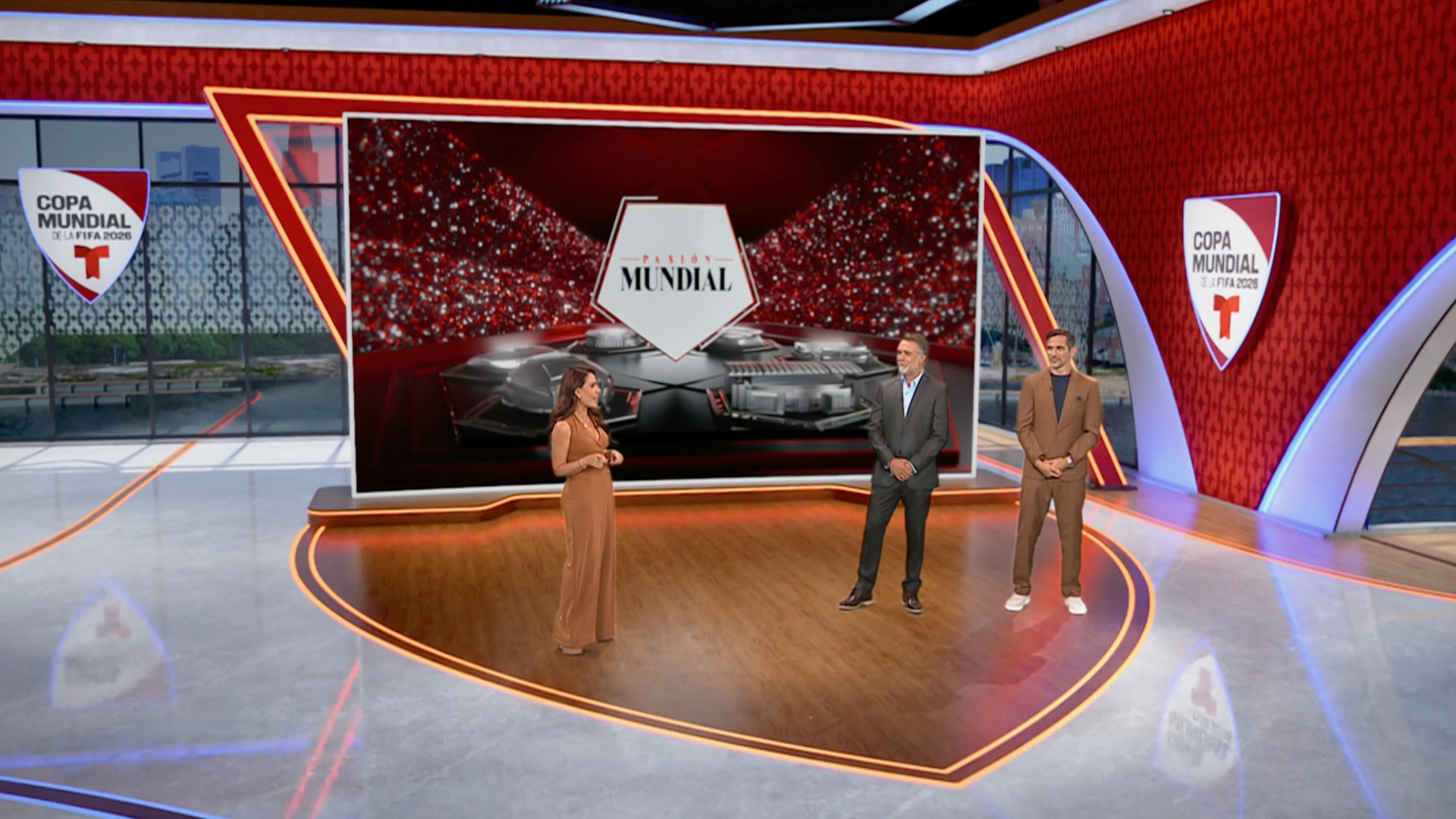
For Telemundo’s 2026 FIFA World Cup coverage, the studio was designed less as a fixed location than as a production system.
The network’s virtual environment, built around chroma key, Unreal Engine and real-time graphics workflows, allowed Telemundo to place its Miami-based studio operation within the visual context of the tournament’s 16 host cities across the United States, Mexico and Canada. The approach gave the production team a way to localize coverage across a multi-country World Cup without building physical sets in each market or relying on a single centralized studio look.
The studio package extended the broader World Cup design system developed with Gameday Creative, but its execution depended on Telemundo’s internal real-time graphics team, led by Fabian Albarracin, director of real-time graphics at Telemundo.

“The first thing that I have to say is to pull off something like this, we share the same vision as the sports department,” said Albarracin. “If not, this is not realistic.”
That shared vision shaped a workflow that continued Telemundo’s long-running investment in virtual production for major sports events.
While many broadcasters have moved toward LED volumes for high-profile studio work, Telemundo chose to stay with chroma key, refining the approach through software, tracking, lighting and internal control systems.
“When we started this six years ago, I remember that everyone said chroma key is dead, you need to go to LED,” Albarracin said. “But we saw the potential for virtual production when it’s live.”
Telemundo’s current sports operation includes three studios, two of them 5,000-square-foot chroma key spaces. For the World Cup, the network combined Blackmagic’s Ultimatte chroma key technology with internal keying workflows in Zero Density, while building the virtual environments in Unreal Engine.
A studio built for location flexibility
The World Cup’s expanded format created a specific design and production challenge. Unlike the 2022 tournament in Qatar or the 2024 Paris Olympics, the 2026 event spans three countries and 16 cities. Telemundo needed a studio that could reflect that geographic spread throughout the tournament.
“Paris, everything was in Paris. Tokyo, everything in Tokyo. Qatar, in Qatar,” Albarracin said. “This time, with three countries, 16 cities, it was a challenge.”
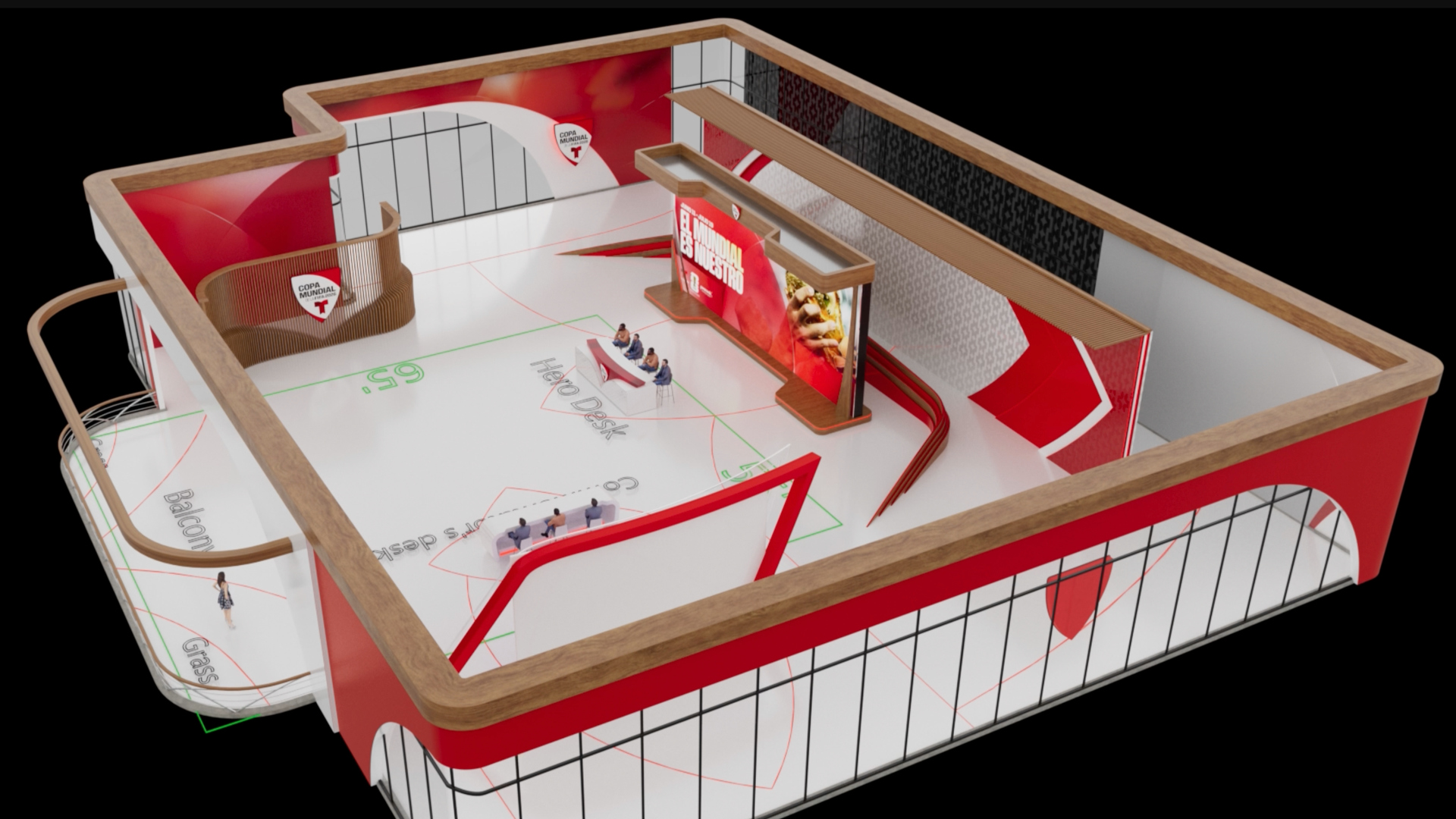
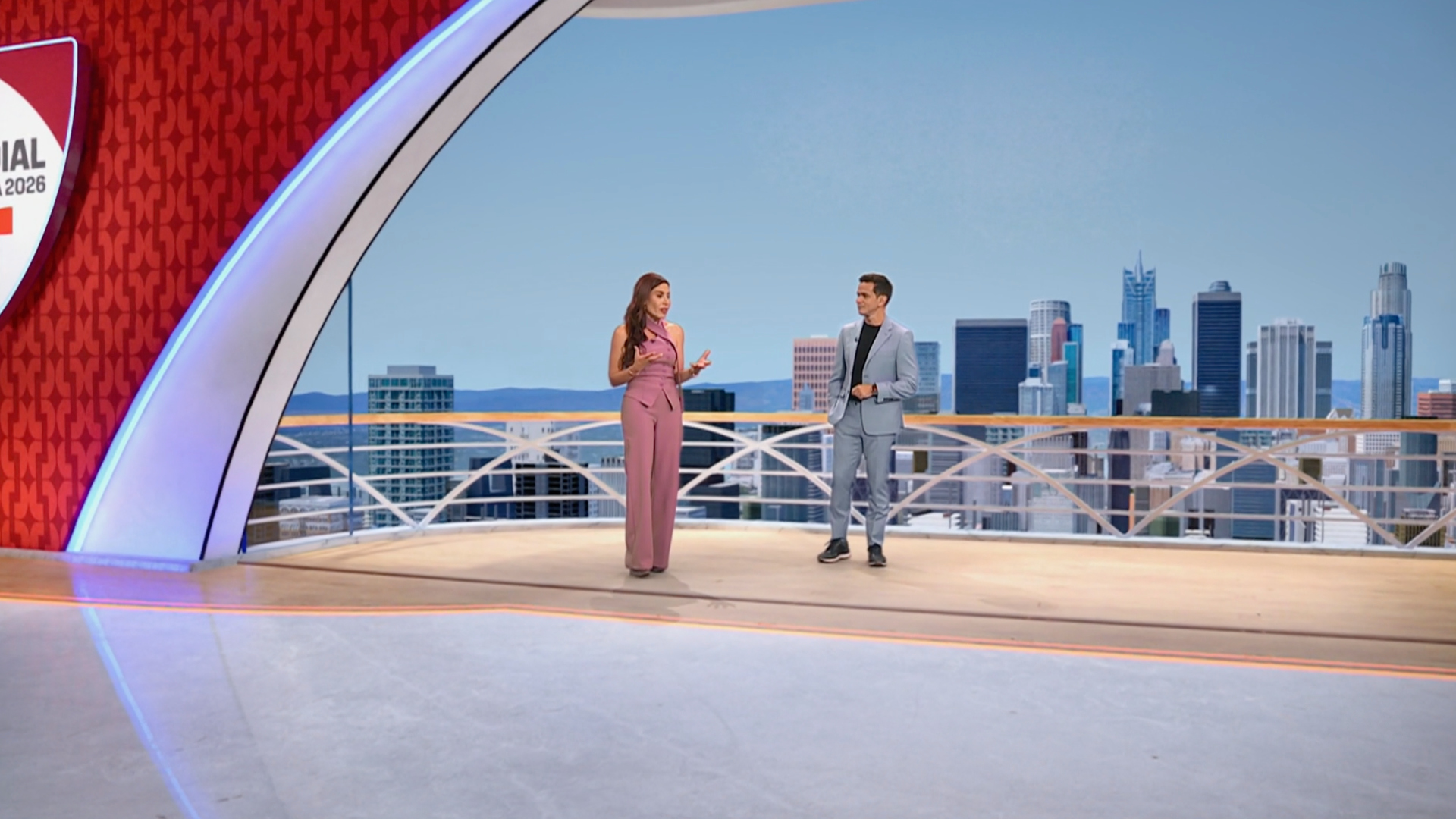
The main virtual set includes a balcony and a city view, allowing the environment to shift depending on match location, time of day and editorial need. Telemundo built daytime, sunset and nighttime versions for each host city, creating 48 city looks for the studio environment.
“If you see the set, you see a balcony with a beauty shot of the city,” Albarracin said. “You are able to see not only the 16 cities, but you can see the daytime, sunset and nighttime for each one.”
The goal was not simply to display a city skyline behind talent. The system was built to make the set feel connected to the day’s match coverage, with city, stadium and sponsor elements working as part of the same environment.
Gameday Creative designed the virtual set from concept through completion, then partnered with Telemundo’s internal team to bring it into Unreal Engine.
“We built the entire virtual set from the ground up, concept all the way to completion, and then partnered with Telemundo’s internal team to bring it to life inside of Unreal Engine,” said Eric Say, owner and creative director at Gameday Creative.
Say said the studio became an extension of the same design language used in the broadcast graphics package.
“This entire design language was summarized in that virtual set,” Say said.
Scanning the host cities
One of the more notable additions to Telemundo’s 2026 workflow was the use of Gaussian splatting to create scanned city environments for live broadcast use.
The production team sent crews to each host city with scanning equipment, including XGRIDS systems, to capture specific areas that could later be brought into the virtual environment. The technique helped Telemundo create location-based shots more efficiently than manually building each city in 3D.
“We have to go to each city with the XGRIDS, a scanner, walk around a specific zone of the city, and we scan the city,” Albarracin said. “We have 16 cities scanned.”
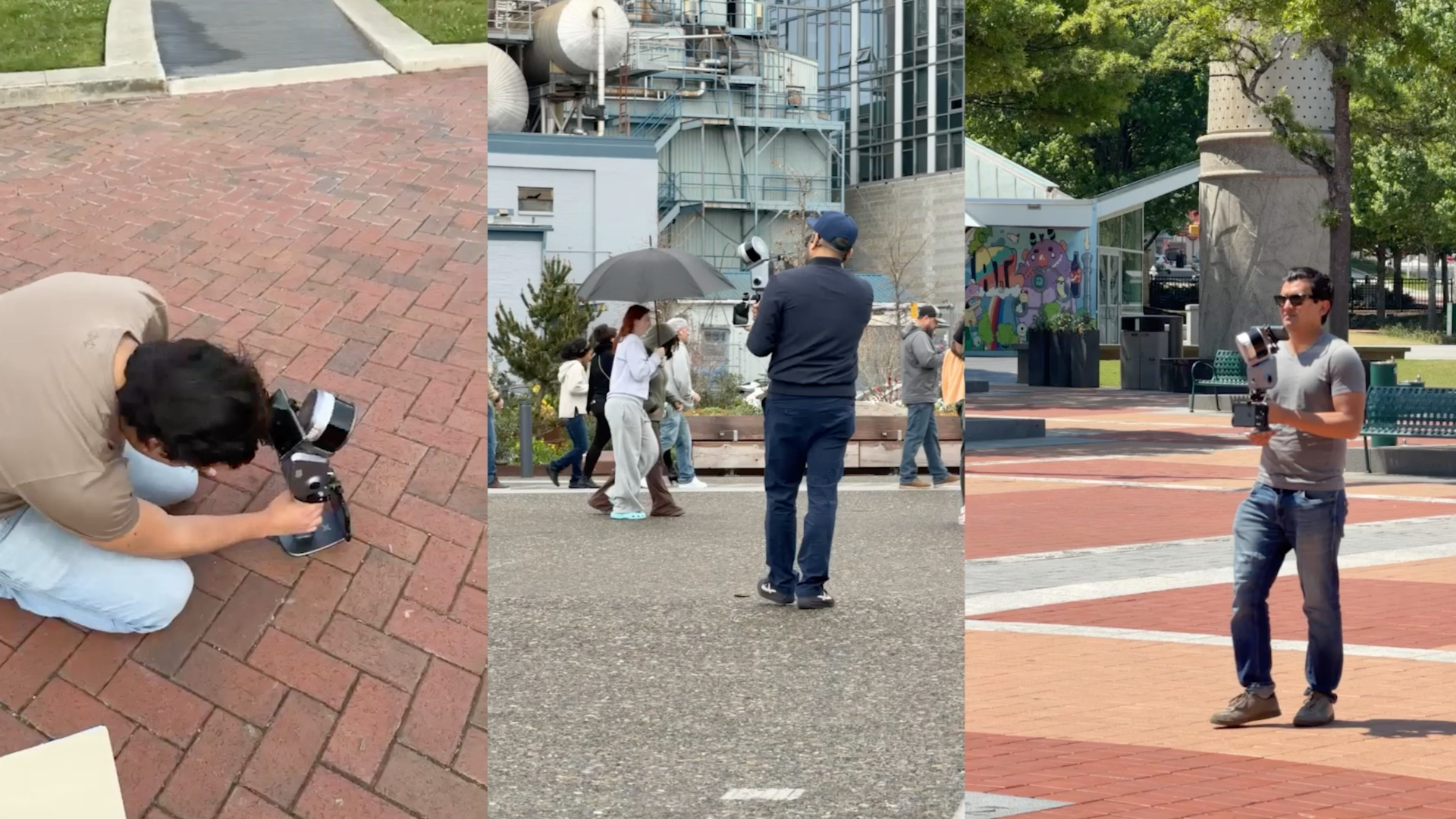
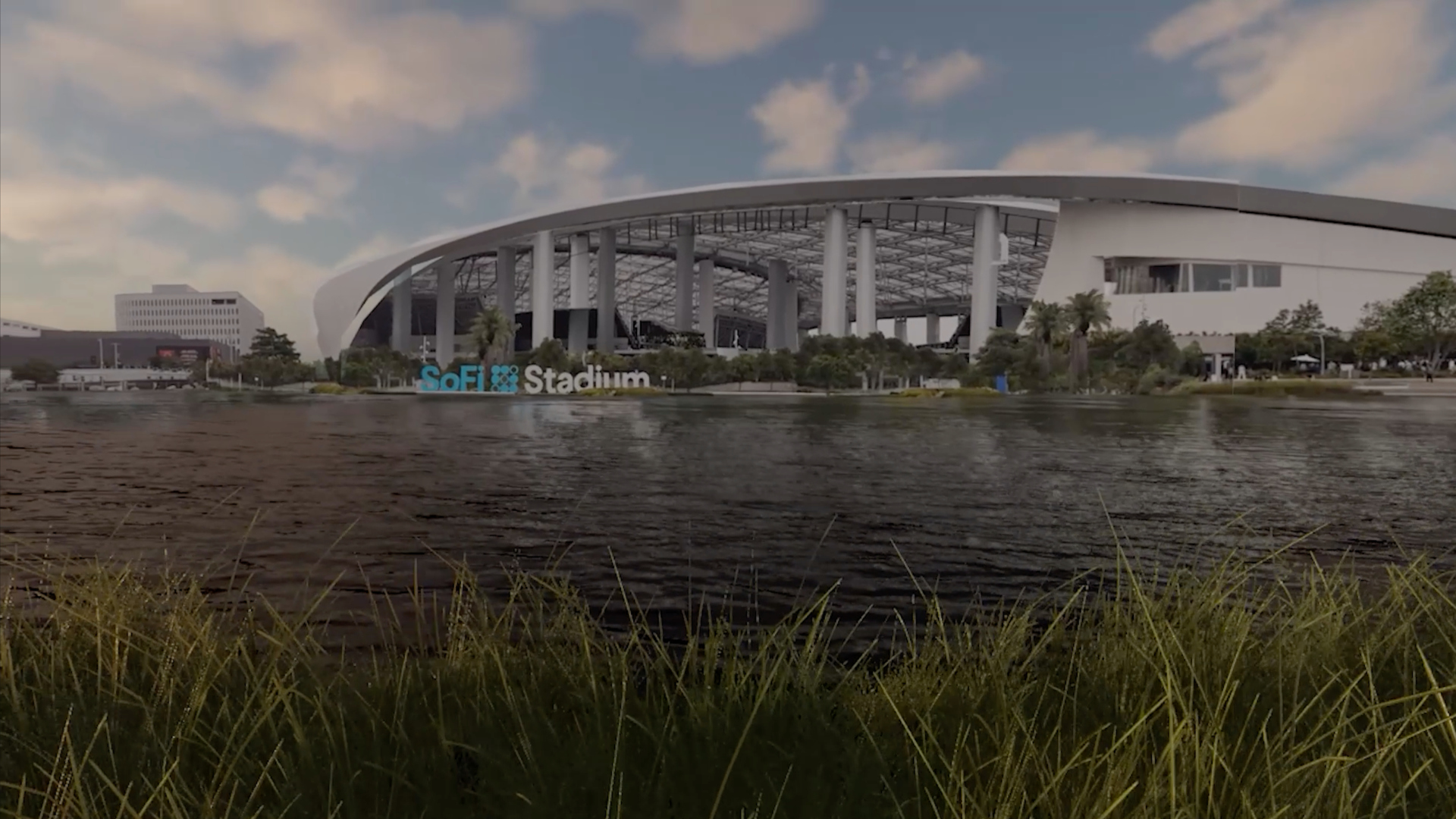
The scanned environments allowed talent to appear as if they were standing within the host city, adding another level of location context to the broadcast. Albarracin said Telemundo had used similar thinking for Paris, but the production timeline and number of cities made manual environment building impractical for the World Cup.
“We did it for Paris, but Paris took like five months to build that environment,” Albarracin said. “Now we don’t have the luxury to build 16 cities.”
The workflow required months of testing with vendors before the team settled on the right capture and playback approach. Albarracin said the system had issues early in development, but the team worked through them to make it stable enough for live production.
“We have been talking to them more than six months,” Albarracin said. “When we saw the beta version, we saw the possibilities.”
Virtual desks and sponsor surfaces
The studio also continued Telemundo’s use of virtual desks, an approach the network adopted to solve a practical chroma key problem.
Instead of placing a physical desk with display surfaces in front of talent, Telemundo uses a green desk and replaces it virtually. The setup gives the team more flexibility over size, material, graphics and sponsor treatments while avoiding keying issues that can happen when green content appears on a physical display within a green-screen environment.
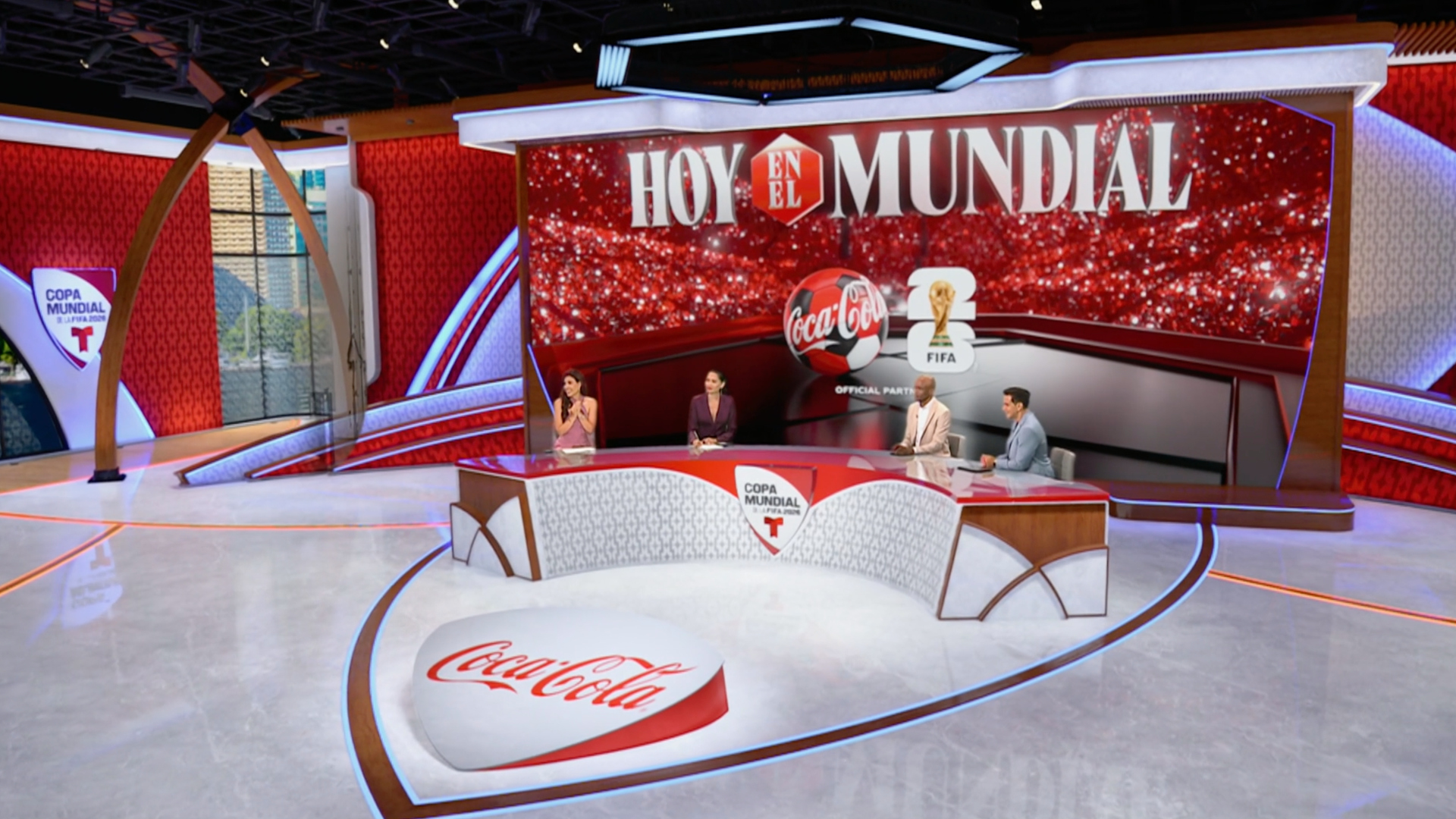

“We only have a green desk and all the desks are virtual,” Albarracin said. “That gives us a lot of flexibility.”
For the World Cup, that flexibility also supported sponsorship. Telemundo could place sponsor elements in the virtual environment, on background displays and as augmented reality elements integrated into the studio.
Jaime Peñalosa, creative director at Telemundo, said those virtual placements helped the network connect sponsorship to editorial segments rather than treating sponsor logos as simple overlays.
“Looking at sponsorship in a different way with all the virtual placements helps us also tell the story editorially a lot better,” Peñalosa said.
The studio package included branded elements and virtual placements tied to major World Cup sponsors, with the goal of keeping the integrations visually connected to the broader Telemundo look.
“We know this part of the show is sponsored by a client, but we also can use our regular stuff to actually talk about it,” Peñalosa said.
Making the system usable in production
Behind the visual design, Telemundo built custom control interfaces to simplify operation across multiple systems. Albarracin said the network developed tools that can control Unreal, Zero Density and other software from a centralized interface.
“To be able to do this, we bring new technology, but we also develop custom interfaces here to control different systems at the same time,” Albarracin said.
That layer helped the production team move between city environments, sponsor elements, AR graphics and studio configurations during live programming without requiring deep technical intervention for every change.
The system also had to support long production days.
Albarracin said Telemundo’s sports programming now relies heavily on virtual production beyond special events, with virtual studios used across regular weekend programming.
“After Tokyo, I believe sports saw the potential and the flexibility that this technology has,” Albarracin said. “Now not only the special events, but the regular productions are virtual here at Telemundo.”
Telemundo also extended the virtual studio by integrating remote talent, including a setup in Mexico that used three cameras and a small green-screen environment to bring Jorge Valdano into the Miami studio virtually.
The effect required more than compositing. Anchors in Miami had to adjust their eyelines and performance so the remote guest appeared to occupy the same space.
“Now they are talking to someone that is not there, but they need to act like someone is in front of them,” Albarracin said. “It is a little of acting with the anchors to make it more realistic.”
Weather joins the sports set
The flexibility of the World Cup studio also allowed Telemundo to bring weather information into the sports production, a useful addition for a tournament played across open-air stadiums in multiple North American climates.
Telemundo adapted weather graphics from its news workflow and integrated them into the sports set, including stadium-specific weather views with temperature, time and forecast conditions.
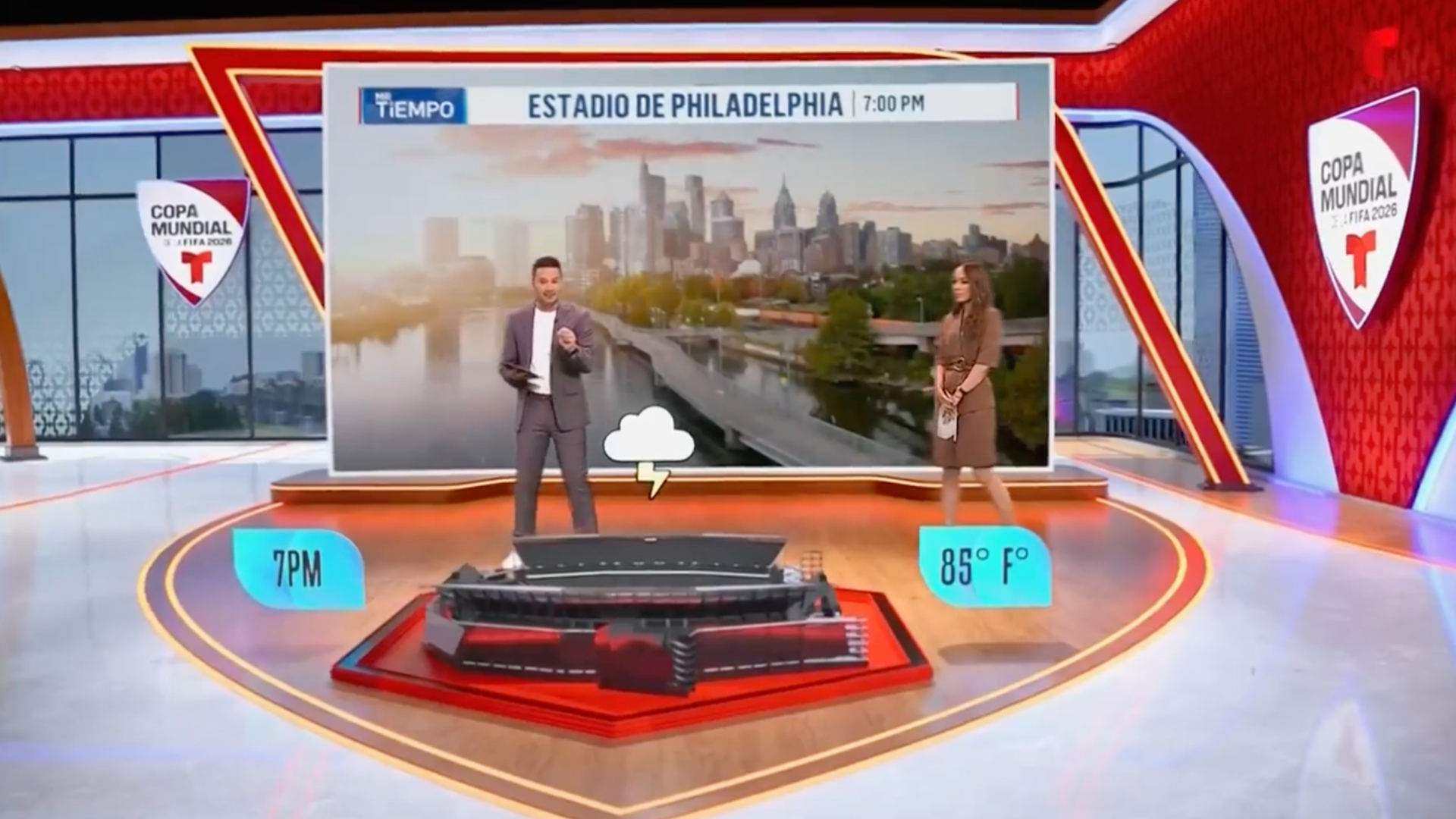
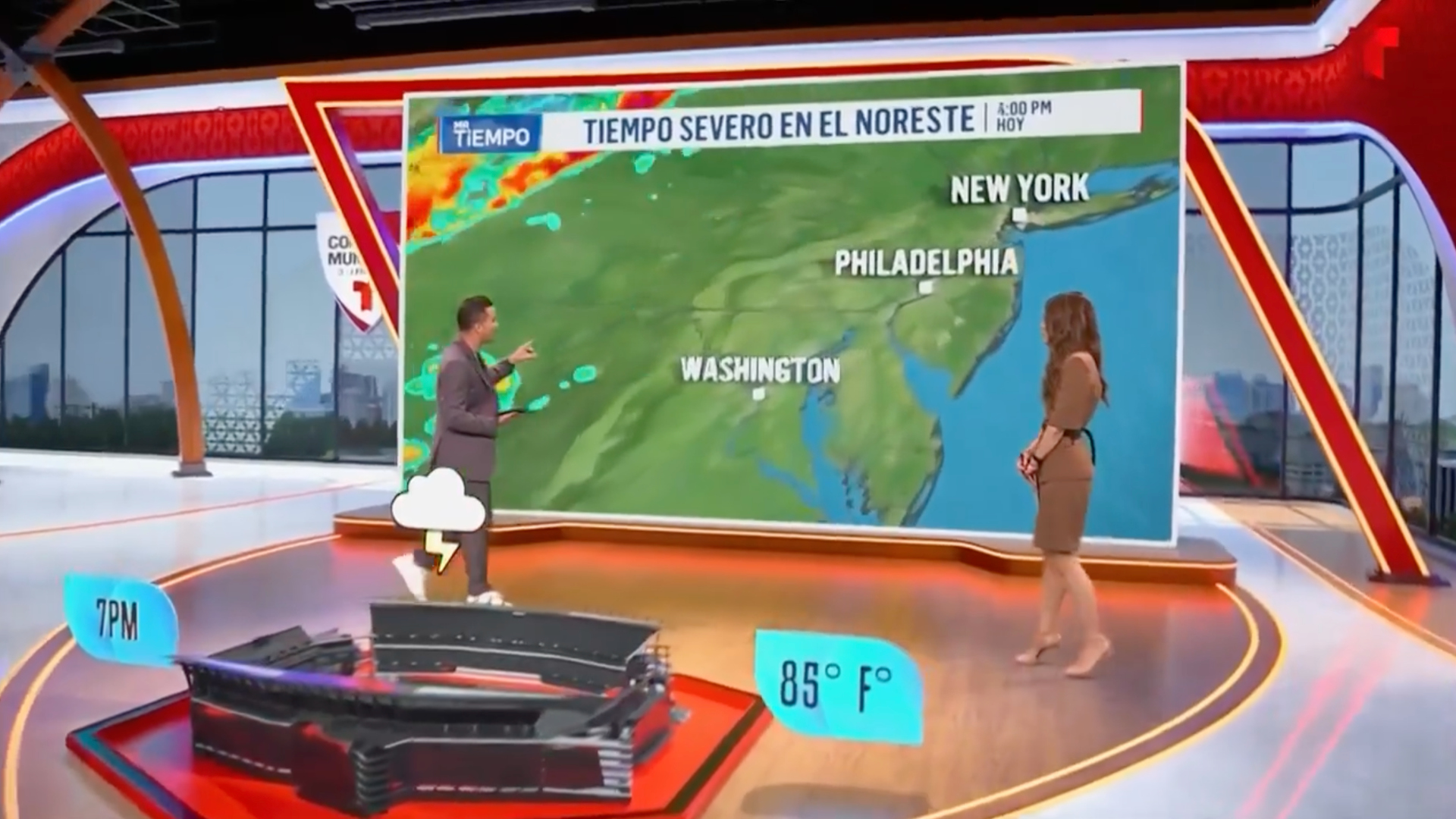
“This is the first time that the weather goes into the sports event to make sure that the audience knows what’s happening and what could happen if we have lightning in the city or in the stadium,” Albarracin said.
The integration allowed a weather presenter to explain local conditions using the virtual environment and monitor surfaces inside the sports set. Albarracin said the segment became one of the unexpected strengths of the production once it moved from rehearsal to air.
“At the beginning, I wasn’t sure how it was going to look,” Albarracin said. “When we saw the rehearsal and then when we put it on air, it really shined.”
Virtual production as an operational strategy
Telemundo’s World Cup studio reflects a broader shift in how major sporting events are produced. For the network, virtual production is no longer limited to specialty segments or occasional augmented reality moments. It has become part of the operating model.
That does not mean the technology is invisible to the production team. The system requires planning, scanning, asset optimization, interface development, lighting, camera tracking and rehearsal. But Albarracin said the goal is for viewers not to focus on the technology at all.
“Our goal is that the people watching the games, they don’t see that this is virtual,” Albarracin said. “They believe that this is real.”
For a World Cup spread across three countries and 16 cities, that realism also serves a practical production purpose. The virtual studio gives Telemundo a consistent home for its coverage while allowing the environment to shift with the tournament itself.
“There wasn’t one central location to build an IBC, so they just built an IBC that can move anywhere,” Say said.
For Albarracin, that flexibility is the point of the investment. The technology is not only a visual effect. It is a way to manage scale, location, sponsorship and editorial needs inside one production architecture.

tags
2026 FIFA World Cup, Blackmagic Design, Epic Games Unreal Engine, Eric Say, Fabian Albarracin, Gameday Creative, Gaussian splatting, Jaime Peñalosa, telemundo, Telemundo Deportes, ultimatte, Unreal Engine, Zero Density
categories
Augmented Reality, Virtual Production and Virtual Sets, Heroes, Set Design, Sports Broadcasting & Production, Sports Set Design