

What 3000 Nits Means for HDR Monitoring in OB Environments
Peak brightness specifications for professional monitors have increased substantially over the past decade, from approximately 100 nits for standard dynamic range displays to a range of 1,000 to 4,000 nits for current HDR production monitors.
These numbers represent measurable technical capabilities, but their practical implications for broadcast production workflows are not always immediately clear.
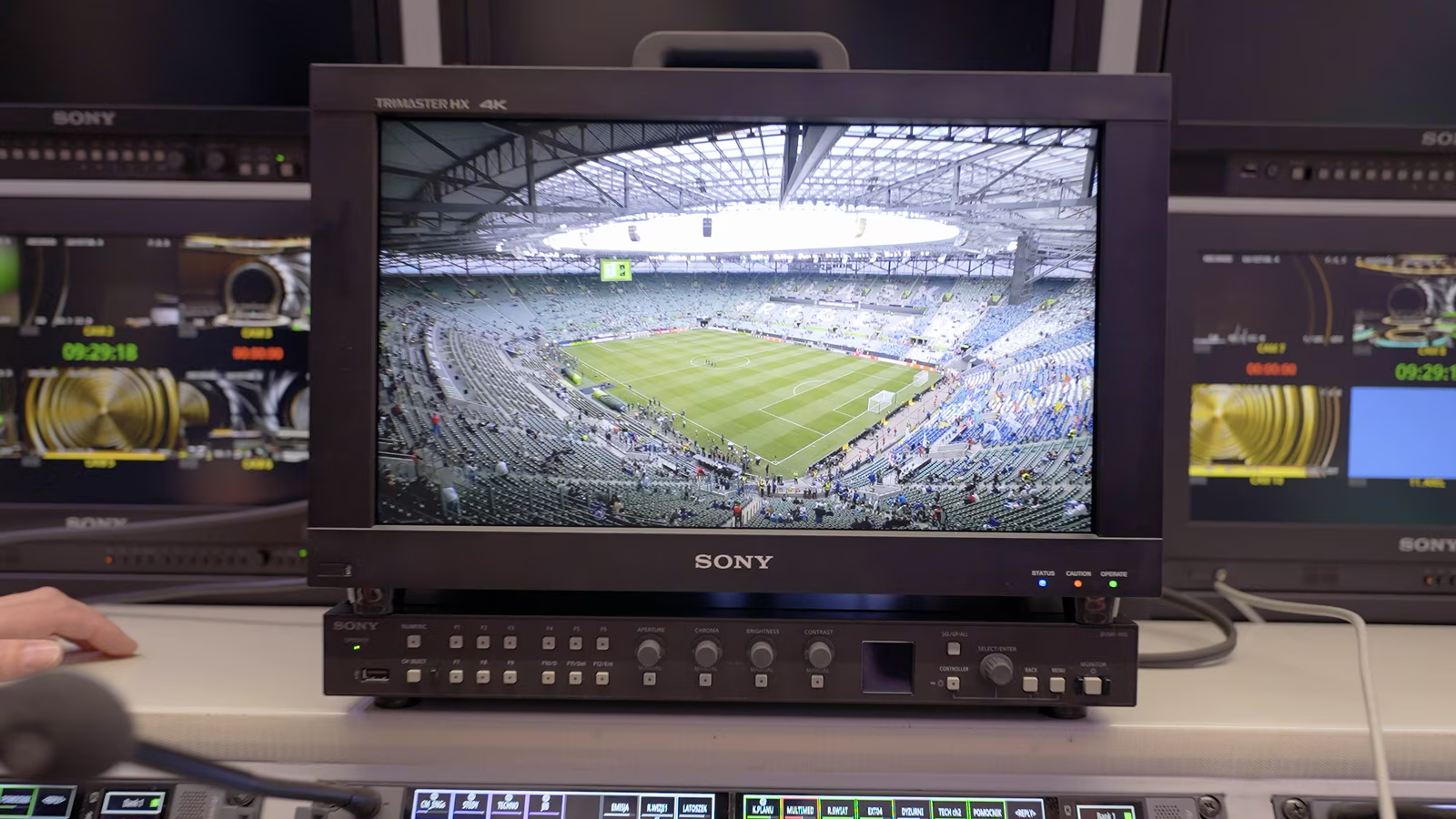
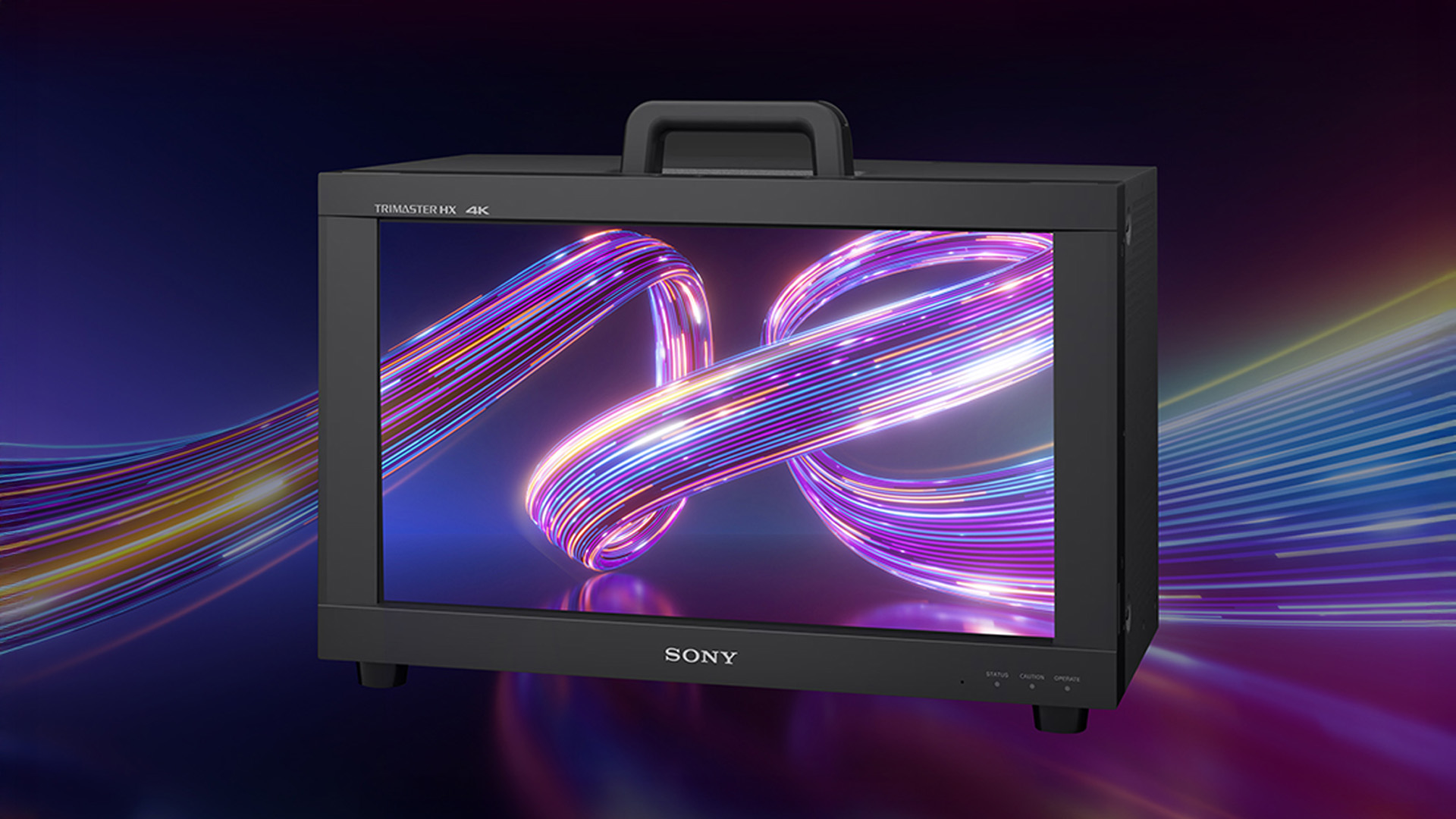
Sony Electronics’ BVM-HX1710, a 17-inch HDR reference monitor designed for OB truck and studio control room applications, achieves 3,000 nits peak brightness within a 10 percent window.
Understanding what that specification means in practice requires examining how HDR content is created, monitored and delivered, and specifically how the two primary HDR standards behave differently in a live environment.
HDR mastering standards and live production
HDR10, the most widely adopted HDR format, uses the SMPTE ST 2084 Perceptual Quantizer transfer function, which supports peak brightness up to 10,000 nits. Most HDR content is mastered between 1,000 and 4,000 nits depending on the target distribution platform.
Two HDR standards are in use: PQ and HLG.
Their behavior differs in ways that matter for live production. PQ is an absolute standard – each code value corresponds to a fixed brightness level, independent of the display’s peak capability. Increasing display brightness on a PQ monitor adds headroom for specular highlights but does not change overall image brightness.
HLG, or Hybrid Log-Gamma, works differently.
It is a relative standard, scaling to the peak brightness of the display. A higher-brightness HLG display produces a brighter overall image across the full tonal range. HLG is designed for live production and broadcast delivery. PQ is used in post-production color grading and for distribution once production is complete. For camera shading and vision engineering in an OB truck, HLG is the relevant standard.
Dynamic range requires both extremes
The term “high dynamic range” refers to the difference between the darkest blacks and brightest whites a display can reproduce. Increasing peak brightness without maintaining deep blacks does not create effective HDR. Both ends of the spectrum matter.
Sony’s BVM-HX1710 uses dual-layer LCD panel technology to address this requirement. The monitor achieves 3,000 nits peak brightness while maintaining black levels below 0.005 nits according to company specifications.
This creates the contrast range that allows detail to remain visible across the full tonal range simultaneously – a requirement when vision engineers need to evaluate shadow areas and specular highlights in the same frame.
The distinction between diffuse white and peak brightness is relevant here. ITU recommendation BT.2408 places diffuse white at approximately 203 nits in HDR workflows, representing typical scene brightness for objects like white clothing or painted walls. Peak brightness above this level is reserved for specular highlights: direct light sources, reflections off water or metal, stadium lights, stage lighting.
A higher-brightness monitor provides greater headroom to display these highlights before they clip.
Extended brightness and the live production workflow
One practical application of the BVM-HX1710’s brightness capability in live HLG production involves what is known as extended HLG range, or super white.
In standard HLG operation, nominal white maps to 1,000 nits. However, the HLG signal contains usable code values above that level – extending up to approximately 1,811 nits — that allow productions to capture and display additional highlight detail.
This approach has been adopted at major sports events where high-contrast scenes, such as snow-covered outdoor venues, present extreme lighting challenges.
Productions using this workflow configure the monitor to operate at 2,000 nits with the HLG gamma adjusted accordingly. This provides display headroom from 1,000 nits to the upper limit of the extended HLG signal. According to Sony, the BVM-HX1710 and BVM-HX3110 support this configuration.
This is distinct from simply running a monitor at high brightness in a bright environment. An SDR signal monitored at standard gamma 2.4 will display at approximately 100 nits regardless of the monitor’s peak brightness capability.
Productions requiring higher brightness output in high-ambient-light situations need to adjust the gamma curve accordingly. For this purpose, Sony includes a 2.4 HDR mode which scales the entire tonal range upward rather than the highlights alone.
Mobile production considerations
Outside broadcast environments present conditions that differ from controlled studio settings. Equipment operates across a wide temperature range – from below freezing at outdoor sports events to high heat at summer productions.
Monitors are viewed by multiple operators working in close proximity, often 18 to 24 inches apart in a technical area that may measure 8 by 12 feet.
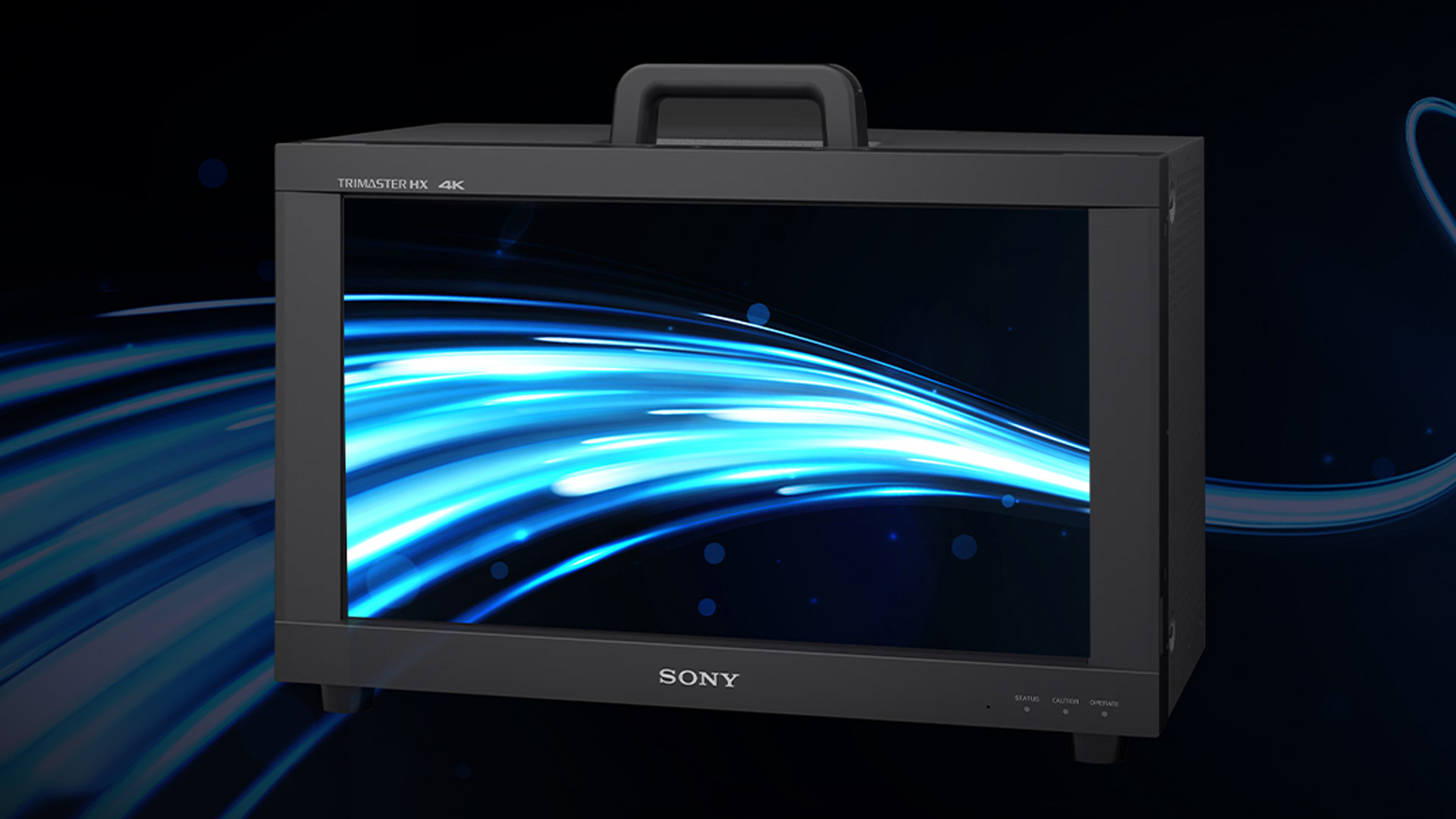
The BVM-HX1710 addresses these conditions with viewing angles of 89 degrees in all directions, maintaining color and brightness accuracy as operators view the display from different positions. An anti-reflection coating uses optical wave cancellation to reduce glare from ambient light sources within the truck, including work lights, indicator LEDs and light entering during setup and breakdown. The monitor operates within a temperature range of 0 to 35 degrees Celsius.
Sony’s optional BVML-F10 license enables faster pixel response for live sports and music productions. LCD panels typically have slower pixel response times than OLED technology, which can produce motion blur during fast camera movements. The license addresses motion handling requirements for productions where cameras frequently pan, tilt or follow fast-moving subjects, and keeps scrolling graphics such as score tickers readable.
Camera shading and simultaneous HDR/SDR workflows
Camera shading has become more demanding with HDR production. Camera shaders must ensure cameras match not only in standard dynamic range but across extended brightness and color gamut. Incorrect HDR shading creates visible problems in SDR conversion – colors shift, highlights clip and shadow detail is lost. These issues compound when multiple cameras operate under different lighting conditions.
The BVM-HX1710 includes waveform monitor and vectorscope displays with automatic scaling for HDR or SDR signals. The graticules adjust based on the selected EOTF setting, providing appropriate technical measurements for the signal being monitored.
Many broadcasters now produce HDR and SDR versions of the same content simultaneously. The optional BVML-H10 license allows the monitor to display HDR content while outputting a converted SDR signal. The quad-view mode enables side-by-side comparison of the HDR master and the SDR conversion in real time. The screen display and conversion output operate independently, maintaining stable signal output even when display settings change.
Technical specifications and color accuracy
The BVM-HX1710 meets EBU Grade 1 monitor requirements, the highest classification in the European Broadcasting Union’s monitoring standard, which sets strict specifications for gamma accuracy and chromaticity coordinate precision. Sony designs its monitor line to maintain consistent chromaticity coordinates across the BVM, PVM and LMD series, meaning hue reproduction is aligned regardless of which series is in use, though peak brightness and saturation range differ by grade.
Color gamut coverage includes 99% of DCI-P3 and approximately 82% to 83% of ITU-R BT.2020. Full BT.2020 coverage remains technically challenging across the industry, particularly in the green region of the spectrum. For broadcast monitoring applications, the monitor covers ITU-R BT.709 completely.
The latest firmware added adjustable maximum luminance settings from 400 to 4,000 nits, supporting compatibility with different HDR mastering workflows. The BVM-HX1710N variant adds SMPTE ST 2110 IP connectivity for networked production environments.
The above Partner Content is sponsor-generated content from Sony Electronics. To learn more about sponsor-generated content, click here.

Categories
Partner Content
The content on this page is provided by the featured companies. NCS cannot guarantee the accuracy or veracity of any claims about products or services made in this content. The views expressed in this content do not necessarily reflect the views of NCS or its team. This content may contain trademarks owned by third parties, and those marks are the property of those companies.