

FAST operators say consistent measurement is the next step for the format
Weekly insights on the technology, production and business decisions shaping media and broadcast. Free to access. Independent coverage. Unsubscribe anytime.
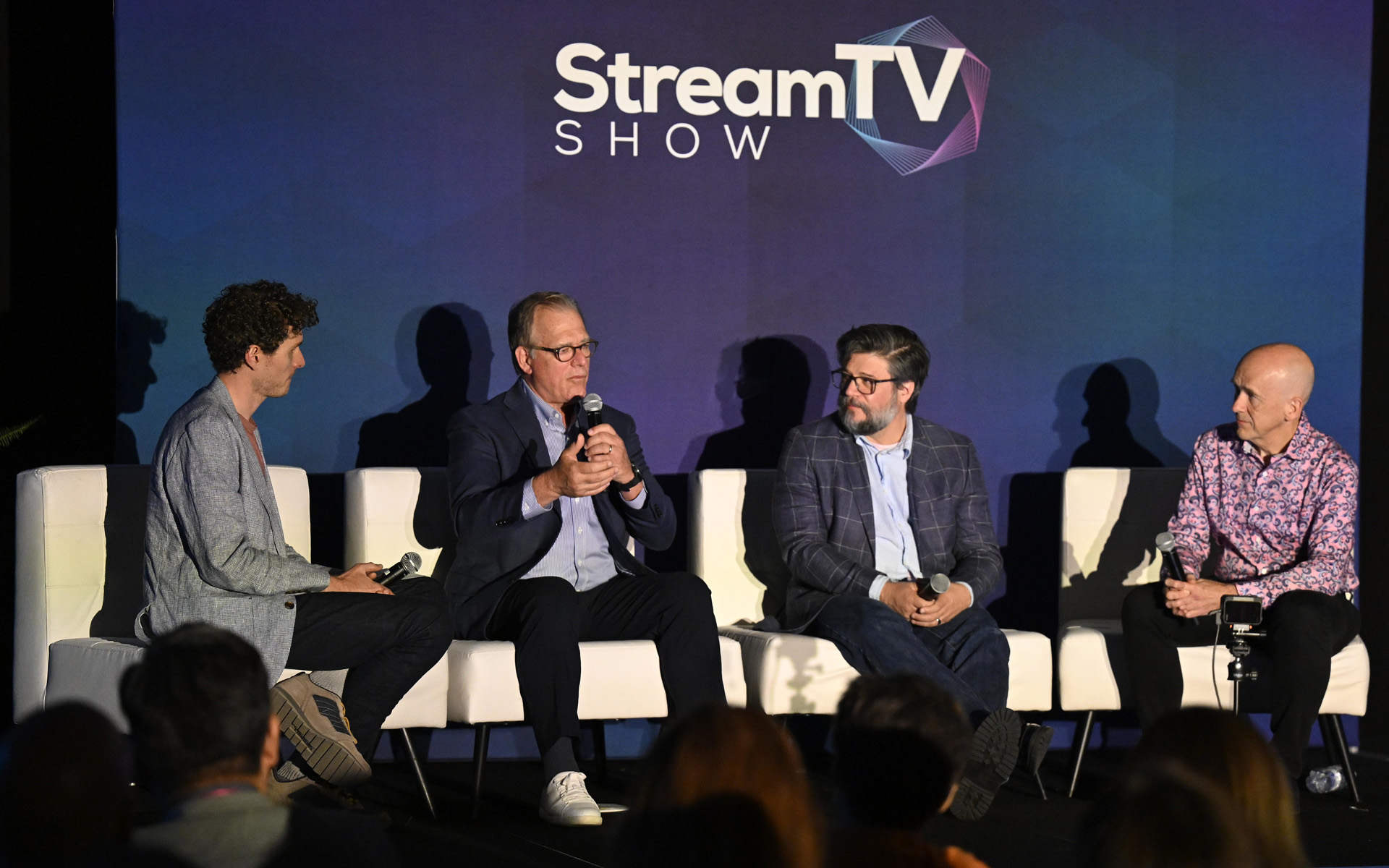
A panel at the StreamTV Show in Denver examined how free ad-supported streaming television, known as FAST, is measured and made profitable, and the speakers agreed that consistent measurement across platforms is the format’s next step.
FAST channels are linear, ad-supported streams that viewers watch for free.
The session, “Running FAST That Performs: Measurement, Monetization & the Operational Playbook,” brought together a measurement company, a distributor and a content company to discuss the metrics that drive channel performance and the daily work of programming and optimization.
Where the numbers stand
Brian Fuhrer, senior vice president of product strategy and thought leadership at Nielsen, said the company currently measures FAST at the platform level and is working to measure individual channels and programs.
“It’s kind of a blunt force instrument. I want to be honest about that,” said Fuhrer, describing the platform-level view that appears in Nielsen’s monthly report, The Gauge.
Fuhrer said platform-level measurement is the first step, providing volume and audience, and that Nielsen is now working on channel-level measurement with clients and reporting it internally. He said that work leads to genre measurement and ultimately to individual programs.
Total television usage has stayed flat or risen slightly across demographic groups, Fuhrer said, contradicting a common assumption that people are watching less. The viewing is shifting rather than shrinking, he said. He cited a decline of roughly 75% in cable viewing over five years against an increase of about 500% in FAST over the same period.
He also said program-level data can surprise people. One of the most-viewed programs Nielsen tracked in 2025 was “Gunsmoke,” a series first broadcast in the 1950s.

Two definitions of success
The platform and content sides defined success in similar but distinct terms.
James Ross, CEO of Lightning International, which distributes about 20 FAST channels across genres including news, music and film, said the company judges channels by revenue against cost.
“It boils down to how much money you’re actually making at the end of the day, and what your costs are, and balancing the two,” said Ross.
Ross said collating data is a persistent frustration because the company carries channels on 25 to 30 platforms, each reporting figures differently through separate portals.
Kent Rees, general manager of MyFree DirecTV, said his team weighs monetization alongside engagement and whether a channel moves viewers toward paid products.
“We’re all about combating fragmentation,” said Rees. “We want to aggregate audiences and help them find what they want with as much ease as possible.” He said the free platform is evaluated both on the revenue it generates and on how well it complements the paid ecosystem through upsell.
The data that is easy, and the data that is not
Asked which data is easiest to obtain and which remains difficult, panelists pointed to a gap in cross-platform information.
Rees said time on platform is straightforward to see, but understanding what audiences watch elsewhere is not. He said connecting FAST audiences across channels and platforms would help with cross-promotion, and that the data does not yet support it.
Ross said channel-level performance data is not publicly available the way it has been for broadcast and cable.
“It’s pretty tough to put that information together from the different portals that we have,” said Ross.
Fuhrer said Nielsen measures all of television by inserting audio codes into channels so they can be tracked wherever they appear, and that the company is studying how audiences overlap across platforms. He said advertisers are eager to follow viewers from cable to FAST.
“As they see viewers move from cable to FAST, they want to replace those viewers,” said Fuhrer. He said many advertisers are seeking basic age and gender measurement rather than advanced attention metrics.

On YouTube, Fuhrer said Nielsen applies the same method it uses for FAST platforms, comparing time spent on television screens. He said the company presents the data without judgment.
What is driving engagement
Panelists said exclusive and nostalgic content is helping draw and hold audiences.
Rees said DirecTV’s free platform carries two exclusive channels and is focused on attracting viewers who are new to FAST. He cited the 1980s drama “Knots Landing” as an example of older programming finding a new audience after the platform invited viewers to start the series from the beginning on demand.
“That show to me is just a great example of what FAST is capable of,” said Rees.
Ross said his company draws on a library of about 2,500 action films that viewers watch repeatedly, and that music and news channels perform in ways pay television did not.
“I was from a background of pay TV, and music and news never drove pay TV. It’s flipped,” said Ross. He said viewers leave music channels running for hours like a radio station, which supports advertising revenue.
Discoverability and metadata
The panel returned to discoverability as an operational challenge tied to branding, metadata and curation.
Ross said many content owners do not supply enough metadata to support their channels, even as platform demand for it grows. Branding, logos and key art also matter, he said.
Rees said curation is central to the DirecTV platform and is done in partnership with channel owners, enabling the team to promote programming in advance.
Panelists also noted that recommendation engines and aggregation shape what audiences find.
Fuhrer cited “Lucifer,” which aired on Fox before becoming a heavily streamed title on Netflix. Ross said interest in his company’s 1980s music channel rose alongside the use of 1980s music in series such as “Stranger Things.”
Live events and transparency
Asked for the single change that would most improve performance, panelists named live events and better information sharing.
Ross described coverage of Japanese sumo tournaments staged in London and Paris and carried on Pluto TV and LG as special events.
“The platforms want these unique things,” said Ross.
Rees said transparency between partners is the foundation. He said partners do not need to share specifics, but a general sense of what is working helps both sides make better decisions, which returns the conversation to the need for a common measurement standard.
Fuhrer said cost and the difficulty of measurement have slowed progress, and that both are improving as encoding becomes embedded in distribution pipelines. He cautioned against expecting too much from artificial intelligence too soon.
“AI only helps once you have some data to work with,” said Fuhrer.
Where the panel sees FAST in five years
Closing the session, panelists said they expect FAST to be treated as part of television rather than a separate category.
Fuhrer said the goal is to make it easy for advertisers to buy and analyze across sources and for sellers to sell through the same pipes. Ross said he wanted the format to match television in quality, standards and technical delivery.
Rees said he hoped to stop debating whether something counts as FAST and simply talk about it as content.
“We’ll just be here talking about it as content, which is what it is, and I think that’s a great place to be,” said Rees.
The author of this story moderated this panel at the StreamTV Show in Denver.

tags
Audience Measurement, Brian Fuhrer, data analytics, directv, Free Ad-Supported Streaming Television (FAST), James Ross, Kent Rees, Lightning International, MyFree DirecTV, Nielsen, Pluto TV, roku, StreamTV Show, Tubi
categories
Heroes, Streaming