

BBC Sport creates city-changing XR studio for 2026 World Cup
Weekly insights on the technology, production and business decisions shaping media and broadcast. Free to access. Independent coverage. Unsubscribe anytime.
BBC Sport’s 2026 World Cup studio begins with a practical constraint: most of the broadcaster’s presentation is coming from Salford, not from North America.
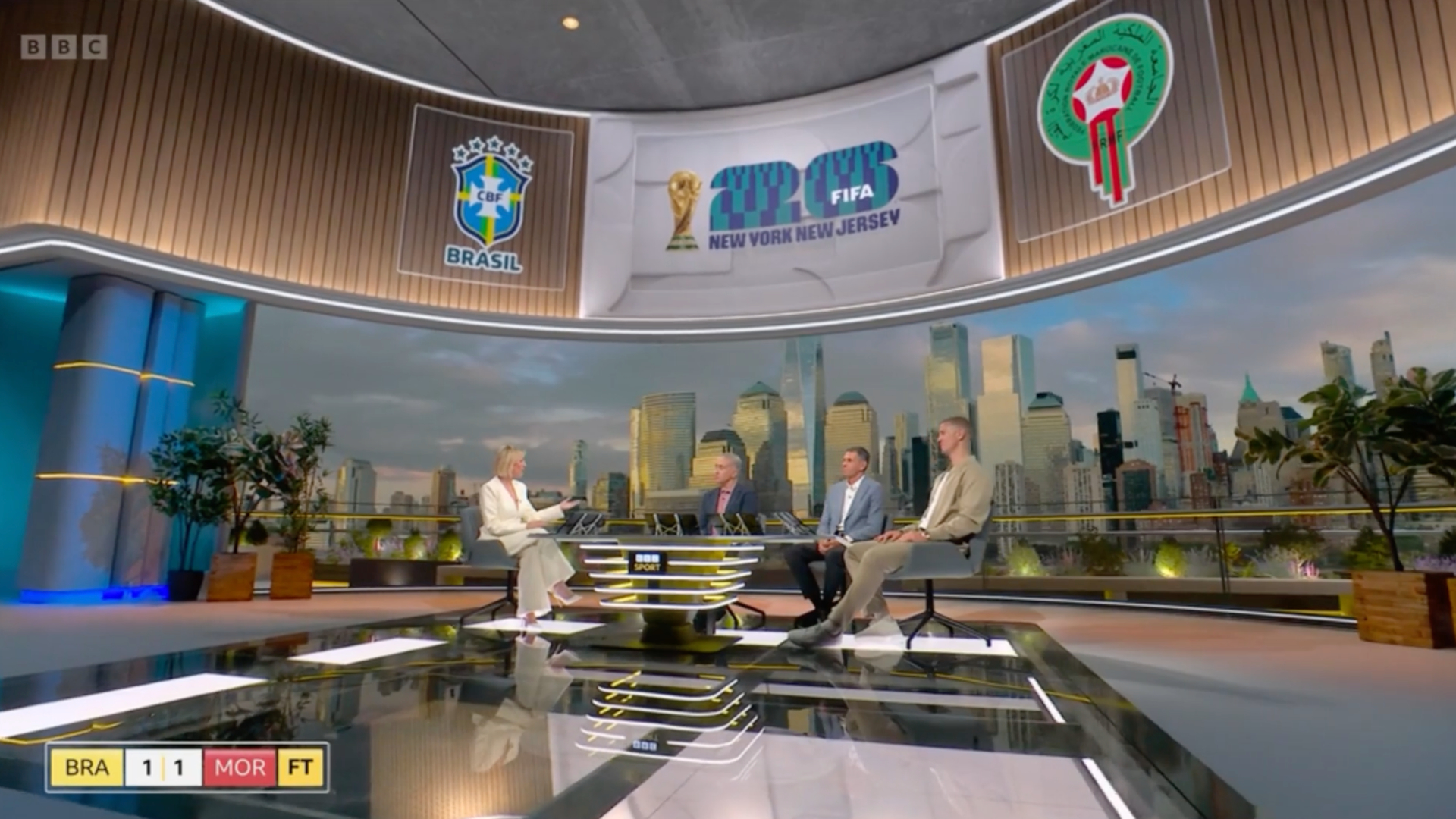
Rather than disguise that fact, the design uses a combination of physical scenery and virtual production to give the coverage a stronger sense of place. The set at dock10 can shift between host-city backdrops, but its core remains deliberately tangible, with real architectural elements, a hydraulic desk and multiple presentation areas built around the LED environment.
For John Murphy, design director at BBC Sport, that balance was central to the project.
The goal was not simply to place presenters in front of changing digital views, but to create a studio that could support the rhythm and variety of a monthlong tournament.
“We thought, because we’ve got the technology and because we’re doing this in XR, let’s try and at least give it a flavor of each of the cities that we’re in,” said Murphy.
The strategy responds to one of the central production challenges of the 2026 tournament. Unlike a World Cup concentrated around one country or a smaller number of production hubs, this edition is distributed across three countries and 16 host cities. For broadcasters, that removes an obvious visual center for studio coverage.
Building a studio around multiple locations
The project drew on BBC Sport’s production for UEFA Euro 2024 in Berlin, where the broadcaster combined virtual elements, LED displays and a real city backdrop.
The World Cup studio extends that approach through a full LED volume, created using panels from ROE Visual, mixed with physical scenery positioned between and around the display surfaces.
“I’m a very firm believer, especially in live broadcasting, that anything physical you can add massively helps,” Murphy said. “It adds that element of realism to what you’re doing.”
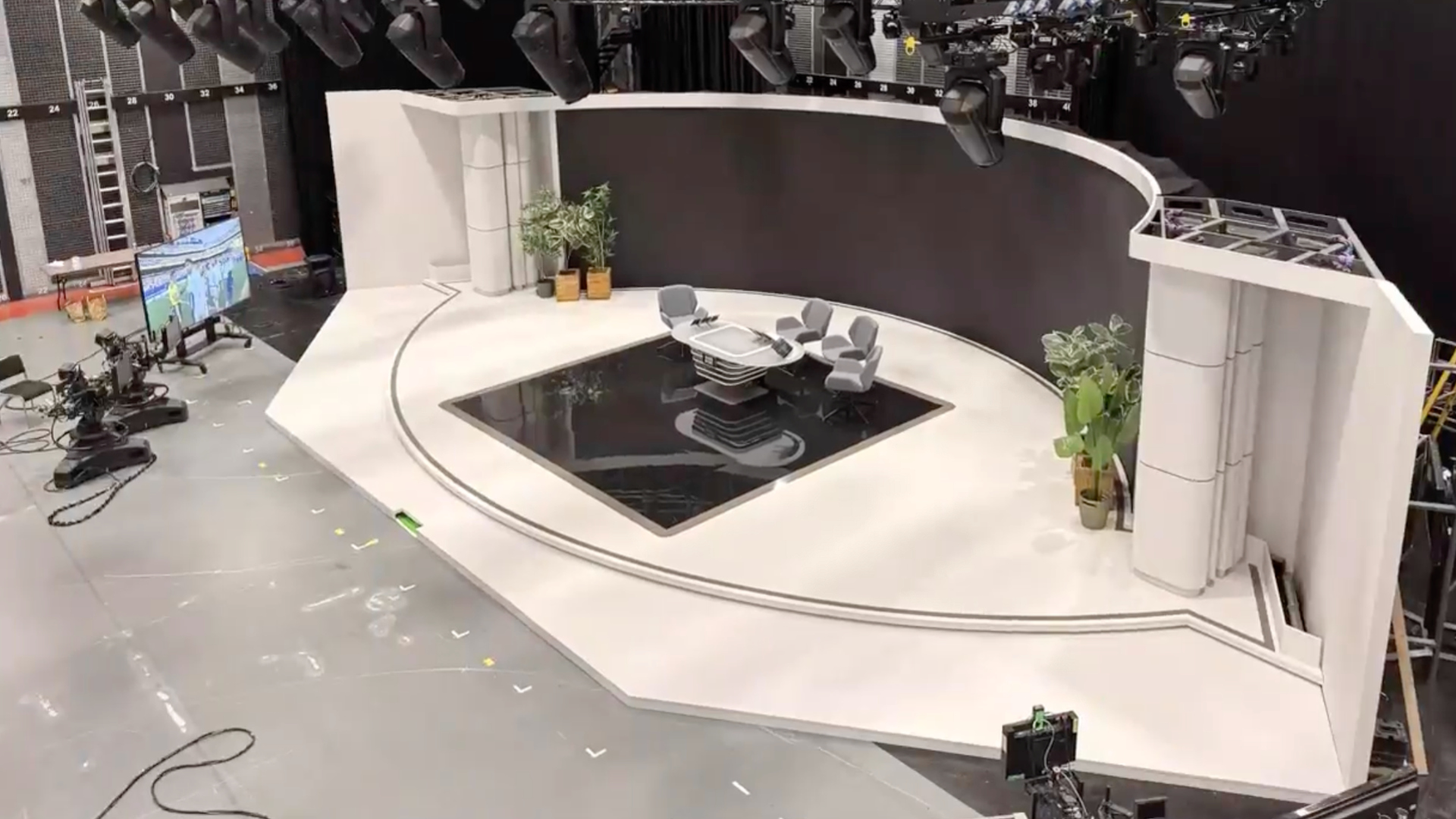
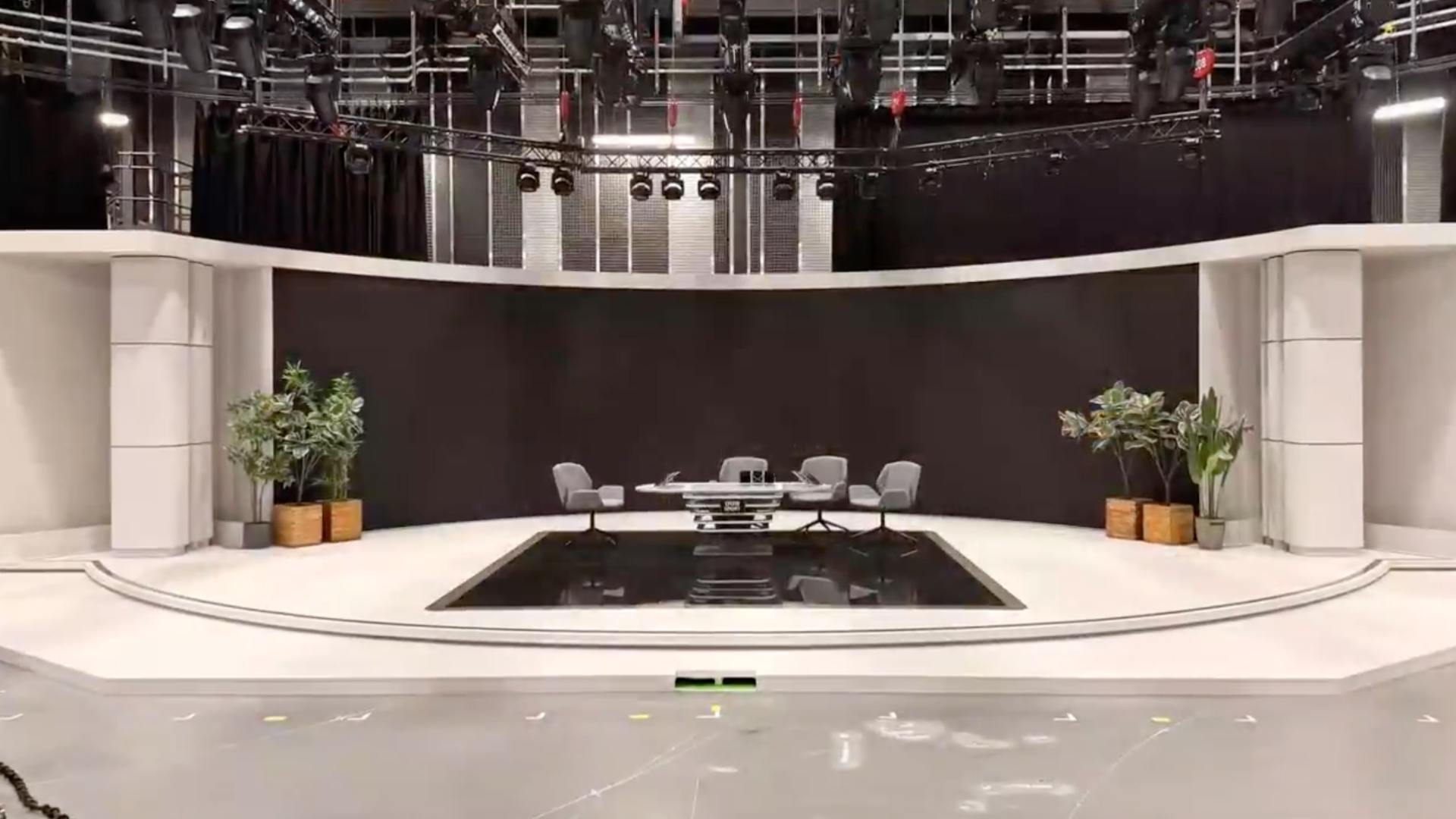
The physical set gives presenters and cameras real objects, surfaces and shadows to work with while helping connect the digital environment to the studio floor. It also reduces the sense that presenters are standing inside an entirely computer-generated space.
The virtual architecture takes some of its cues from a New York apartment, reflecting the location of the tournament final while providing a neutral framework that can accommodate the different city views.
Within that environment, BBC Sport created three primary presentation configurations.
The main area supports traditional seated coverage. A second area uses a hydraulic table that can be lowered for seated discussion or raised for standing presentation on a virtual terrace. A third analysis position incorporates the LED floor, which displays a football pitch beneath a glass surface.
The analysis area can support augmented reality team lineups and tactical elements, while an adjacent standing position allows presenters to work with a large display on the LED wall.
“We made it multifunctional from one core central setup,” Murphy said. “It gives us different bases to use rather than having the same sit-down area for all the programs.”
Locating the production at dock10 also gave BBC Sport access to more studio floor space than it was likely to have in a temporary facility near the tournament. That allowed the team to build several presentation and analysis positions within the same environment rather than rely on a single desk-based setup.
Turning photography into dynamic environments
The city views are largely based on high-resolution photography that has been separated into layers and imported into Unreal Engine.
The production adds dynamic sky and water elements, along with camera parallax, to give the backdrops depth and movement. For New York and Philadelphia, members of the creative team were able to capture panoramic images locally. Other cities required BBC Sport and its partners to source imagery that met the perspective, resolution and composition requirements of the studio.
“The city backdrops have been a challenge because they’re based from photography, but they’ve had to be layered in Unreal Engine,” Murphy said. “You still can’t get them exactly how you want them in the time that we’ve had, but you get the parallax and the effect, and we’ve made it work.”
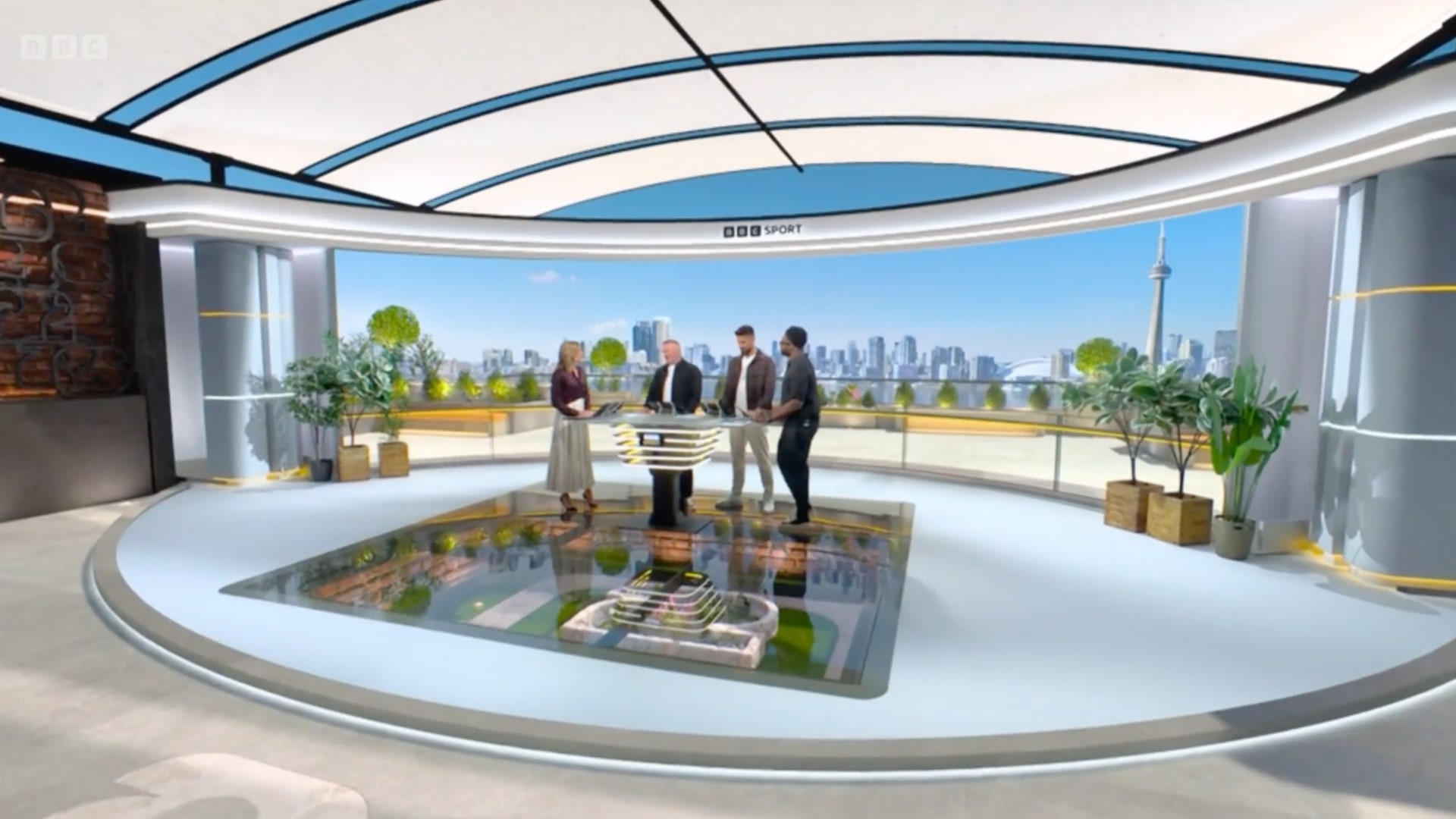
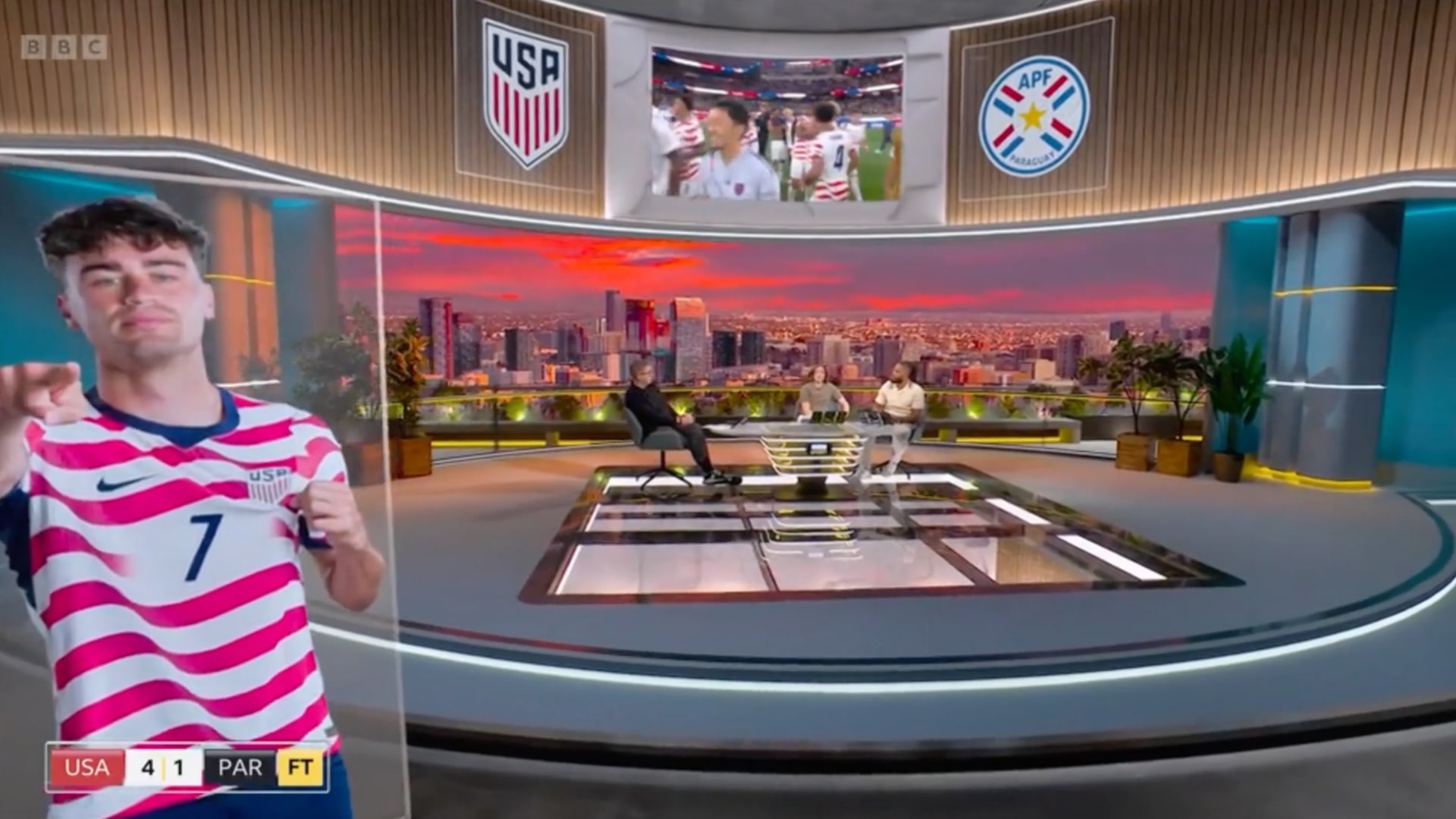
Each city also requires multiple environmental versions, including daytime, dusk, overcast and nighttime conditions. The workload continues as the tournament progresses because BBC Sport did not know every knockout-round location when production began.
The creative team may need to build additional city environments with limited turnaround once later match assignments are confirmed.
Small practical effects help reinforce the outdoor illusion. Fans positioned in the studio can create subtle movement in presenters’ hair when they are shown on the virtual terrace.
Those details do not attempt to convince viewers that the studio is physically in each city. Instead, they give the presentation a visual connection to the tournament’s geography while retaining the practical advantages of a centralized production.
Testing a new XR workflow
BBC Sport conducted a technical test in February using a section of LED wall and a portion of the floor. The test focused less on the final visual design than on how the technology would operate within the dock10 production environment. BBC Sport had not previously delivered this form of full XR production from its Salford studios, requiring creative, graphics, camera and studio teams to establish a new workflow.
“We learned a lot from that week,” Murphy said.
The full LED installation and physical set did not return to the studio until approximately two and a half weeks before the first broadcast. During that period, the teams completed the scenic build, LED installation, camera calibration, graphics integration and supporting production workflows.

Pixotope provides the virtual production system, with Unreal Engine used for the real-time environments. AE Live handled elements of the graphics workflow, Unreal integration and augmented reality production.
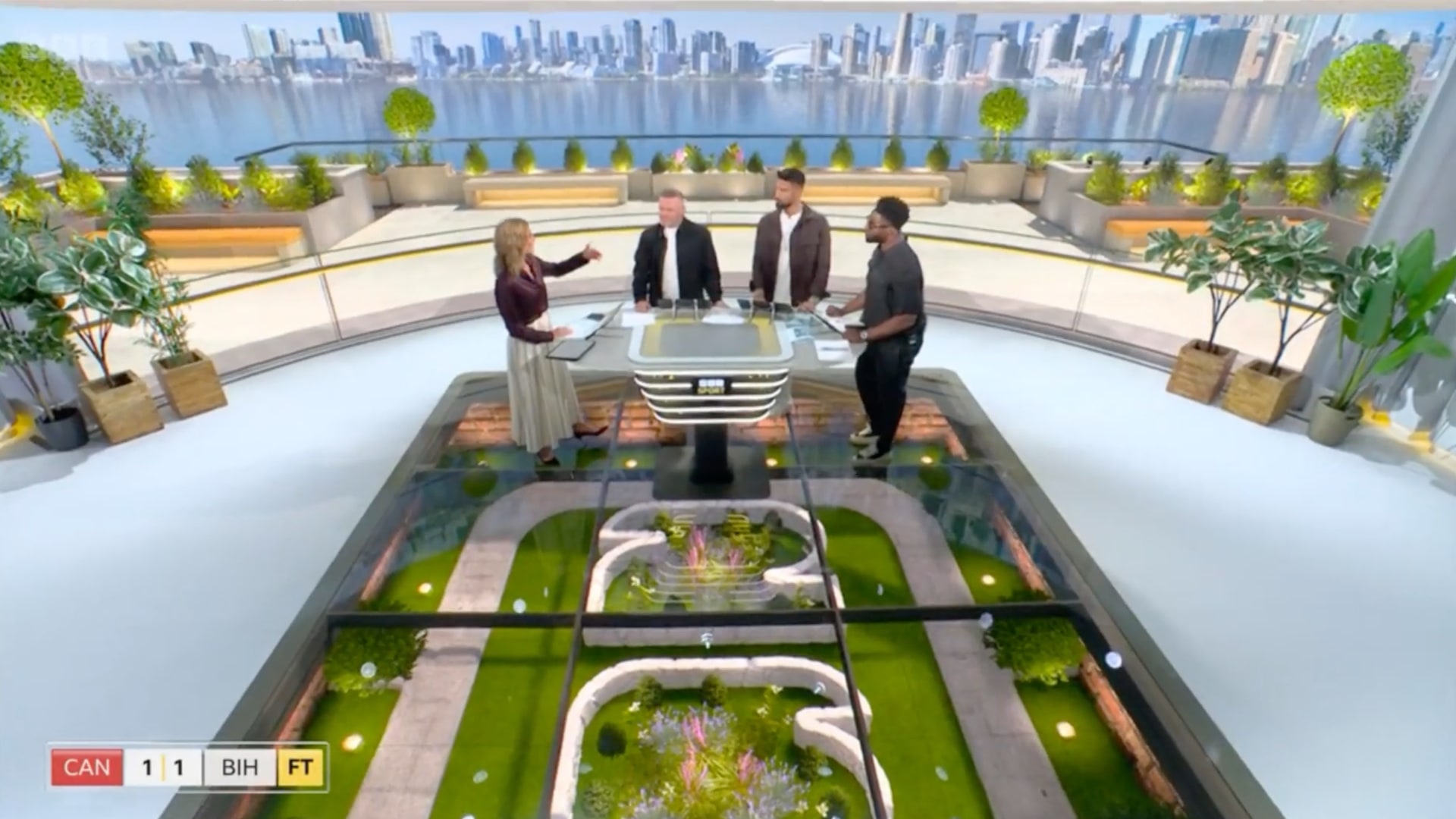
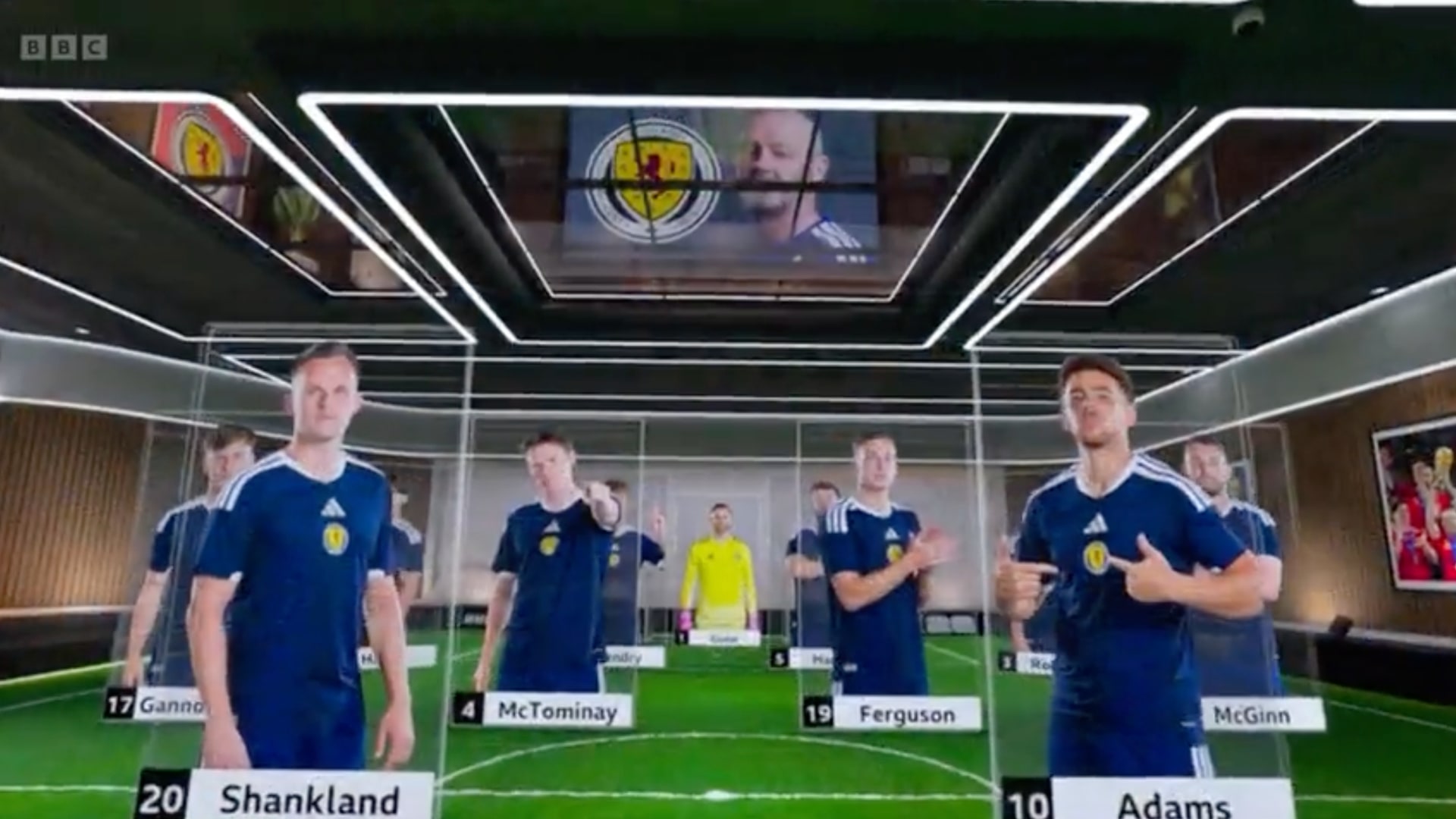
BBC Sport’s internal graphics team contributed to the design and execution, while 3D artist Paul Kavanagh developed the base model of the studio environment. dock10’s technical and studio teams implemented the system within the facility and supported the virtual city setups.
Linking BBC and FIFA graphics
The studio presentation is also designed to transition into FIFA’s match coverage without creating an abrupt visual change. BBC Sport’s graphics retain the broadcaster’s own presentation requirements while borrowing colors, shapes and other elements from FIFA’s tournament identity.
“When we go to the match coverage, it all becomes FIFA’s graphics,” Murphy said. “We don’t want it to be a complete change of style.”
BBC Sport used FIFA’s asset package as a visual foundation, adapting selected elements for its studio graphics, wipes and augmented reality treatments. The goal was not to duplicate the international feed but to create enough continuity that the studio and match presentation feel connected.
The broadcaster’s broader World Cup identity began with a mixed-media title sequence developed by BBC Creative and the network’s marketing department with Blair King.
The concept combines filmed, animated and graphic elements rather than relying on a single visual technique. BBC Sport’s internal team then extended that identity into the wider broadcast package, including studio graphics and AR.
The varied approach reflects the difficulty of building a national visual theme for a tournament divided among the United States, Canada and Mexico.
Designing beyond the tournament
Parts of the World Cup studio will remain in use after the competition ends.
BBC Sport rented the large LED installation for the tournament, but a smaller LED wall and floor are planned for the dock10 studio used for weekly football programs, including “Match of the Day.” The desk and other physical scenic elements will also move into BBC Sport’s regular coverage.
The transition will take place gradually after the tournament, with the permanent LED system expected to be integrated later in the summer or early fall.
“We try to take some of those assets into our ongoing coverage for the next year or two,” Murphy said. “It’s important from a sustainability point of view and from a cost point of view.”
That reuse gives the World Cup project a role beyond a single event. It also allows BBC Sport to test virtual production tools during a major tournament before applying a scaled version of the workflow to its continuing football output.

tags
2026 FIFA World Cup, AE Live, BBC, BBC Creative, BBC Sport, dock10, Epic Games Unreal Engine, John Murphy, LED Volumes, Paul Kavanagh Studio, Pixotope, ROE Visual, Unreal Engine, XR Studio
categories
Augmented Reality, Virtual Production and Virtual Sets, Heroes, Set Design, Sports Broadcasting & Production, Sports Set Design