

TSN’s Vancouver World Cup studio trades monitors for mountains
Weekly insights on the technology, production and business decisions shaping media and broadcast. Free to access. Independent coverage. Unsubscribe anytime.
When TSN began planning its studio coverage for the 2026 FIFA World Cup, the easy option was right in front of the network. TSN operates a large, well-equipped studio in Toronto, outfitted with monitors that could be tailored to any event. But Eoin Maher, TSN’s head of soccer, pushed for something else entirely.

“He was adamant we had to be in Vancouver,” said Jamie Bower, senior coordinating producer at TSN. “It would have been really easy for us to say the games were in Vancouver, let’s just host from Toronto.”
Canada played two of its three group stage games in Vancouver. TSN’s on-air talent was already going to be on the ground with the team. Maher’s argument was that the broadcast should be there too.
“It’s a big investment. Fortunately, upper management supported it, and I think it’s paid off well,” Bower said.
TSN’s World Cup coverage spans the network’s full ecosystem.
Every game airs on TSN, with a selection also broadcast on CTV, Bell Media’s network television property. All matches stream on Crave, the company’s streaming platform. RDS, the French-language counterpart to TSN, carries full coverage in Quebec. On days when Canada plays, TSN is on the air from 8 a.m. through 10 p.m.
An open-air structure on the waterfront
The Vancouver set was built in Jack Poole Plaza, adjacent to the convention center and near the site of the International Broadcast Centre used during the 2010 Winter Olympics. TSN worked with BC Event Management to construct a temporary structure and partnered with Mood Design, led by set designer Michael Parks, on the scenic elements. The set was deconstructed on July 7 after the final Vancouver World Cup game.
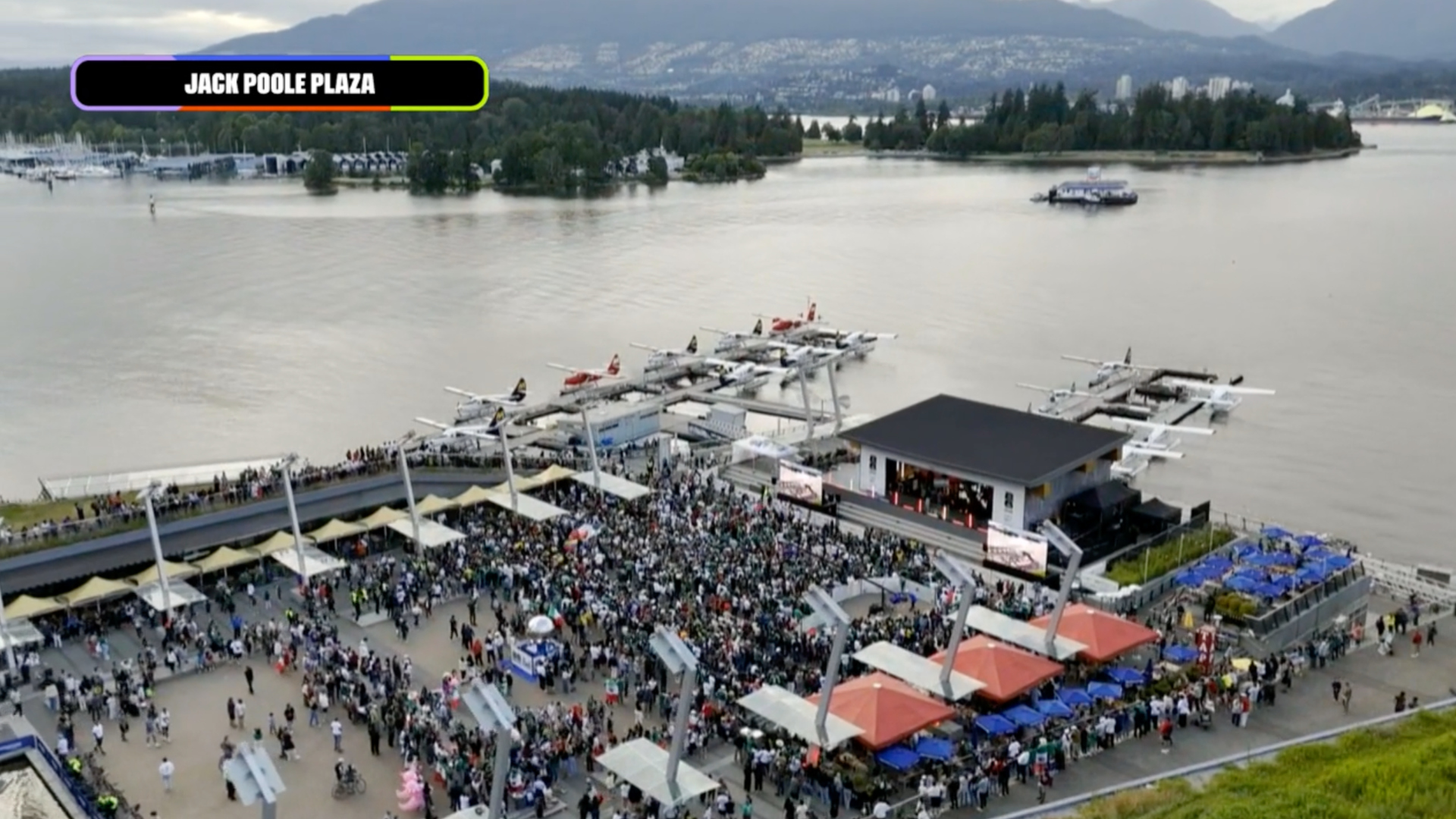

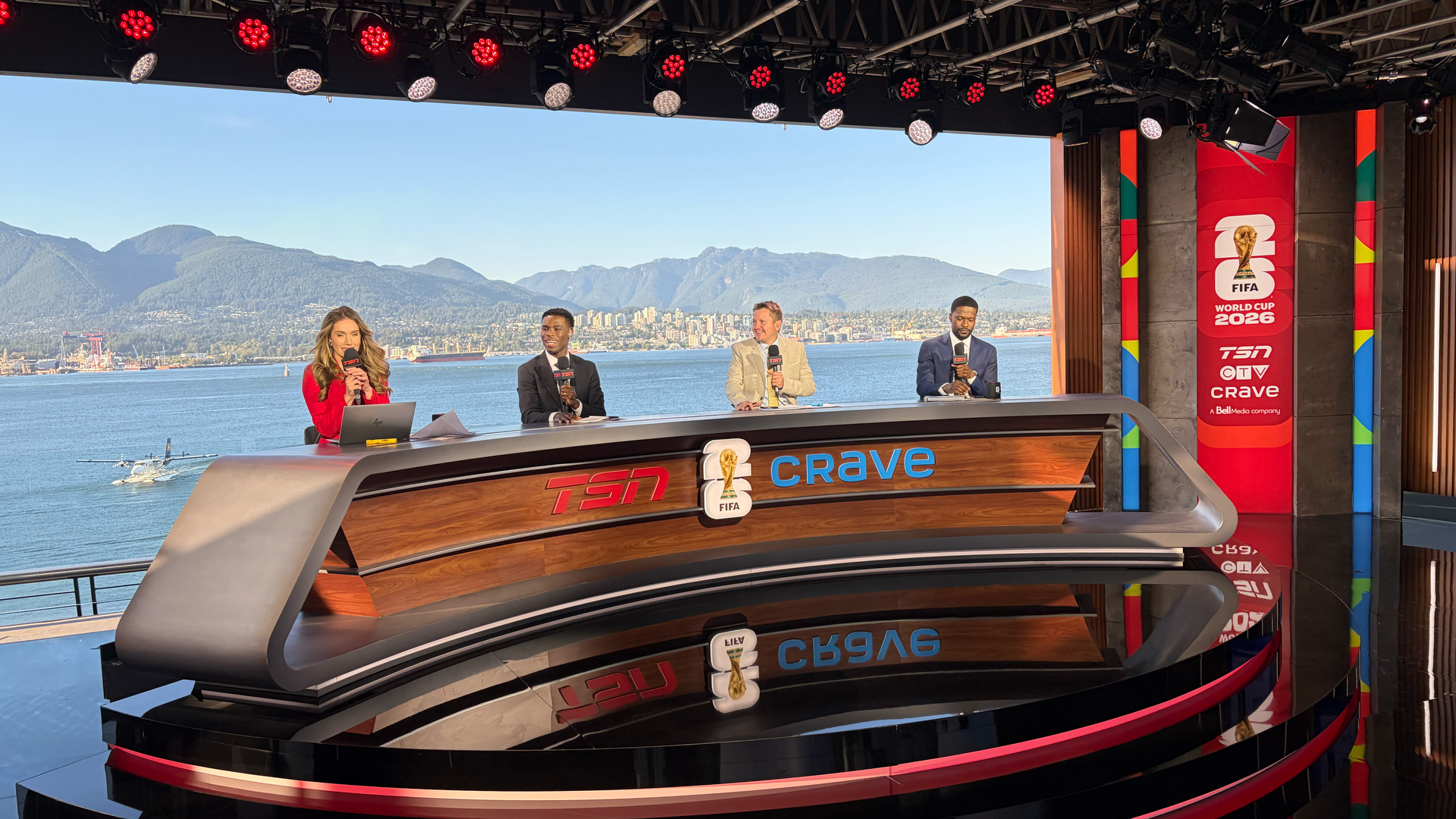
The structure measured 53 feet wide by 37 feet deep, with a 44-foot-wide opening across the back wall. That opening was left unenclosed, giving every camera angle a direct line of sight to the waterfront, the North Shore mountains and the western edge of Stanley Park.
“We really wanted to make it big enough for the giant desk that we created, but also so the shots and all the singles would not be shooting the structure but would be shooting to the beautiful backdrops,” Bower said.
The approach was deliberate. Rather than relying on LED walls or virtual environments, the production team used the city itself as the backdrop.
“We didn’t have to do a lot there. We’re just using nature,” Bower said. “But I think that was sort of our mentality all the way through it, to have unobstructed camera shots.”
West Coast modern, not rustic
The scenic design aimed for a tone Bower described as “West Coast modern architecture along with a cool soccer, international soccer vibe.” The team avoided anything that skewed rustic or cabin-like. The centerpiece was a 30-foot wood-fronted desk, a departure from TSN’s typical studio furniture, with minimal monitor placement on the front face.
“We don’t often build a wood desk,” Bower said. “We placed a few monitors in other spots for practical production things and also for sponsors. But really, we wanted to embrace the space.”
Elements from the broadcast graphics package, designed separately by Stephen Gilmore’s team, were incorporated into the set as well. The result ties the on-air look to the physical environment without overwhelming it.
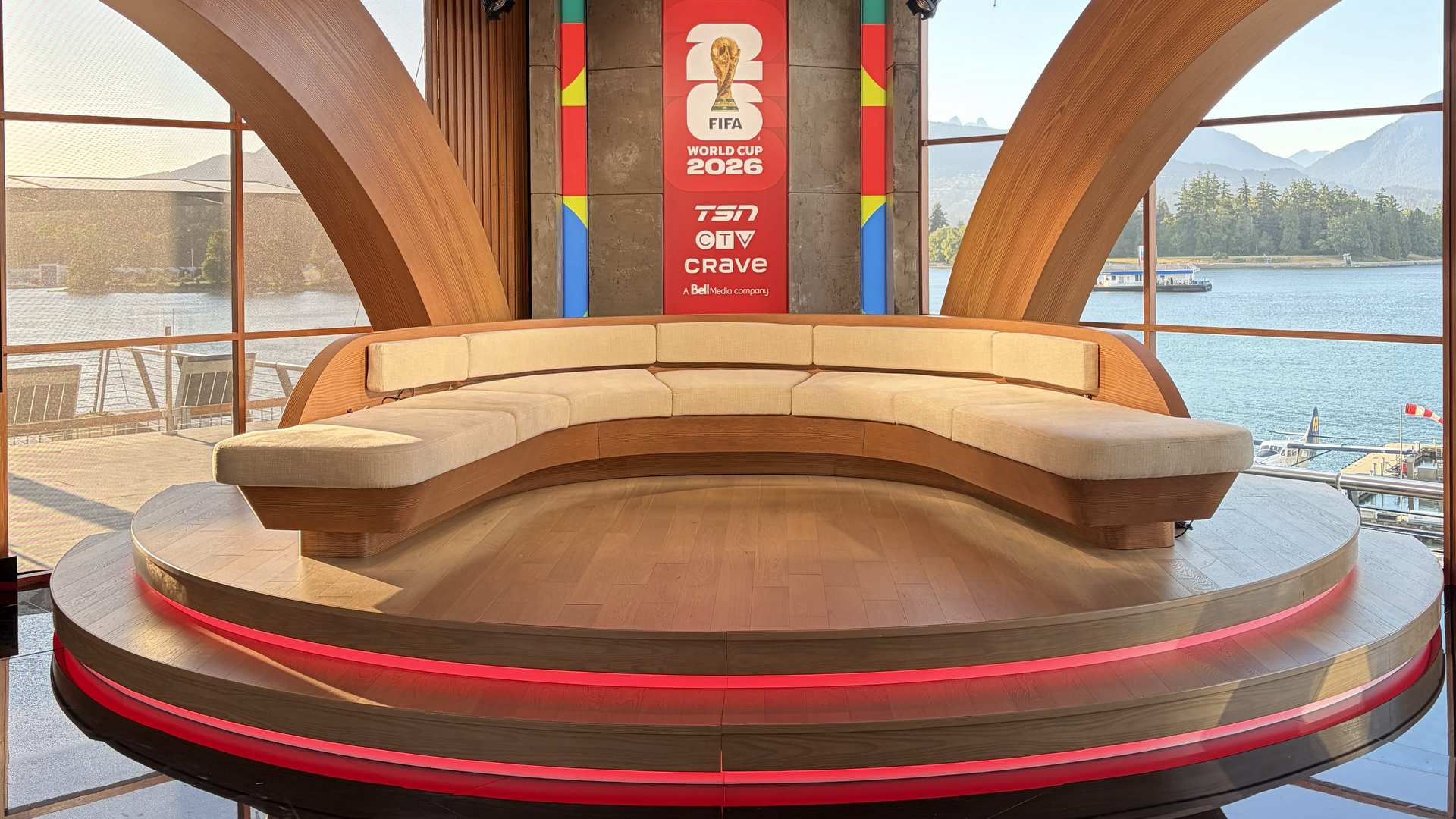
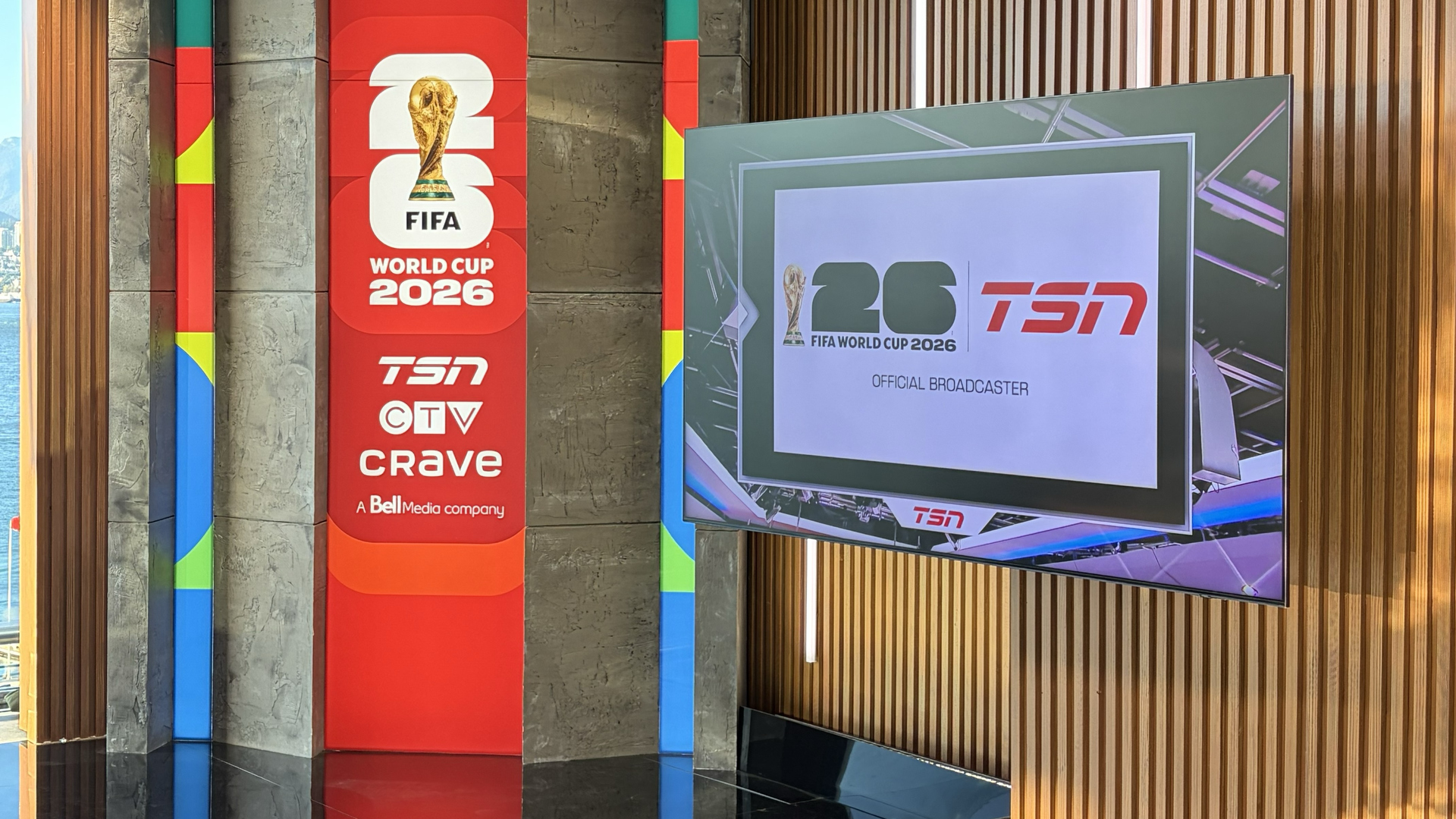
The set was divided into three zones.
The main desk anchored the space for panel coverage. Camera left held a seated couch area designed for more conversational segments and interviews, which also doubled as a rain contingency location. Camera right featured a standup position with monitors for tactical breakdowns and sponsor integrations.
Cameras, screens and the plaza
The Vancouver setup included five cameras: three hard cameras inside the structure, one jib inside and a second, larger jib positioned outside in the plaza. Beyond the set itself, TSN installed two large 16-by-9 LED screens facing outward so fans gathered in Jack Poole Plaza can watch games and live broadcasts from the open area.
“The folks that wanted to come and watch our broadcasts and watch the games can sit out in Jack Poole Plaza,” Bower said. “We’re embracing the atmosphere and the fun that’s going on out there.”
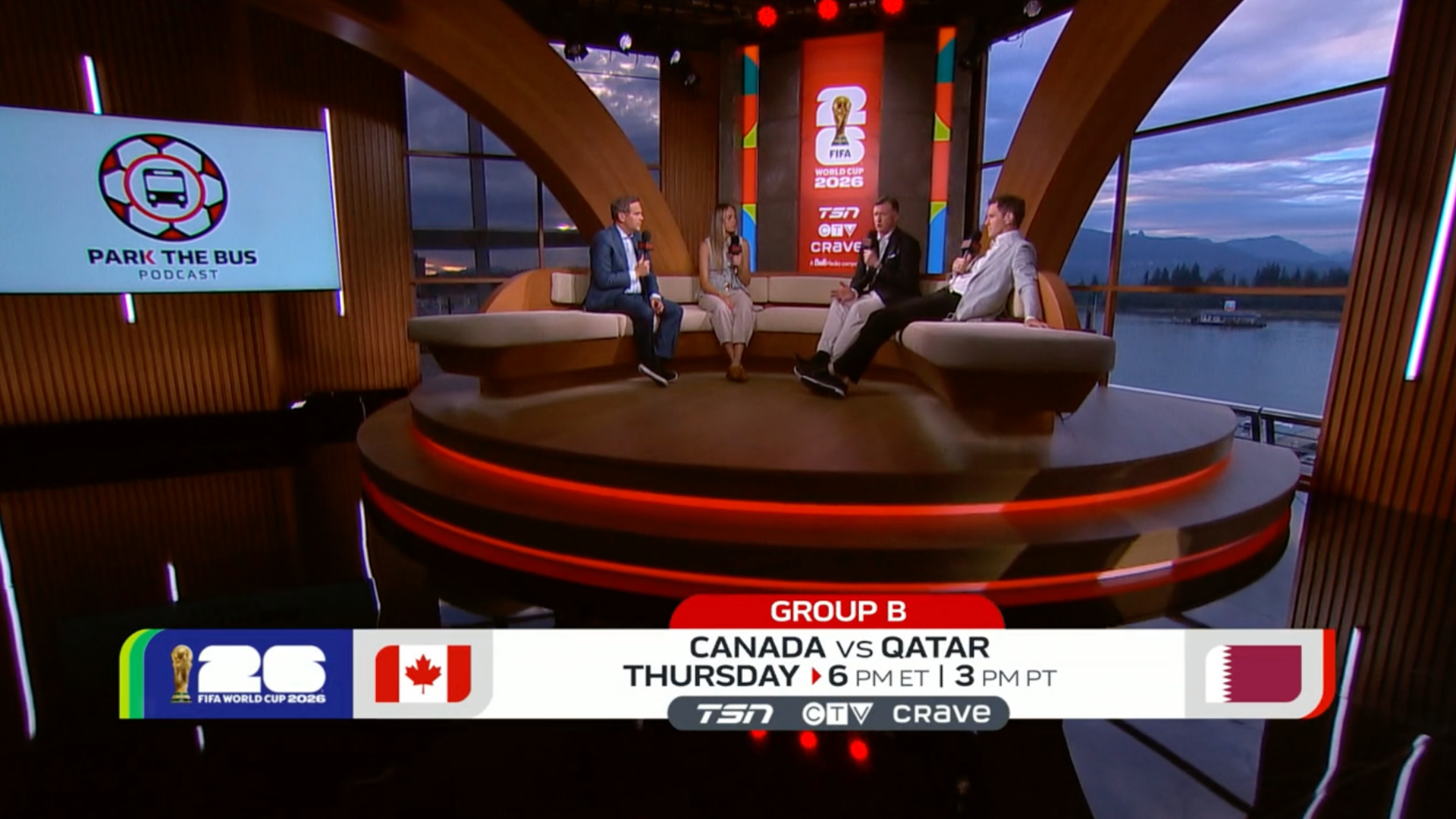
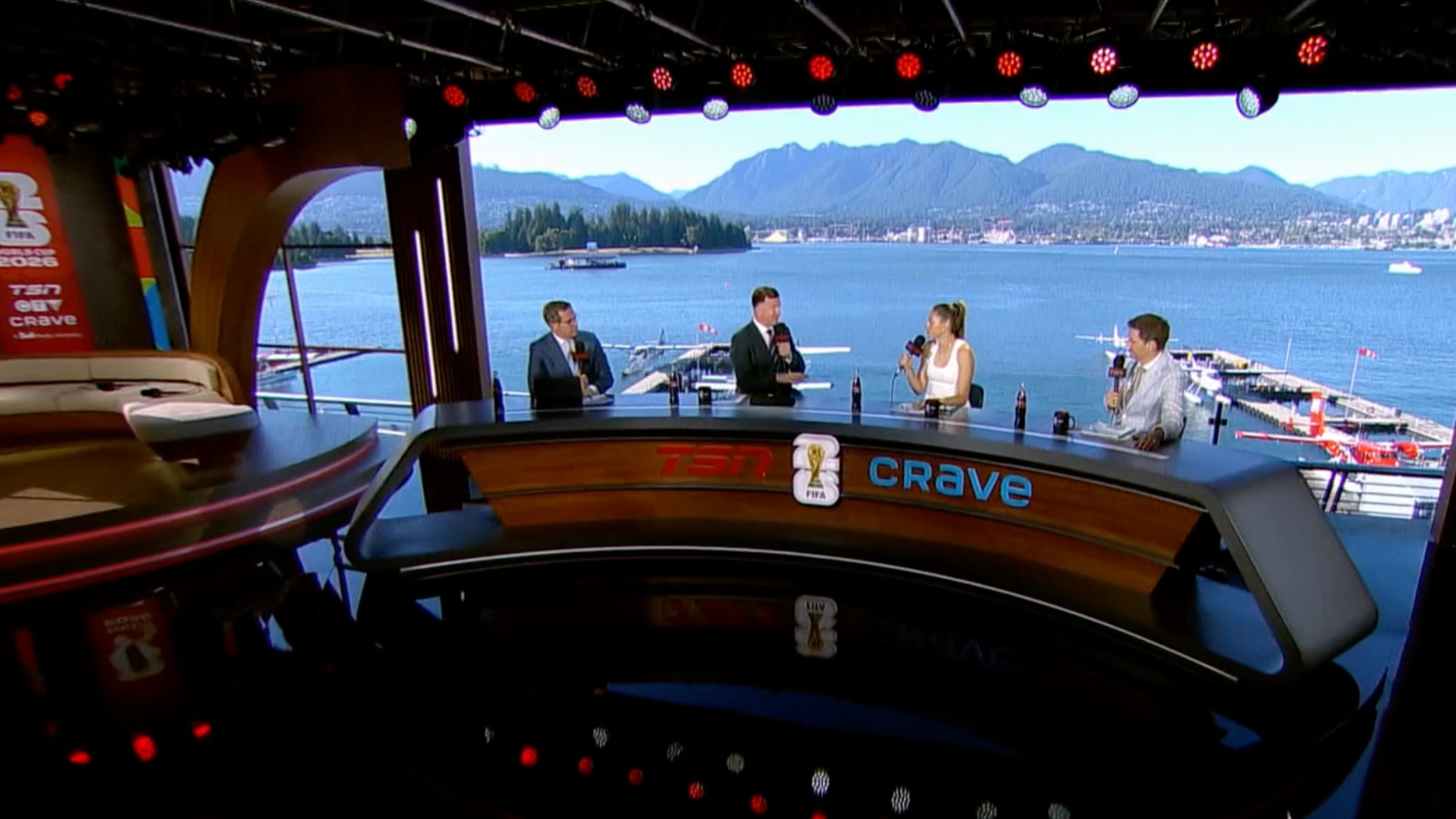
The Vancouver set was designed by Parks, whose firm Mood Design has a long history with TSN.
Bower noted the volume of revisions on this project to get the desk and view just right.
“Spike kept saying to me, nobody makes this many revisions,” Bower said. “I felt a bit bad, but we were so passionate about getting exactly what we wanted.”
The desk in particular went through significant changes before reaching its final form. Bower said the response since the set debuted has been unlike anything he has experienced in two decades of building sets at TSN.
“I’ve never had a set where people after the first day are like, oh yeah, that looks nice. It’s just endless on Twitter, people calling me. Every one of our employees, people are asking them about the set,” he said.
Project credits
- Head of Soccer, TSN: Eoin Maher
- Executive Producer, TSN: Ken Volden
- Senior Coordinating Producer, TSN: Jamie Bower
- Creative Director of Design, CTV and TSN: Stephen Gilmore
- Set Designer: Michael “Spike” Parks of Mood Design
- Staging: Shane Droucker of BC Event Management


tags
2026 FIFA World Cup, Bell Media, Crave, CTV, Jamie Bower, TSN, vancouver, vancouver convention center
categories
Heroes, Set Design, Sports Broadcasting & Production, Sports Set Design