

NBC News Now continues moving shows to Studio 3A
Weekly insights on the technology, production and business decisions shaping media and broadcast. Free to access. Independent coverage. Unsubscribe anytime.
NBC News Now has forged ahead with plans to take over the former MSNBC studio in 30 Rockefeller Plaza.
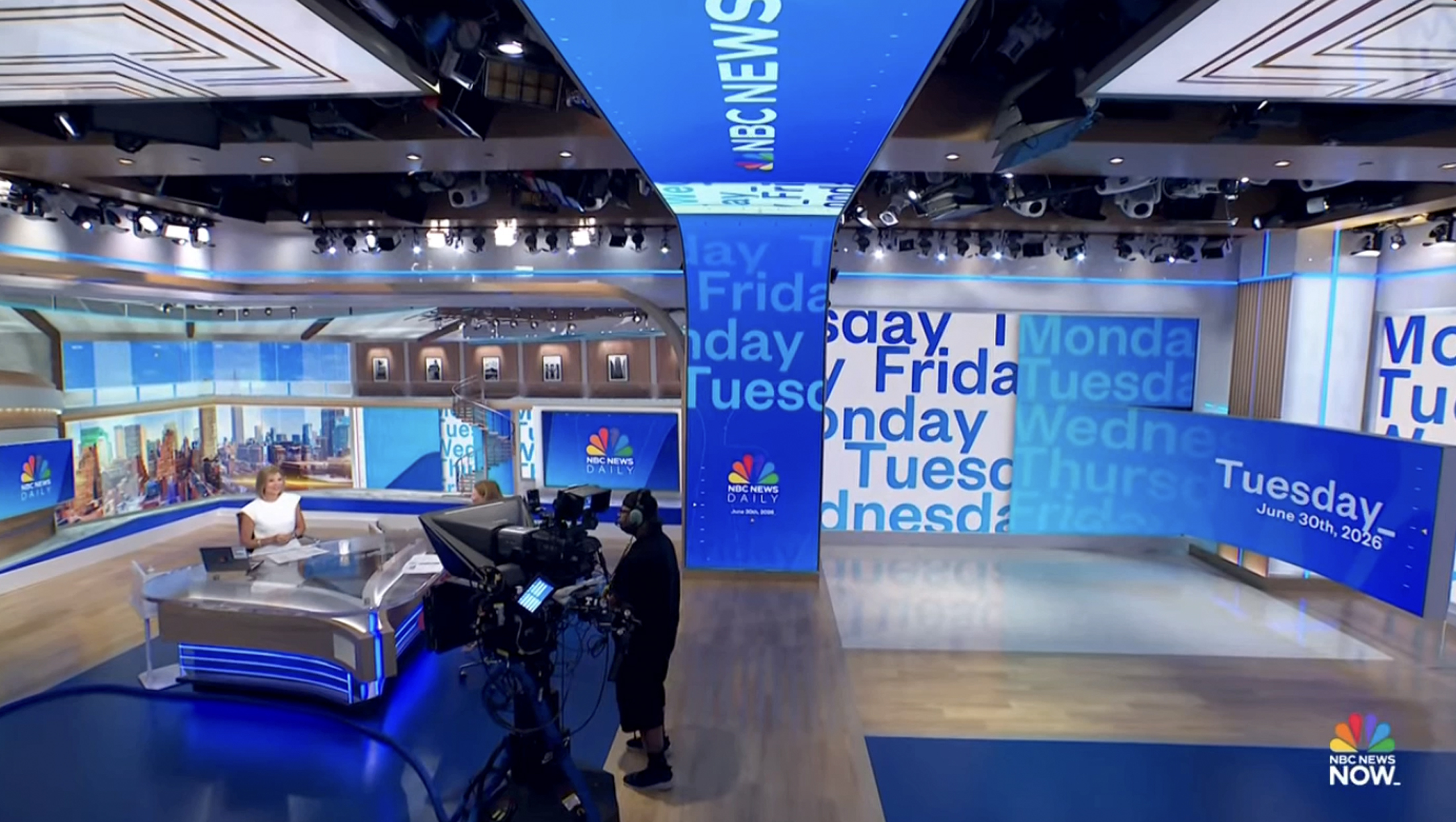
Both “Morning News Now” and all blocks of “NBC News Daily” have moved into Studio 3A in the past few weeks.
The streamer had been producing much of its New York-based programming from Studio 3AW using a set originally built for “NBC Nightly News” back in 2017 (at the time the studio was known as Studio 3C).
Studio 3A proper had been the longtime home of much of MS NOW (formerly MSNBC) programming originating from NYC.
Word that the free news streamer would move next door came earlier in 2026 and followed MS NOW’s transition to Versant’s building near Times Square back in November 2025, following Comcast’s Versant spinoff that severed ties between NBC News and MS NOW.
Studio 3A underwent some minor tweaks, including bringing in some more wood tones and updates to the practical glass-lined hallway on one side of the space.
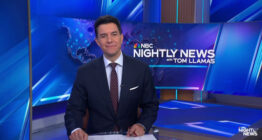
NBC’s takeover of 3A has previously included both “NBC Nightly News,” which airs on the flagship NBC network, and “Top Story with Tom Llamas” moving in.
“Morning News Now” moved into 3A June 17, 2026, followed by “NBC News Daily” June 30, 2026 (all “Daily” blocks stream on NBC News Now with select ones simulcast on the NBC network).

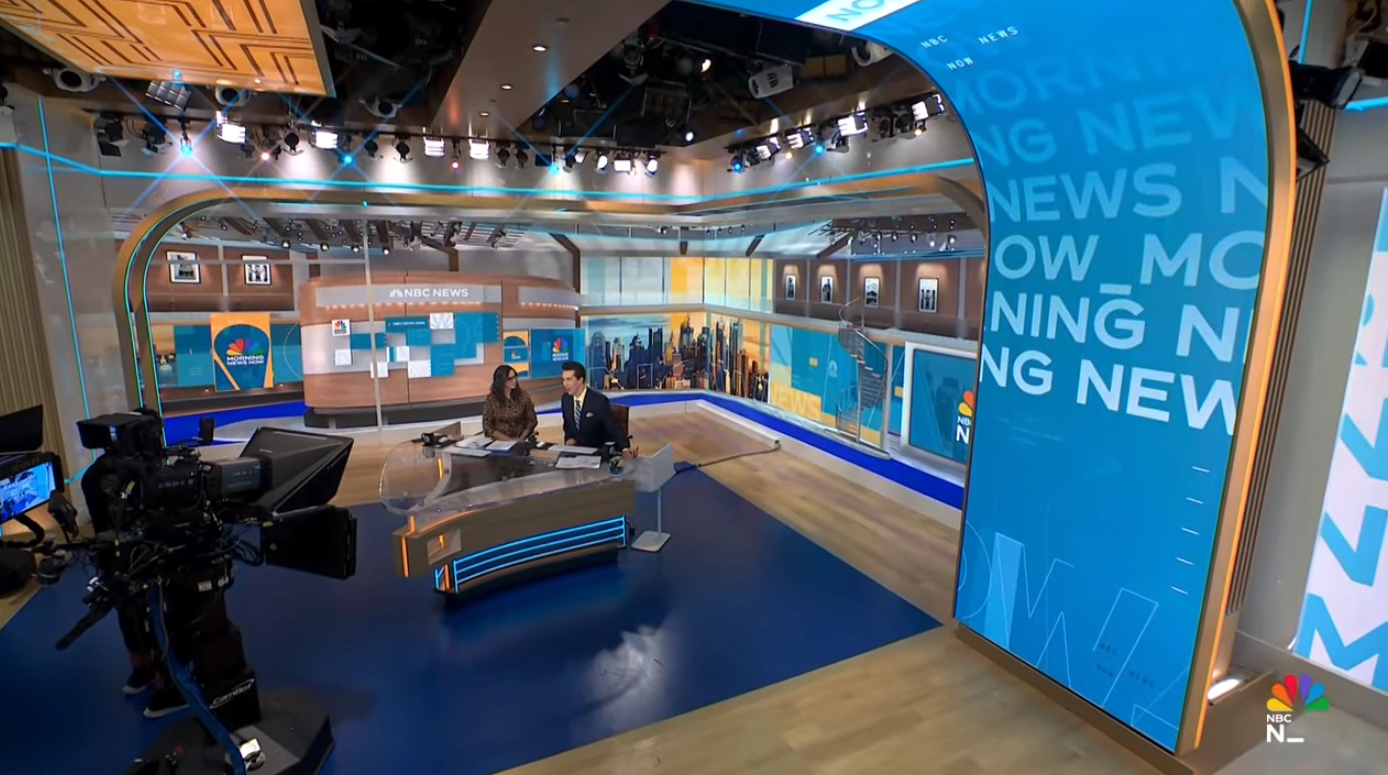
Both broadcasts use the large video wall alcove installed at a 90-degree angle in one corner of the space as their primary backgrounds, with virtual set extensions fed to the panels.
Both “Morning” and “Daily” share the same base VSE, but with the option to swap out parts of the look in favor of their own respective looks.
The VSE features, running from camera left to right, a little-seen simulated alcove next to a curved wood wall fronted with a virtual array of LED panels arranged in a checkered pattern and culminating in a larger wall-mounted panel.
Near the center of the VSE is a curved open space that can be filled with a variety of looks.
To the right of this are additional panels near a simulated spiral staircase leading to the wraparound virtual background above, which simulates a wood-walled mezzanine decorated with architectural photography from around 30 Rock. In the center, a low glass-paneled railing fronts a series of vertical panels that often tie into the camera center look on the floor below.
The VSE ends far camera right with a wall-mounted large video panel next to the spiral stairs.
Much of the VSE features what appear to be curved walls and surfaces, ranging from the bulging wood structure camera left to the camera center background (interestingly, this part of the graphic hits right near the perpendicular corner of the video wall installation).
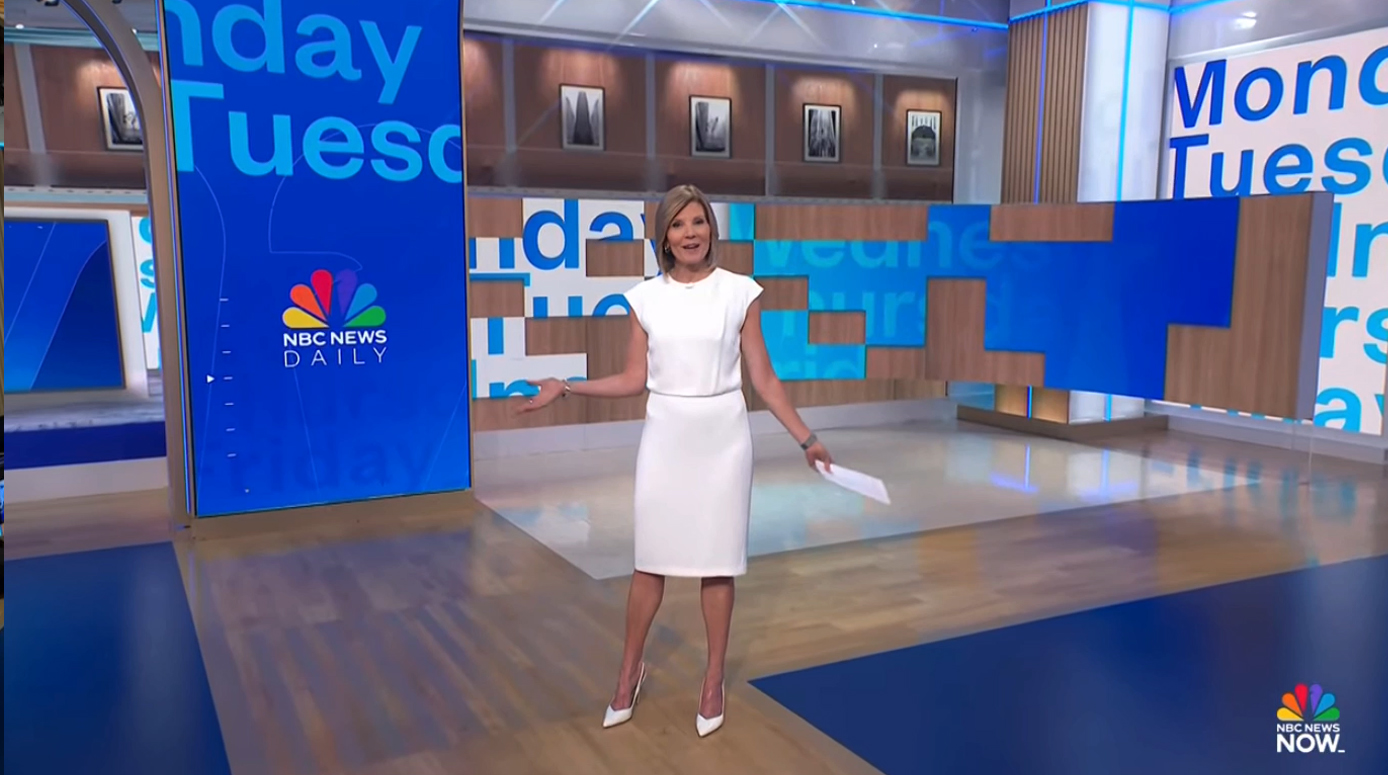
Additional VSE elements are available for the curved LED band on the opposite end of the studio, including another take on the wood-backed checkerboard pattern found over on the other graphic. Notably, this pattern ties into a practical wall built with blocks of standalone LED panels backed by backlit panels in 3AW.
This array, which is sometimes referred to as a jigsaw wall, eventually merges into the tall video tower, so in some ways the VSE NBC News Now is using replicates that look when the curved wall appears next to the arched LED band that runs down the center of 3A.


This area also includes the flexibility to use topical graphics without the virtual set elements, with the additional option for a sit-down-style interview area that echoes the alcove-like space used in a similar way in the old studio.
Many of the graphics used near the curve completely take over the various LED panels in this area with topical or themed looks that mirror looks that “Daily” frequently used previously, whereas the other area tends to rely more heavily on the VSE.
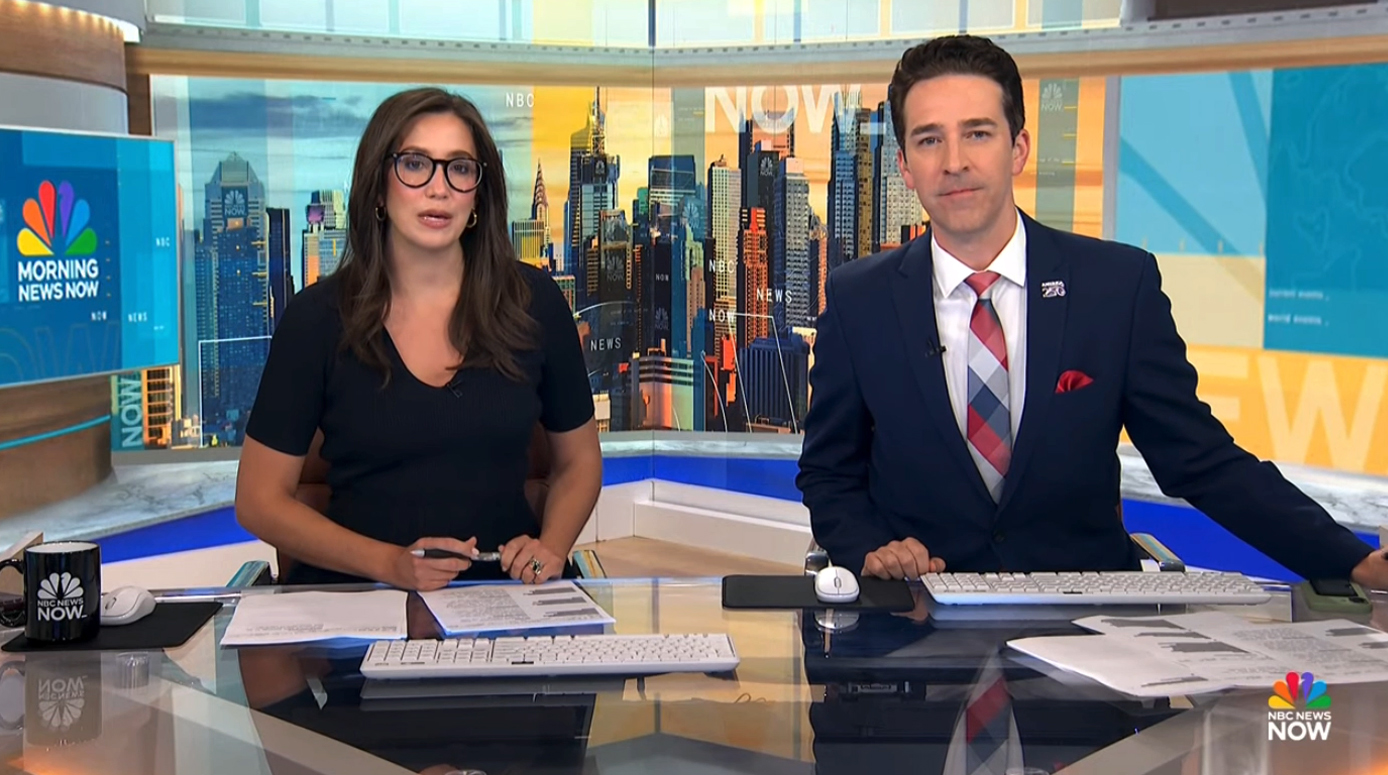
Returning to the other VSE, that center array can be filled with a variety of looks, including stylized cityscape backgrounds similar to the ones both shows used in 3AW.
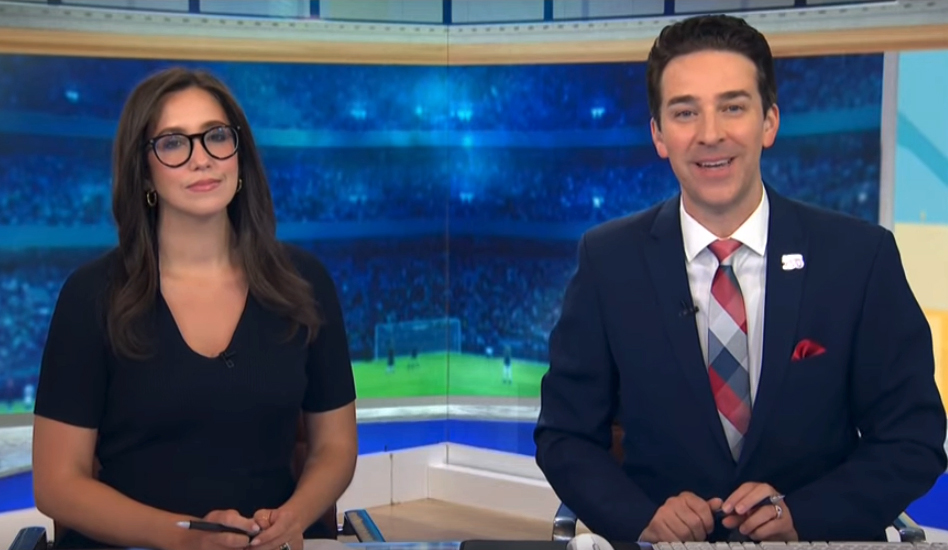
There is also the option to add more topical looks, such as ones used for World Cup coverage.
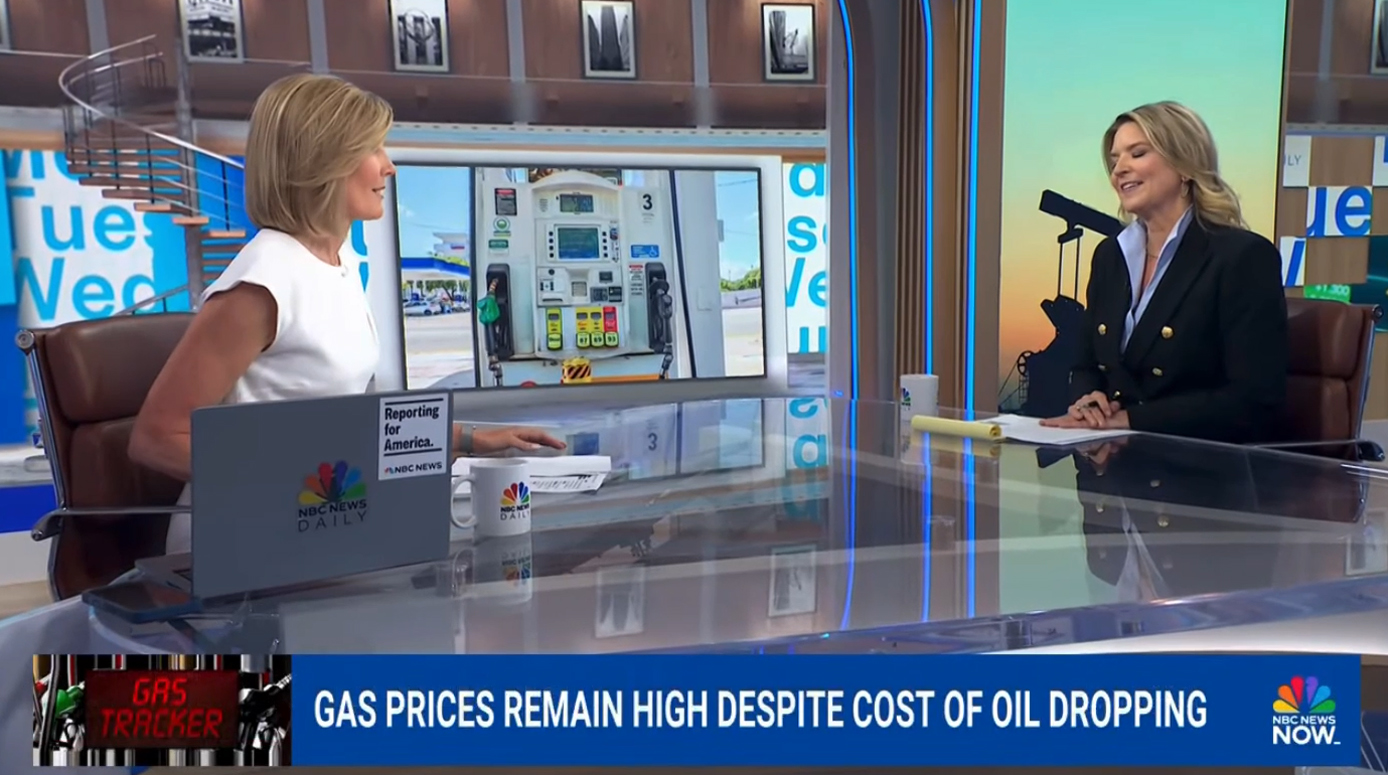
Meanwhile, the larger simulated wall-mounted panel on the far right of the main VSE is often used to display topical imagery, headlines or segment branding when there is an in-studio guest.
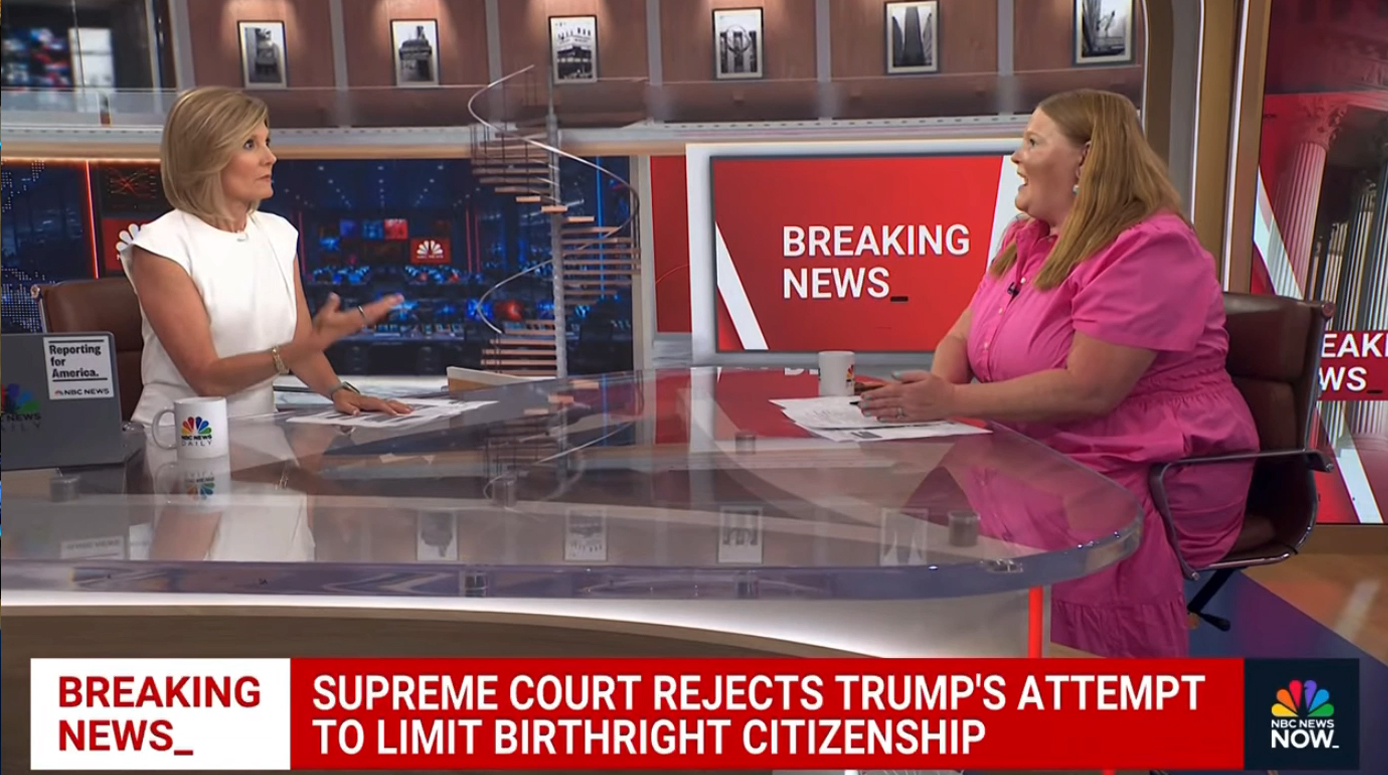
There is also a distinct virtual set extension look for breaking news, featuring a dark control room background accented with deep blues and red accents. A dotted world map overlay covers some portions of the view.
A distinct element for breaking news mode is the use of angled elements, seemingly inspired by the outline of a peacock feather from the network’s iconic logo. Most of the structural elements from the normal VSE design remain, with the breaking news look swapped in.
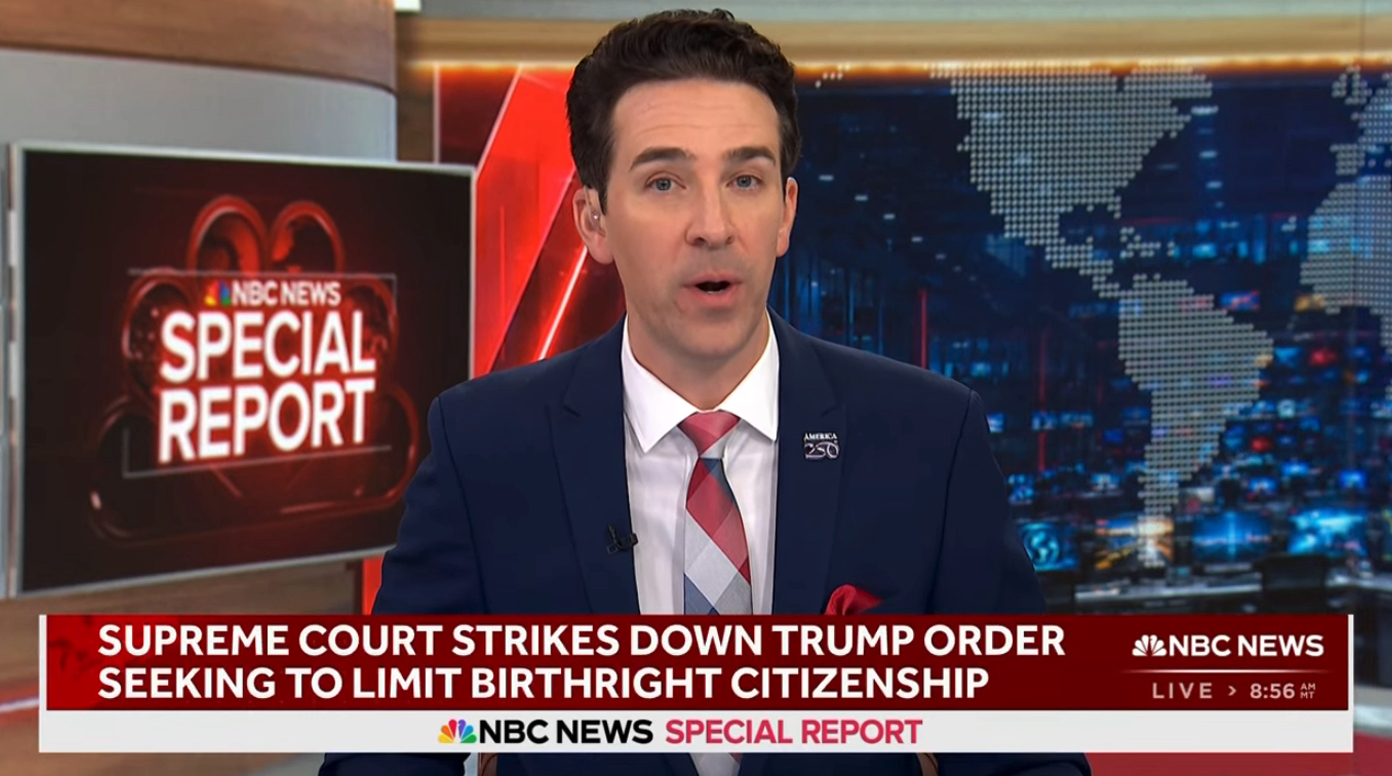
So far, NBC has been using this look for breaking news coverage on both “Daily” and “Morning,” forgoing more show-specific designs in these cases.
The look is also used in instances when NBC News Now talent helm coverage branded under the broader network special report banner as well as in-show segments covering developing stories.

One key element of the VSEs is that the blocking needs to work for both solo and dual anchor setups to accommodate instances when one is out.
Staying true to the notion that the graphics are a physical set, there are no significant changes to the virtual “structure” of the VSE in either case, even though that would be relatively simple to accomplish.
In the case of a single anchor, the primary one-shot is framed to use more of the left side of the graphic’s center. This includes the angled wall-mounted video screen mounted on the front of the curved wood wall, which can be used for either general branding or topical OTS-style element.
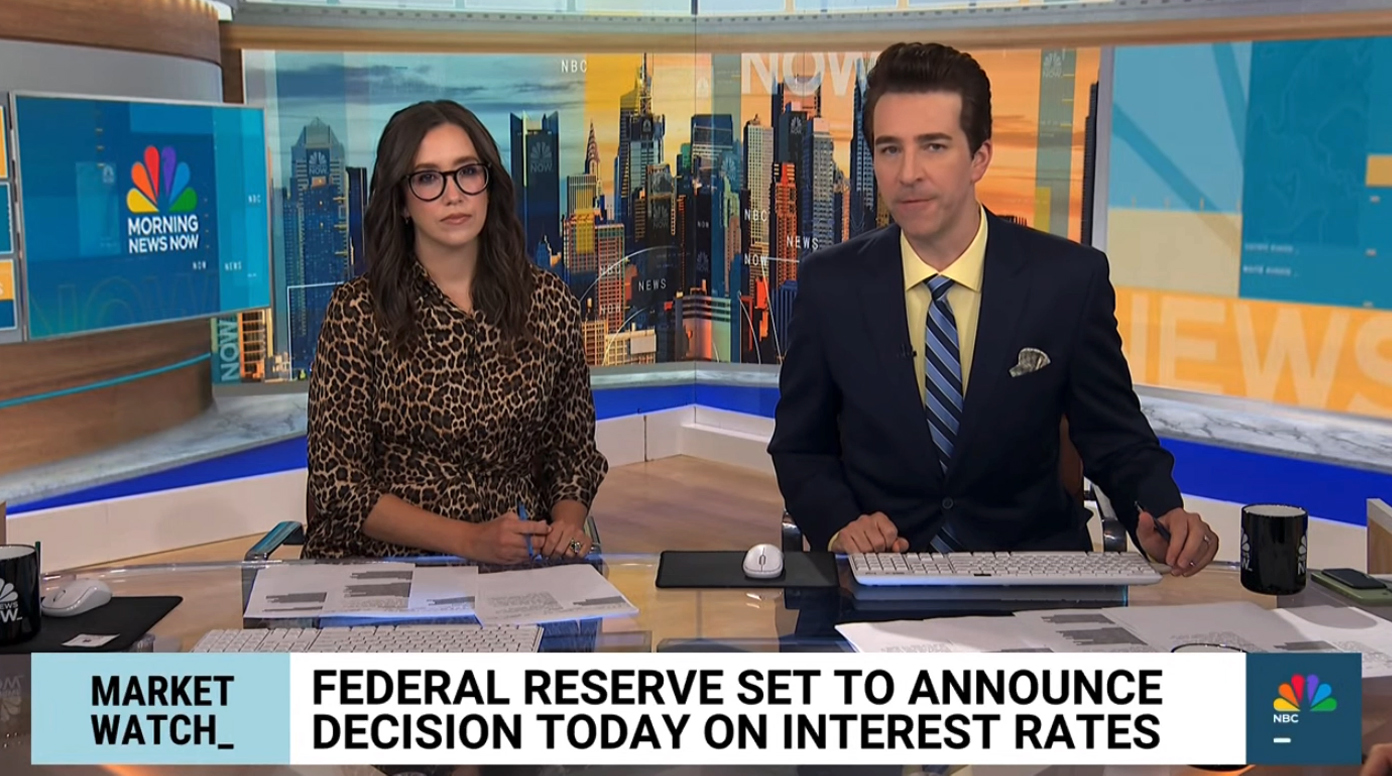
When two anchors are on set, the view becomes wider and shifts up and to the right to get both anchors in frame.
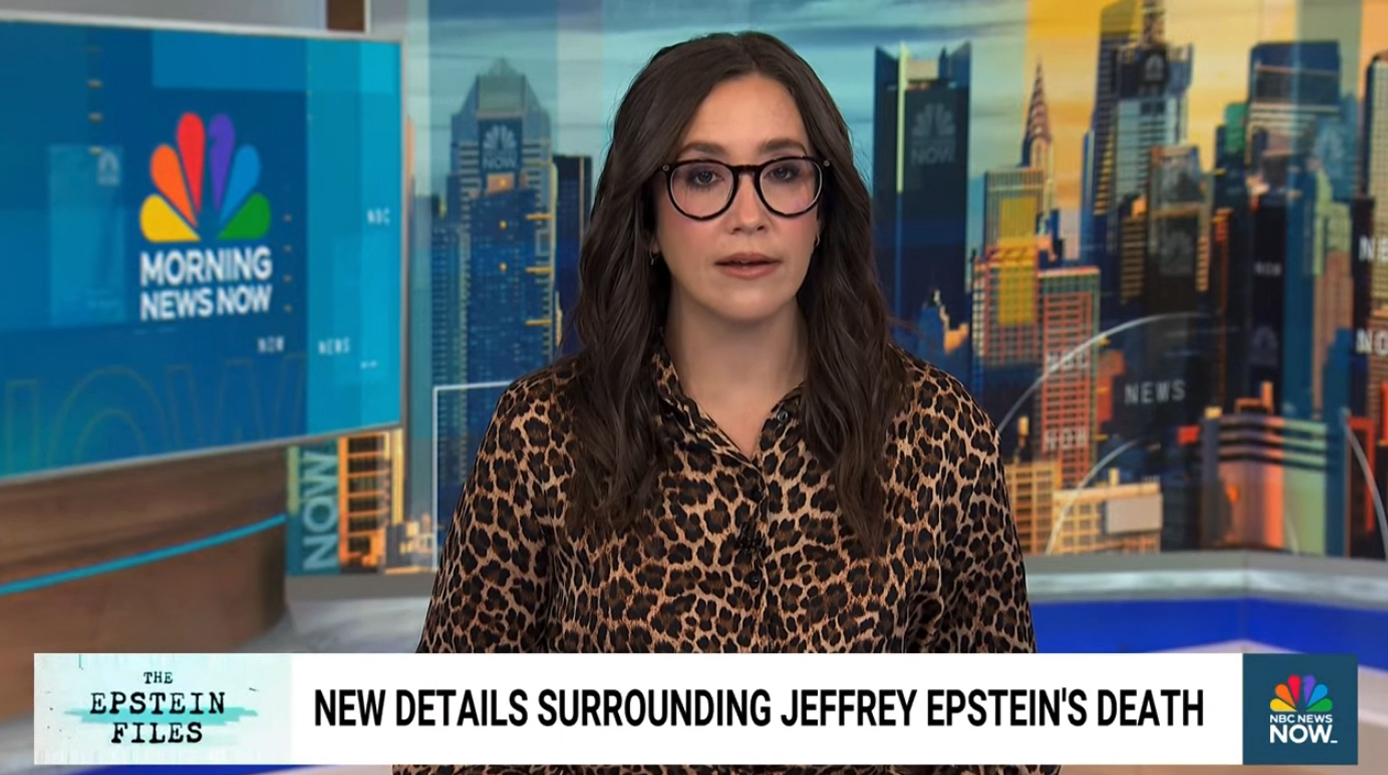
In cases where a one-shot on the camera left anchor is needed, the framing becomes similar to that of when only one person is at the desk.

The camera left shot, meanwhile, captures part of the spiral staircase and background behind it.

tags
30 Rockefeller Plaza, Morning News Now, NBC, NBC News, NBC News Daily, NBC News Now, OTT, streaming, Studio 3A, Studio 3AW, virtual set extensions
categories
Broadcast Industry News, Heroes, Networks, Set Design, Streaming