

NBCUniversal builds Sail4th 250 coverage around nearly 50 cameras and no rehearsal
Weekly insights on the technology, production and business decisions shaping media and broadcast. Free to access. Independent coverage. Unsubscribe anytime.
NBCUniversal is preparing to cover Sail4th 250 with nearly 50 cameras spread across land, water and air.
Yet the defining challenge may not be the number of cameras. It is that the company must create the television production, coordinate the participating divisions and cover an event stretching across miles of New York Harbor without a conventional rehearsal or host broadcast feed.
The six-hour “America’s 250” special will air July 4 from 7 a.m. to 1 p.m. Eastern across NBC, Telemundo, NBC News Now, Peacock and other NBCUniversal platforms. Its centerpiece will be the International Parade of Sail, accompanied by a naval review and an aerial procession led by the U.S. Navy Blue Angels.
NBCUniversal News Group will anchor the production from Governors Island, with additional camera and correspondent positions extending from Staten Island to areas near the George Washington Bridge.
Behind that public-facing spectacle is an unusually broad internal production partnership.
NBCUniversal Local originated the relationship with Sail4th 250, while teams from NBC News, “Today,” Telemundo, NBC Sports, the company’s owned stations and regional sports networks have contributed personnel, facilities and production expertise.
“This was an opportunity that came through the NBCU Local division, but really it was an opportunity to be shared by the company,” said Jon Slobotkin, senior vice president of live events at NBC Sports Regional Networks.
NBCUniversal Local Chairman Valari Staab and Maggie Baxter, vice president of programming for NBCUniversal Local Boston, helped establish the partnership. Baxter has continued as a project lead for Sail4th 250 and NBCUniversal Local’s broader Our 250 initiative.

As the proposed coverage expanded, Slobotkin began bringing in production leaders from elsewhere in the company. That included Mike Sheehan, Olympics coordinating producer, whose experience includes six Olympic opening ceremonies, and Matthew Carluccio, executive producer of “Today” weekends and special events.
“It needed a village to make this happen, and the village has nicely come together,” said Slobotkin.
The result is less a handoff between departments than a production assembled from their combined capabilities.
“I’ve been here for a long time, and I can’t remember anything remotely like that,” Carluccio said. “Everybody has sort of leaned into their strengths. It didn’t take a lot of, ‘This is my lane, this is your lane.’”
Building the host production
Large international events often provide broadcasters with a central host feed. Rights holders then add their own cameras, commentators and reporting positions around that underlying production.
“There’s no playbook here,” Carluccio said. “This is a one-time deal.”
Sail4th 250 offers no such foundation.
NBCUniversal is responsible for creating the primary television coverage while also producing its English- and Spanish-language presentations. In that sense, the company is taking on responsibilities similar to both a host broadcaster and a network rights holder.
Carluccio contrasted the project with productions such as a papal conclave or a British coronation. Those events may require extensive unilateral coverage, but broadcasters can typically begin with feeds supplied by Vatican Media, a royal production partner or another central organization.
The distinction substantially increases the production footprint.
NBCUniversal is not simply deciding how to personalize an existing feed. Its teams must determine where cameras will be placed, how miles of river will be divided into coverage zones and which visual resources will be available as ships, aircraft and crowds move through the city.
Sheehan compared the undertaking to an Olympic opening ceremony, particularly the 2024 Paris ceremony staged along the Seine. NBC supplemented the Olympic Broadcasting Services production in Paris with approximately 25 cameras. For Sail4th 250, the network’s own deployment is nearly twice that size.

“In Paris, I had 25 cameras for that, and that was just supplementing OBS,” Sheehan said. “Here, we doubled it.”
The Sail4th production will use nine hard cameras, 15 handheld cameras, six drones, a helicopter, a blimp and cameras aboard several vessels. A jib-equipped boat will operate on the water, while existing beauty cameras from WNBC and Telemundo 47 will also become part of the production.
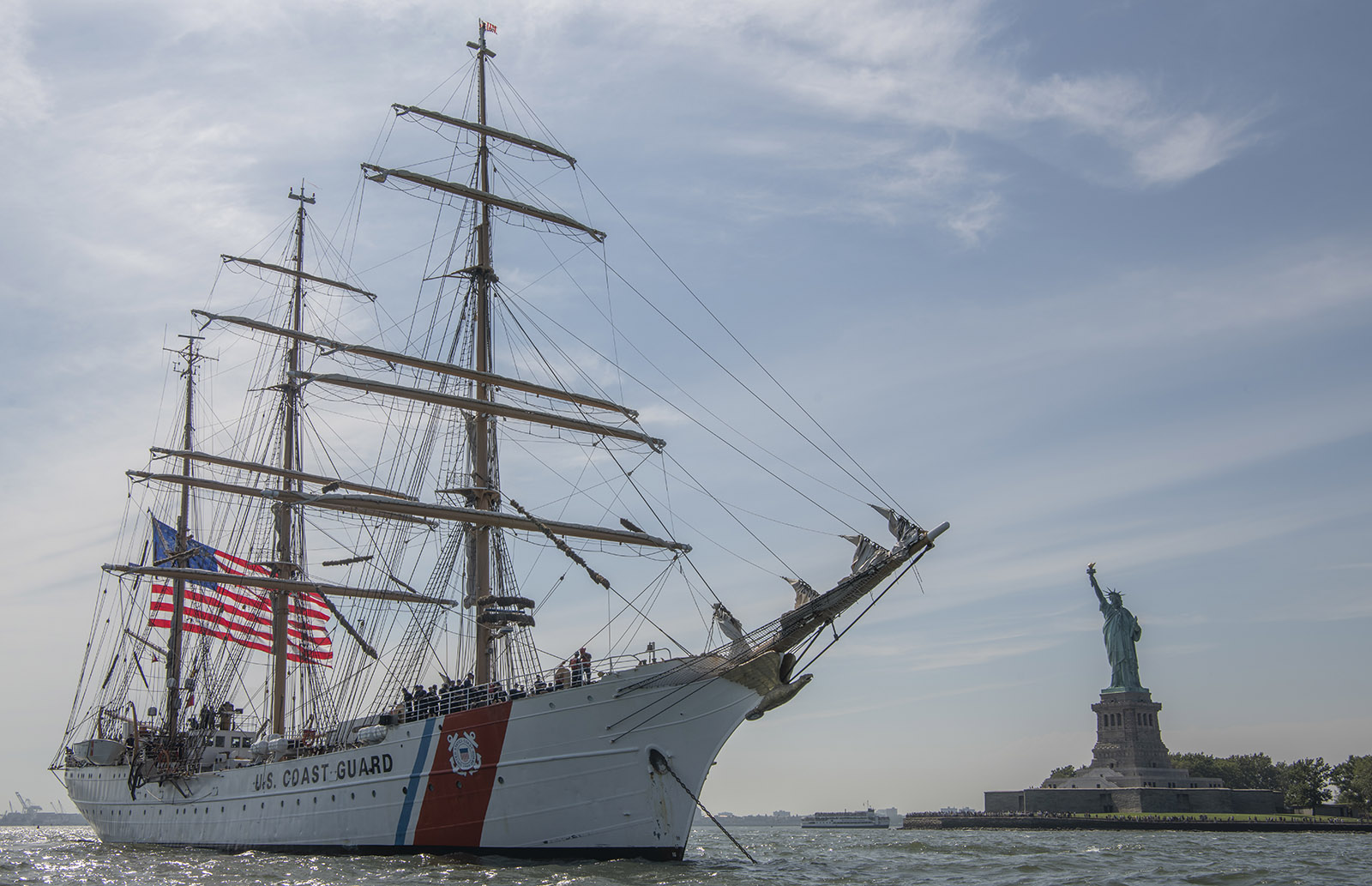
A Technocrane positioned at Edge, the observation deck at Hudson Yards, will provide an elevated view of the river and aerial review. Additional cameras will be placed aboard participating ships, including the Coast Guard cutter Eagle and Queen Mary 2.
The challenge is not capturing a single stadium or performance space. The route stretches from the Verrazzano-Narrows Bridge through New York Harbor and north along the Hudson River toward the George Washington Bridge.
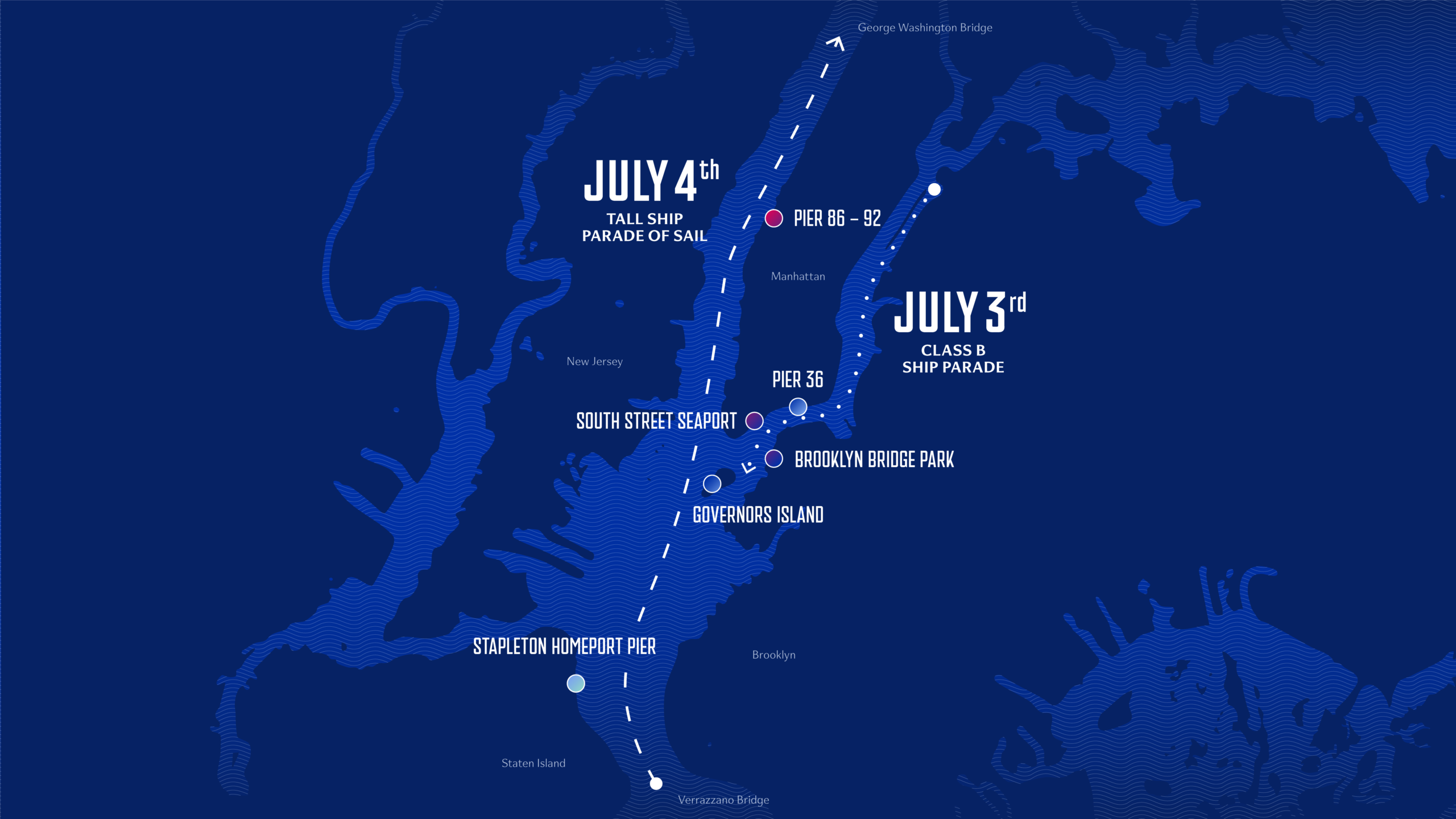
“We’re covering miles and miles of waterway here,” Sheehan said. “We picked a select area that we’re going to concentrate on, but we’re going to do our best to still tell the stories of some things that are happening farther up the river.”
That required the production team to accept that no camera plan could comprehensively cover every vessel and viewing area. Instead, it has built layers of coverage that can be combined as conditions change.
One control room, many points of origin
NBCUniversal has established a technical compound on Governors Island, where the primary anchor set and a spectator area will be located. The production itself will be directed from PCR 32 at 30 Rockefeller Plaza.
Signals from camera positions, ships, aircraft and field teams will return to 30 Rock, allowing the company to use an established control-room environment while distributing acquisition resources across the harbor.
The field plan includes approximately 10 primary talent positions. Correspondents will report from Governors Island, Staten Island, Battery Park, the Intrepid Museum area and Riverside State Park. Other contributors will be stationed aboard tall ships, naval vessels and private watercraft.
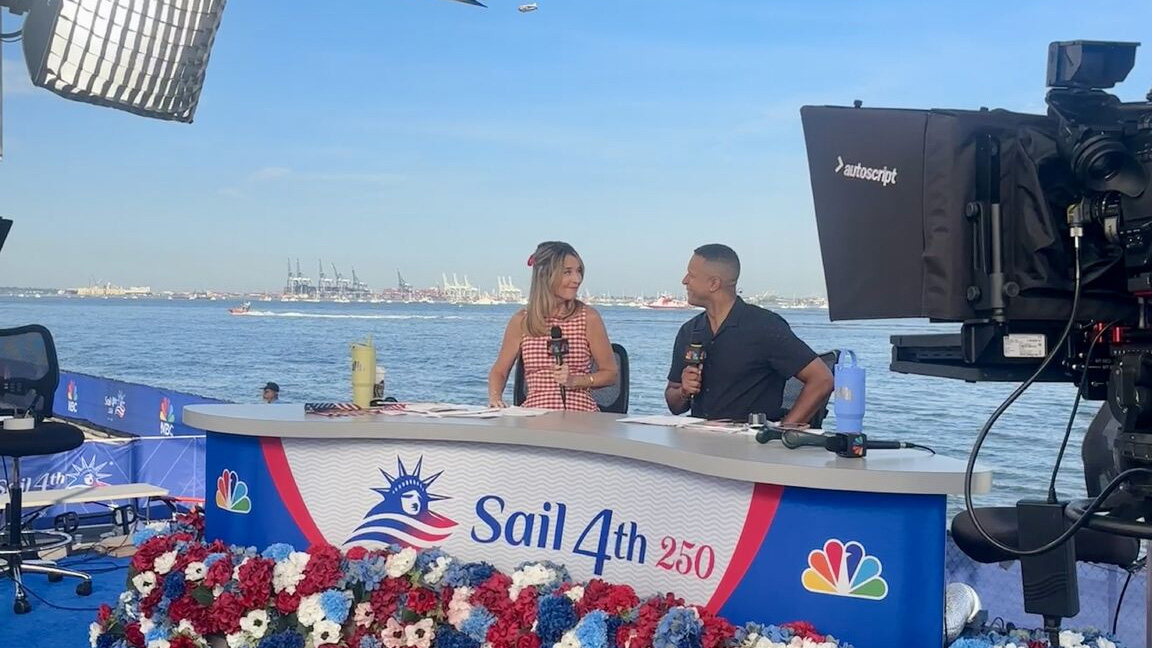
Al Roker will report from the Eagle, while Stephanie Gosk will be aboard Italy’s Amerigo Vespucci. Dylan Dreyer will report from a recreational vessel among the private boats gathered in the harbor.
The range of positions is intended to provide more than geographic coverage. Producers want the broadcast to move between the ships, aircraft, military review and spectators without treating the event as a six-hour sequence of similar maritime images.
“The stars in this show are the ships, the airplanes, the pilots, the captains and also the crowd,” Sheehan said. “We want to make sure we do a good job not only covering the great visuals, but telling the human story as well.”
The first portion of the broadcast will retain elements familiar to the “Today” audience, combining regular segments with previews and reporting tied to Sail4th 250. Around 10 a.m. Eastern, the format will transition more fully into special-event coverage as the parade and aerial review develop.
Carluccio said the pacing will depend on moving among live spectacle, ship profiles, historical context and spectator reactions.
“It’s a mix of see it, say it and experience it,” he said.
Tall ship specialist Don Wildman and U.S. Navy personnel will provide context from the anchor position. Field producers and correspondents will add stories from individual ships and viewing locations throughout the route.
That editorial structure also gives the control room alternatives when a planned shot is unavailable. A ship may move out of position. A tugboat may block a camera. Airspace restrictions may change. Weather can alter visibility.
“People at home only know what you show them,” Sheehan said. “They don’t know what you intended to do.”
Producing without a rehearsal
Most complex live productions use rehearsals to test camera placement, communications, timing and editorial sequencing. Sail4th 250 cannot be replicated before the broadcast.
The tall ships will not be assembled in formation until the event. The aircraft will arrive for the aerial review. Naval and commercial traffic will continue to operate under security and maritime restrictions. Millions of spectators and large numbers of private vessels are also expected around the route.
“We’ll do all of this without a single rehearsal,” Sheehan said. “There’s no way any of this can be rehearsed because the ships aren’t even here yet.”
The production team has used mapping, nautical charts, location surveys and planning data to model what the event may look like. Tim Canary, senior vice president of engineering at NBC Sports and an experienced sailor, has helped translate nautical information into production planning.
Even so, the first full view of the ships, crowds and aircraft in their final positions will arrive as the production is happening.
The lack of rehearsal has also increased the importance of regulatory coordination.
Camera plans have required discussions with the New York Police Department, Federal Aviation Administration, Coast Guard, FBI, Secret Service and White House communications personnel.
Final permission for some locations, including the Statue of Liberty and Ellis Island, arrived only shortly before the broadcast. Drone routes and aerial positions remained subject to changing security and operational conditions.
“Real life at some point may actually introduce itself into this thing,” Sheehan said.
The production therefore depends on redundancy in both technical resources and editorial planning. No single camera or location is expected to carry the show. Instead, the control room will have multiple ways to follow the procession and shift attention when access, movement or weather makes the preferred shot unavailable.
A visual identity across the coverage
NBCUniversal also commissioned a dedicated graphics package from ArtHouse for the special.
The design needed to connect the nautical character of the event with the broader commemoration of the country’s 250th anniversary. Rather than applying the regular appearance of one NBCUniversal program, the production required an identity that could operate across “Today,” NBC News, Telemundo, local stations and special-event coverage.
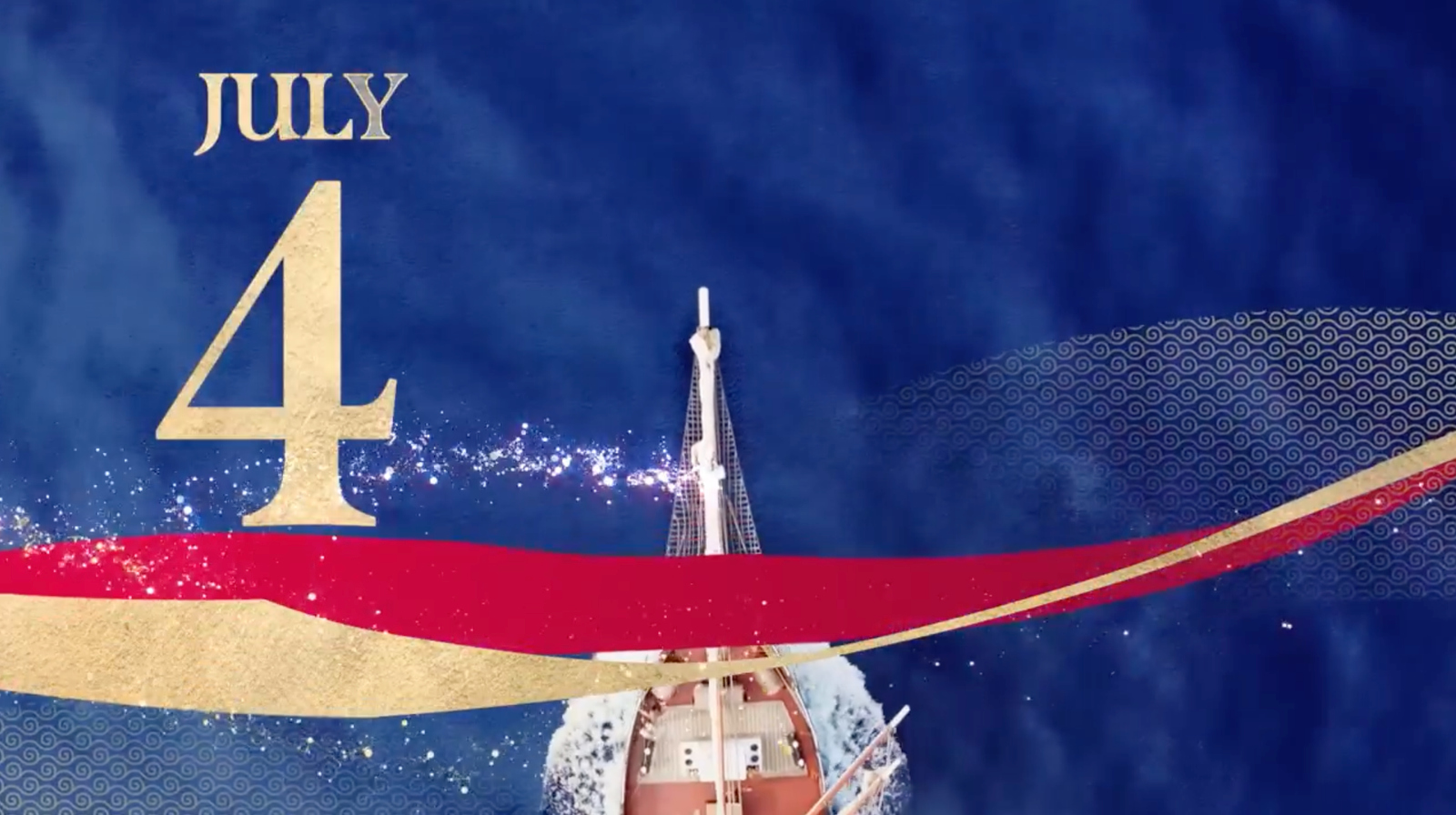
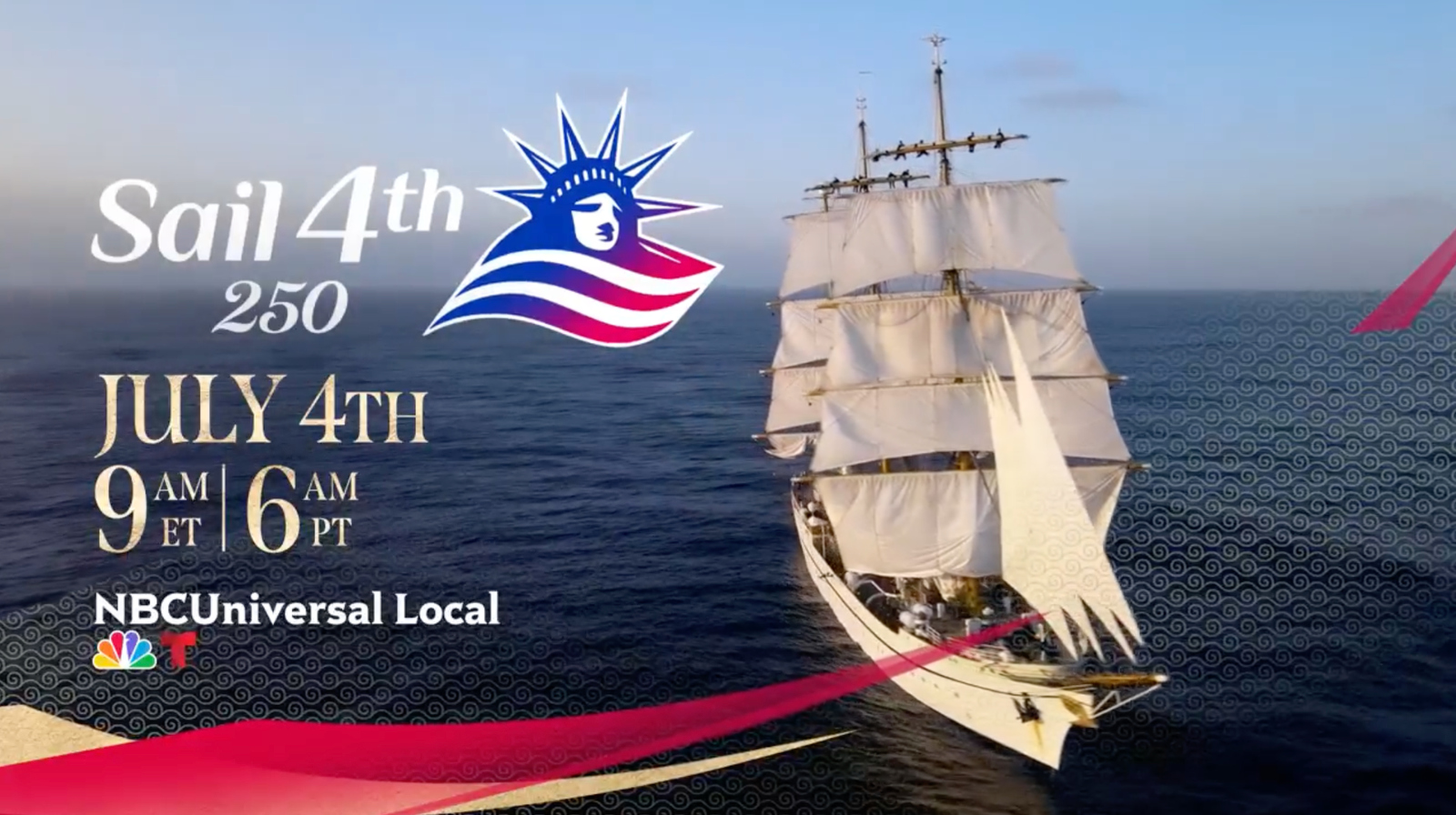
“They took the sensibilities of what Sail4th was trying to do with this event and came up with a package that represents nautical and patriotic at the same time,” Slobotkin said.
The creative work is another example of how the project has crossed normal organizational boundaries. It is not solely a “Today” remote, an NBC News special, a local-station production or an NBC Sports event. Each contributes part of the operating model.
NBC Sports brings experience in distributed event coverage and international productions. NBC News and “Today” contribute editorial structure, correspondents and experience with major ceremonial events. Local stations contribute cameras, facilities, regional knowledge and bilingual production resources. Telemundo creates a parallel Spanish-language presentation rather than a translated afterthought.
The production is built around shared cameras, transmission paths and control-room resources, but the finished coverage still has to serve several networks, platforms and languages. That adds another layer of coordination to an event already spread across miles of water and airspace.
There is little room to refine the approach once the broadcast begins. Camera positions may be blocked, aircraft access may change and ships may not move exactly as planned.
For the production team, the task is to turn those variables into a coherent six-hour broadcast of an event that cannot be restaged.
“This isn’t going to happen again next week,” Slobotkin said. “We want to make sure we get this right, not just for July 4, but for future generations.”
Photos courtesy of Sail4th and U.S. Air Force.

tags
Al Roker, America 250, Arthouse, Craig Melvin, Dylan Dreyer, Jon Slobotkin, live production, Maggie Baxter, Matt Carluccio, Mike Sheehan, NBC, NBC Arthouse, NBC Sports Regional Networks, NBCUniversal, NBCUniversal Local, NBCUniversal News Group, new york, New York City, Savannah Guthrie, Stephanie Gosk, valari staab
categories
Heroes, Networks, Programming, Sports Broadcasting & Production