

Fox Sports redesigns NASCAR graphics with bold type, speed
Weekly insights on the technology, production and business decisions shaping media and broadcast. Free to access. Independent coverage. Unsubscribe anytime.
Fox Sports debuted a redesigned on-air graphics package for its NASCAR coverage at the start of the 2026 season, with changes that touch everything from the scoring pylon to lower thirds.
The new look, developed with design and animation company Big Star, centers on a deliberate shift toward bolder typography — a visual approach the network said reflects the sport itself.
“We want to be super bold and intentional with typography. It’s kind of a brandable quality in our insert packages,” said Gary Hartley, executive vice president and creative director at Fox Sports. “Unapologetically loud, just like NASCAR.”
Big Star developed the core visual concept and animation. Fox Sports’ internal team then extended that foundation across the full insert system, along with specialized elements for additional series and pre-race programming, including “NASCAR RaceDay.”
Much of the effort behind the new package centers on the scoring pylon, the on-screen display that lists driver positions during a race. Hartley described it as among the most difficult graphics challenges in sports broadcasting.
“I personally think a racing pylon is the hardest thing to do in sports,” he said. “Because of all the data integration, and also trying to marry that integration with some kind of aesthetic that makes sense.”
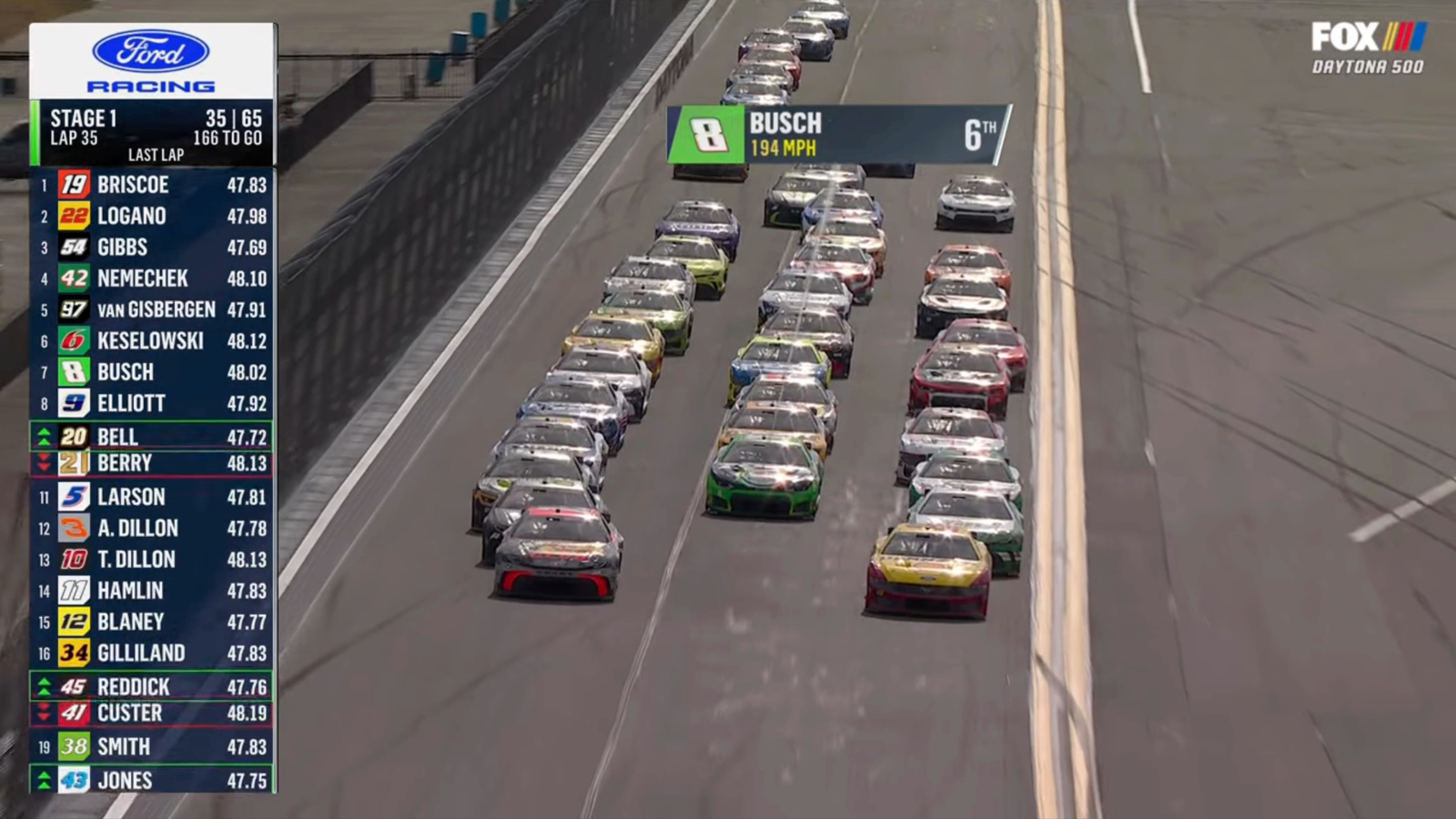
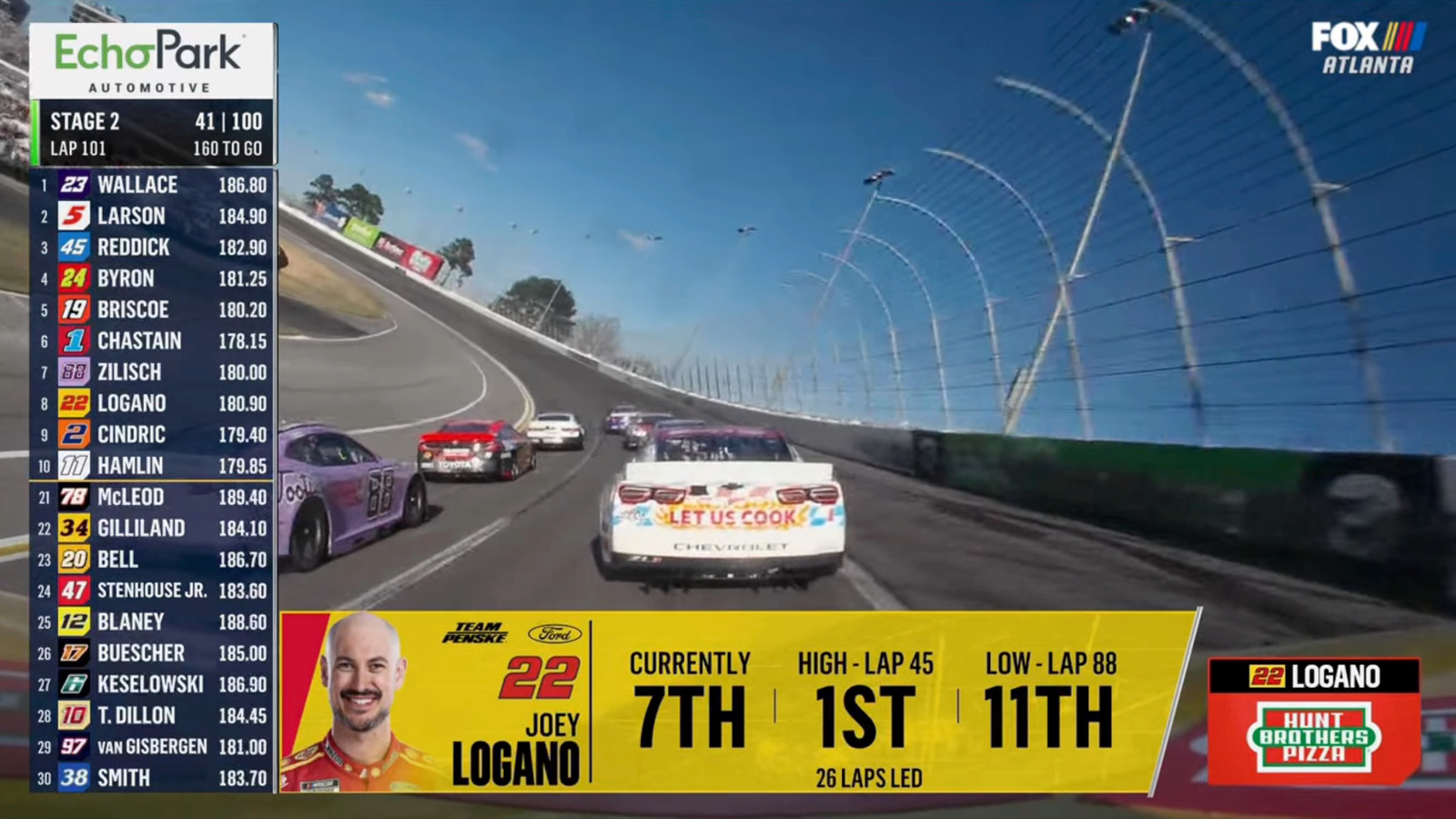
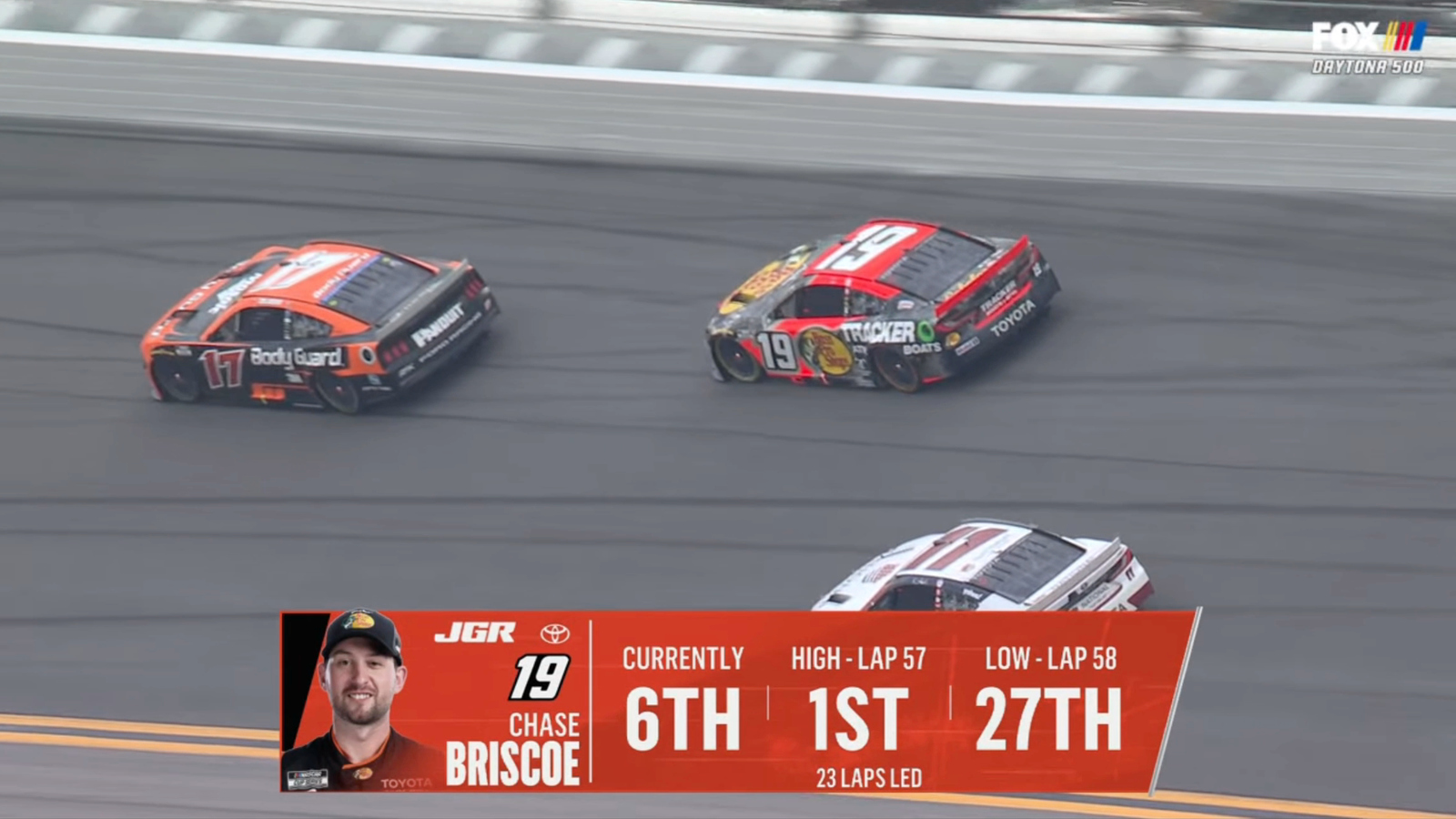
A core design goal was finding ways to draw attention to individual drivers at different moments during a broadcast, an approach Fox Sports refined during its debut season covering IndyCar.
Fox launched its NASCAR coverage in 2001 with a scrolling ticker format before adopting the pylon in 2018. Hartley noted the structure continues to prove effective because it can accommodate more drivers on screen at once while adding additional layers of data over time.
“In racing, a pylon makes the most sense,” Hartley said. “You can get a lot of drivers on. You can kind of denote what’s happening on the track quickly.”
“The amount of information that can be delivered in that format, we’ve found, is much easier for a viewer to digest than reading across multiple lines,” said Zac Fields, senior vice president of graphic technology and innovation at Fox Sports.
Speed and atmosphere at the forefront
The design is separated into two distinct layers. Inserts, like the scoring pylon, lower thirds and data displays, stay minimal, leaning on bold typography and team colors to convey information quickly. The bumpers, wipes and rejoins carry the visual weight of the sport itself.
“How are you reflecting what the sport is? That’s the speed, the power, the danger, all that kind of stuff,” Hartley said.
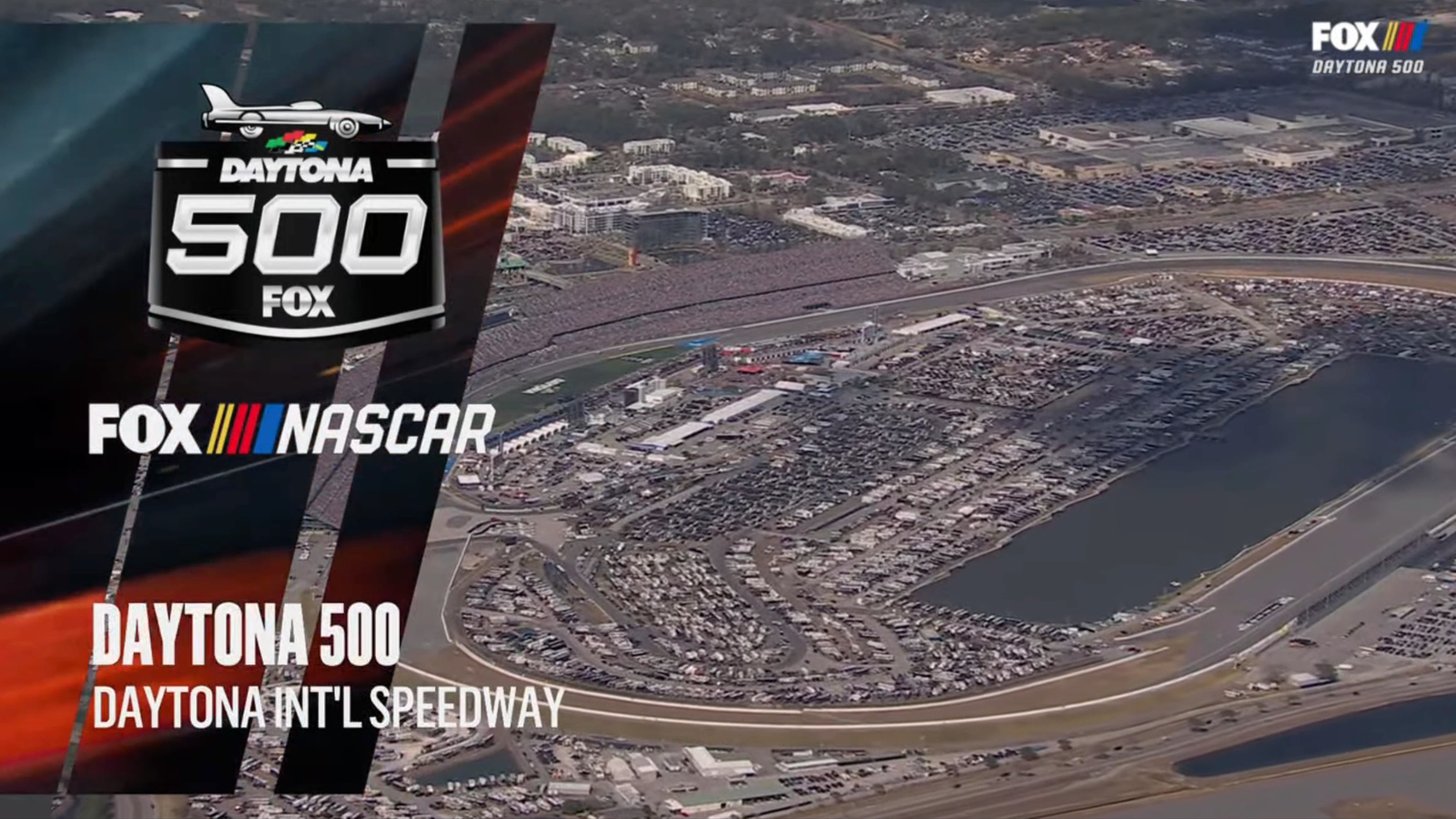
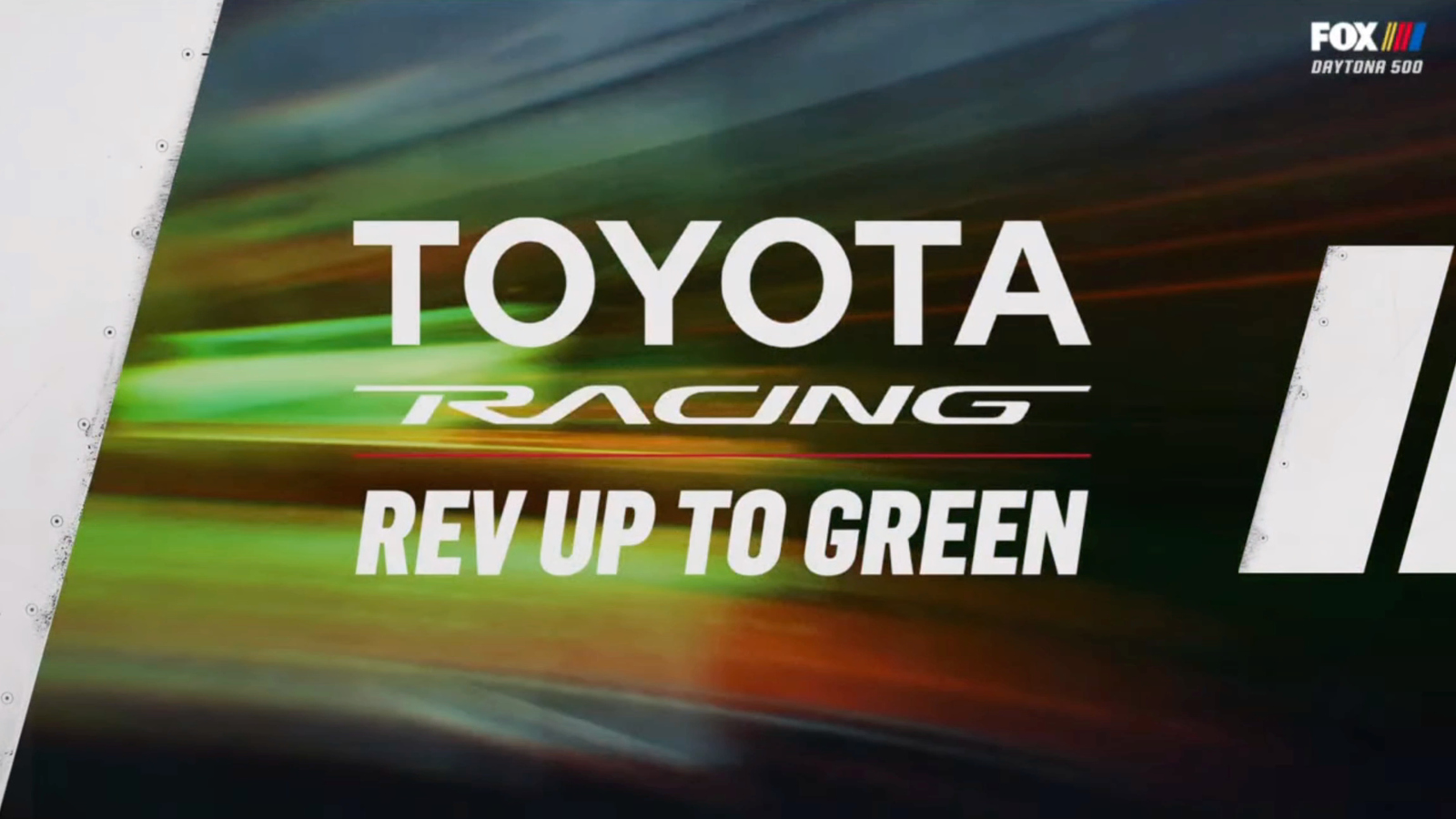
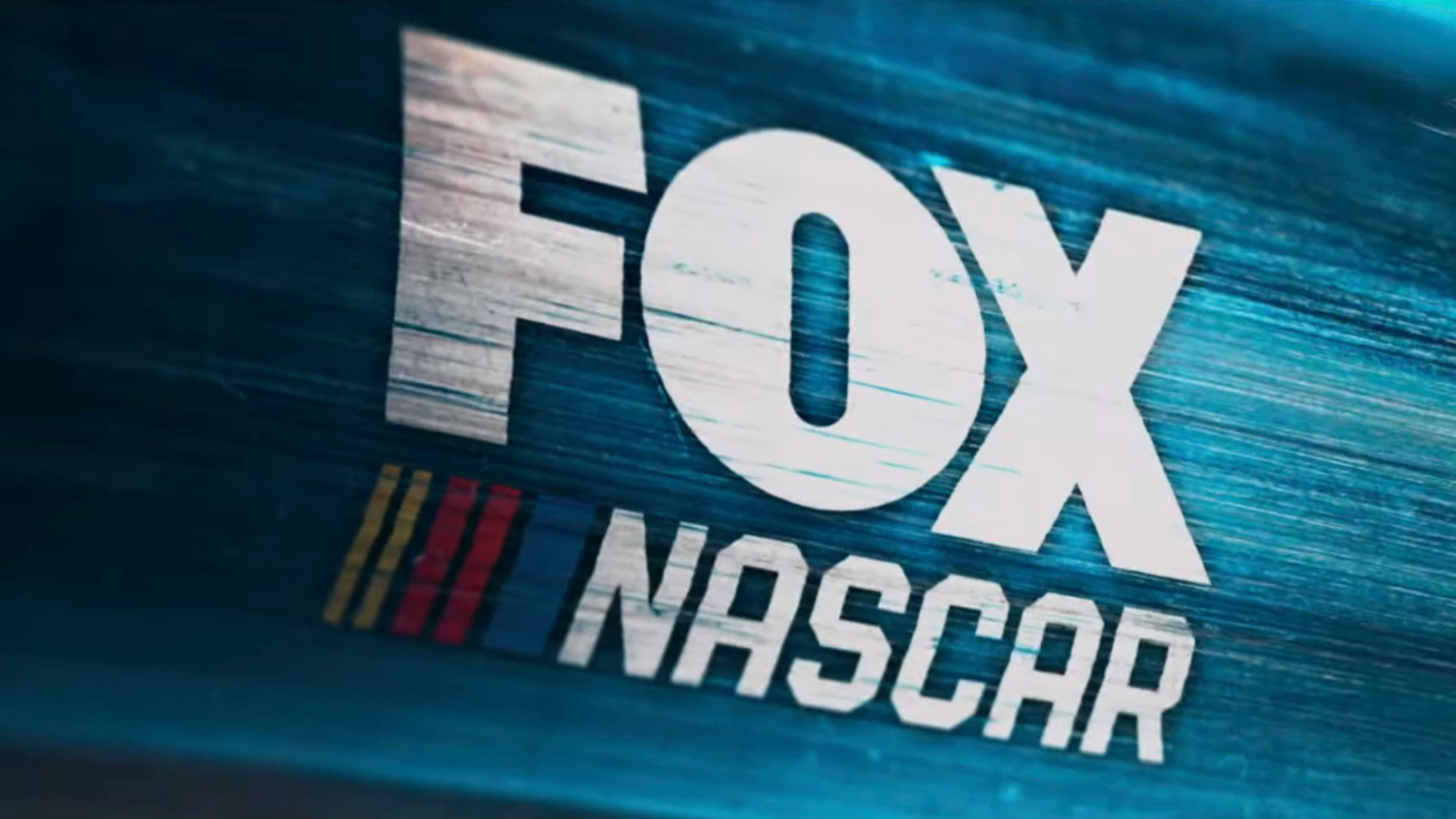
The main title card uses angled shapes drawn from NASCAR’s logo, a repeating theme in the new package, with colors rushing past in a blur to suggest speed and movement. Smoke effects, metallic textures and grittier backgrounds carry through the rest of the package, giving it a moodier appearance compared to past “NASCAR on Fox” design, which used a flatter, cell-animated style.
That balance is complicated by the nature of the sport, where each driver and car operates as its own brand, carrying individual sponsor colors and liveries.

“Each driver is their own brand. They’re all sponsored by a bunch of people. So it’s a very colorful sport,” Hartley said. “Trying to find a way to kind of reflect that individuality while encompassing it in a greater whole — one broader umbrella theory — is a little bit of a challenge.”
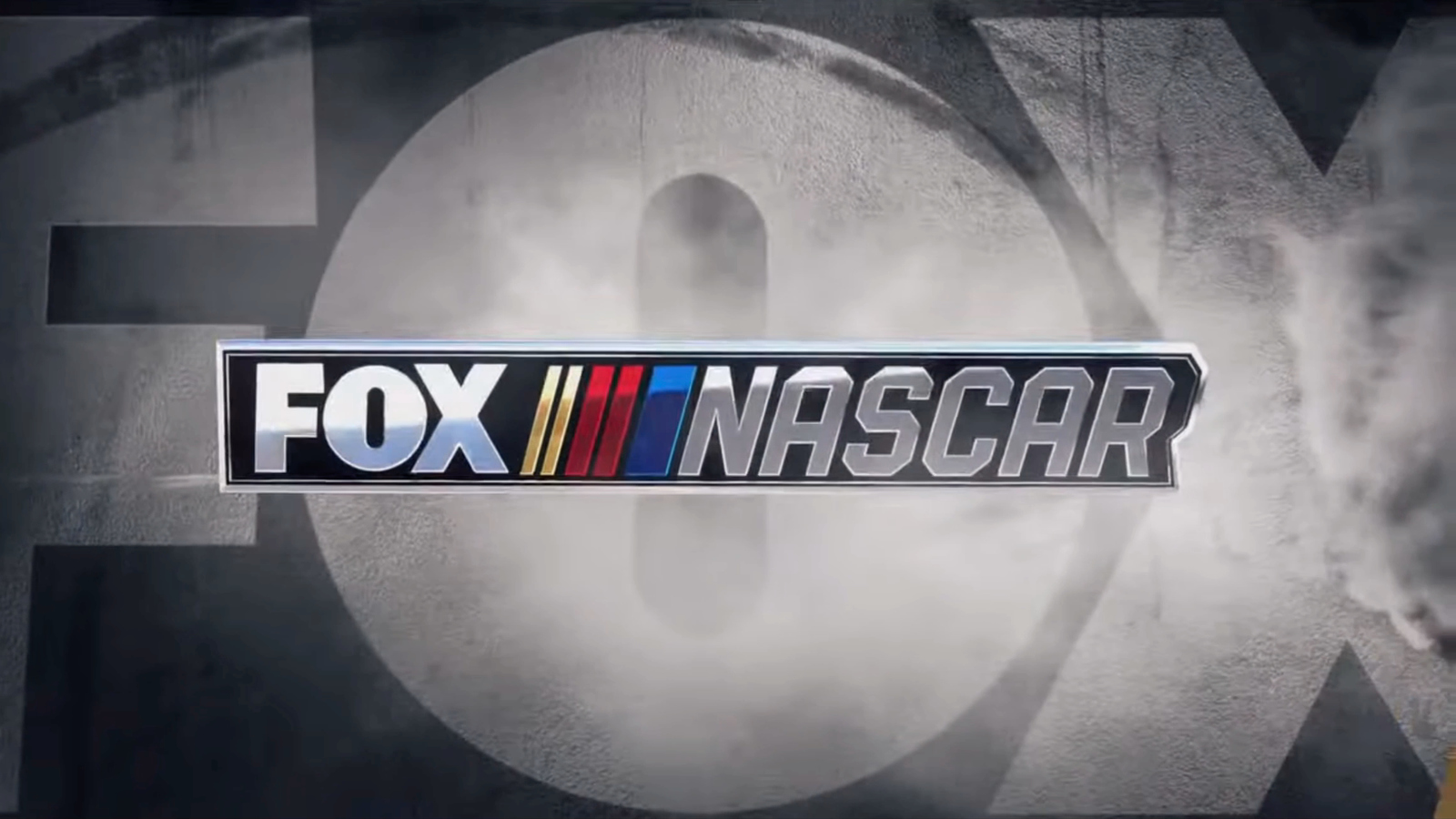
The updates extend to the broader franchise branding as well. Fox updated the “NASCAR on Fox” and “NASCAR RaceDay” logos for the 2026 season, adding metallic finishes and lighting effects that carry through the overall look.
Integrating data and the ghost car
On the technology side, Fields pointed to improvements NASCAR has made to its car-tracking system as a technology upgrade for the 2026 season.
The upgraded positional system increases the frequency at which car location data is captured, which Fields said opens new possibilities for how that information is used on air.
“That opens the door for us to do more things, not only internally in the pylon with telemetry data, but also with our friends at SMT, our pointer system, our ghost car setup,” Fields said.
The ghost car feature, which displays a visual representation of a previous lap or benchmark time alongside a driver in real time, has been a part of Fox Sports’ IndyCar and NASCAR broadcasts, and Fields said viewer response has been strong.
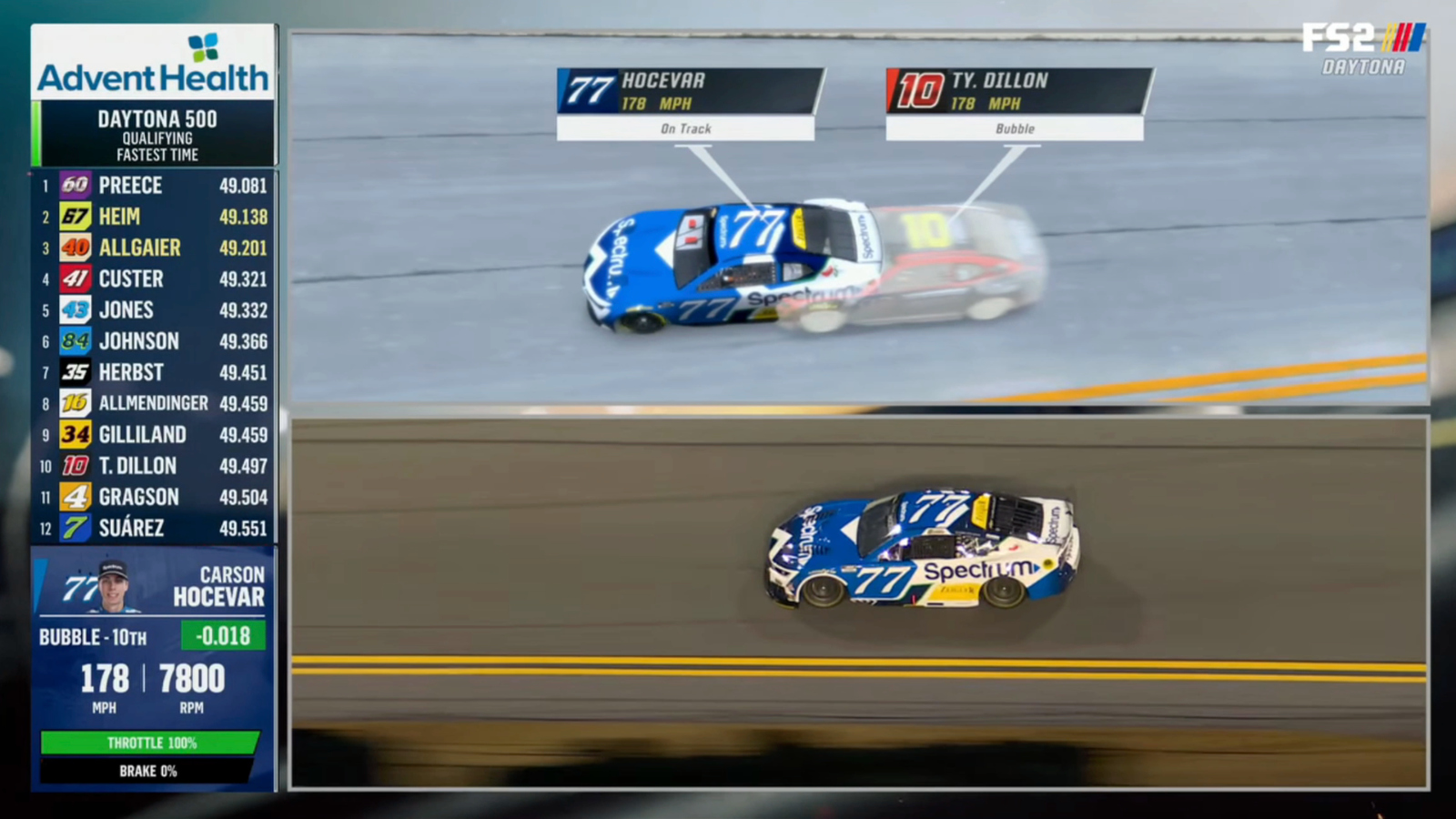
“It almost creates some suspense,” he said. “It’s a lot more suspenseful to actually see what someone is chasing versus just watching them chase a number.”
Hartley noted that, in the past, producers and assistants in the truck manually pushed information to viewers at specific moments. Automated data feeds have largely replaced that process, with the pylon and other on-screen elements now running in real time.
“The whole process of creating insert graphics has changed from putting something on the screen at a specific point in time based on a prompt from a producer to the information just coming to you,” Hartley said. “A lot of times it’s just running.”
New graphics packages typically evolve over time, and Hartley said this one is no different. The team continues to refine elements as the season progresses. But after more than two decades of NASCAR coverage, he said this rollout stands out.
“Of all the NASCAR packages I’ve done since 2001, this has been the smoothest launch,” Hartley said. “That’s a testimony to Zac’s team, because the technology side of that is really daunting.”

tags
Big Star, Fox, Fox Sports, fs1, Gary Hartley, motorsports, nascar, nascar on fox, Zac Fields
categories
Broadcast Design, Graphics, Heroes, Sports Broadcasting & Production