

Why bigger isn’t always better: Virtual processing means agility can triumph over scale

Weekly insights on the technology, production and business decisions shaping media and broadcast. Free to access. Independent coverage. Unsubscribe anytime.
It always used to be the case that broadcast facilities were designed to meet the anticipated demands of the biggest production. Future scale had to be built into system design and facility planning, and over provisioning was the engineering solution to meet future and unplanned production demands.
But not today. Not anymore.
There were many takeaways from last month’s NAB which reflected an industry in flux, but this was the clearest and loudest. When it comes to content, consumers are now in the driving seat, there is an increasing demand for more niche and diverse content to appeal to a wider and more varied audience. The broadcasters who are going to thrive are the ones who are adapting to consumers’ emerging needs and expanding their programming to suit, moving from traditional broadcast models to engage with streaming, social and FAST channels and whatever else is coming down the line.
Achieving this is no longer about scale, it is about being agile.
More flexibility
In a bid to develop engagement for their customers, broadcasters are taking a cue from the wider content economy by creating more content across more channels. They’ve actually been doing this for a while, enabled by shifting production patterns across more remote and distributed workflows.
This seamless blending of on-premise infrastructure with remote, virtual or hybrid operations across multiple processing environments has quickly become an established way for broadcasters to generate more content. It is exactly where the industry is now and it goes some way to overcoming some of the challenges around creating more content with minimal additional outlay. It not only enables broadcasters to create new audiences for more niche interests and sports, but secondary content around the top-tier events. At this year’s Winter Games, part of the largest Games production in history, NBC Olympics mixed all audio remotely from 14 control rooms at its 115,000 square foot Broadcast Centre in Connecticut, USA, nearly 4,000 miles from Milan. As part of a wider remote-production model underpinning the entire operation, this workflow helped deliver more than 2,500 hours of Peacock coverage alone, in formats including 4K HDR and Dolby Atmos.
High-profile projects like this prove that the physical location of an audio controller no longer matters. Crucially, nor does the location of the processing, which can be anywhere — on-premise, at the edge, or totally virtualized, spun up in a software-defined environment as and when needed on a temporary basis, or a blend of all the above.
But the idea of blending all these together by spinning up additional virtual DSP, and dynamically orchestrating these hybrid environments, is the story of NAB 2026. It might not be where the broadcast industry is currently, but it’s where it will be because it is the only way to create the amount of content required to retain viewers.

More choice
The ability to add temporary virtualized processing resources means that broadcasters can scale to their biggest event of the year; here again, bigger is not necessarily better. By supplementing productions with temporary processing power, virtualized hybrid workflows can make premium content more cost-effective, delivering the choice and flexibility broadcasters are looking for to expand production without up-front hardware investment.
And as we have seen, it also fills content gaps at the lower end — tier two and tier three level sports — where digital-first content for more niche markets builds new audiences, deepens engagement and opens new revenue streams.
But it’s not just a shift from CapEx to OpEx that is accelerating these workflows. It’s having the technical agility to scale and control everything seamlessly while retaining familiar operational environments.
More simplicity
To be successful, broadcasters and vendors must use joined up thinking. Virtual processing cannot be considered in isolation, everything needs to communicate. True success comes from fully integrated workflows across hardware, remote, distributed, virtual, and hybrid environments. Wherever the processing is located and however a workflow is designed, it shouldn’t make a difference to the operator; they already have enough to consider. We need to make it easier — the operator should never see the complexity, and so companies that reduce it and invest in their user experience by bringing it all together to seamlessly blend on-prem infrastructure with remote operations and virtualized resources will come out on top. The ability to orchestrate thousands of audio channels across distributed DSP environments and virtualize entire workflows, all while delivering the same control over EQ, dynamics, routing, direct outputs and delay as if everything is still in the room next door, is just as important as it has always been.
As our industry transforms, the need for agile, scalable, future-ready solutions has never been greater, and keeping it all simple is always a challenge. And although responsible vendors are spending time and money ensuring that the interface is the same as it’s always been, these developments are also encouraging stronger relationships within the vendor community.
The recently announced deep integration of Calrec’s ImPulseV virtual DSP software with Grass Valley’s AMPP Cloud-Native Live Production Platform and NEP’s Platform demonstrates Calrec’s agnostic approach — combining virtualization, and multi-vendor integration into unified ecosystems to deliver even more choice, agility and utilization. That’s good news for everyone. And whichever hybrid model broadcasters choose to adopt for a given project, integrations like these will undoubtedly shape the industry for years to come.

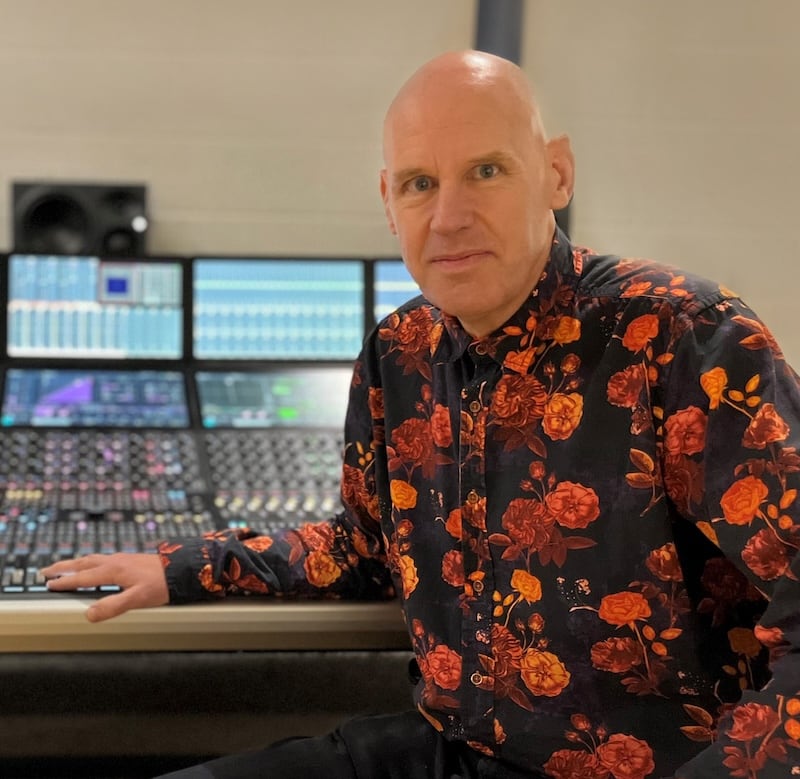
Henry Goodman, CalrecHenry Goodman is director of product management for Calrec.
tags
AMPP, Calrec, DSP, hdr, NAB Show 2026, NBC Olympics, NEP, Virtualized Content Production
categories
Broadcast Facility Technology, Featured, Sports Broadcasting & Production, Thought Leadership, Voices