

Vinten and Autoscript bring unified answer to the PTZ production challenge
Weekly insights on the technology, production and business decisions shaping media and broadcast. Free to access. Independent coverage. Unsubscribe anytime.
PTZ cameras are everywhere in broadcast studios right now. They are in local news sets, cable news studios, corporate facilities and increasingly in outside broadcast environments. What has not always kept pace is the infrastructure around them – the support systems, control solutions and prompting hardware that make PTZ-based productions actually work at a professional level.
That gap is what Videndum’s broadcast brands, including Vinten, Autoscript and Autocue, focused on at the 2026 NAB Show, where the company showcased a range of new products built around the reality that PTZ cameras are no longer a secondary or budget option but a primary production tool.
“From the debut of Versine 240 and VEGA Lite to our expanding PTZ ecosystem, we’re focused on giving customers the flexibility to choose how they work — whether manual, robotic or a combination of both,” said Ginny Grove, product marketing director at Videndum.
Vinten debuts new fluid head and a PTZ control system
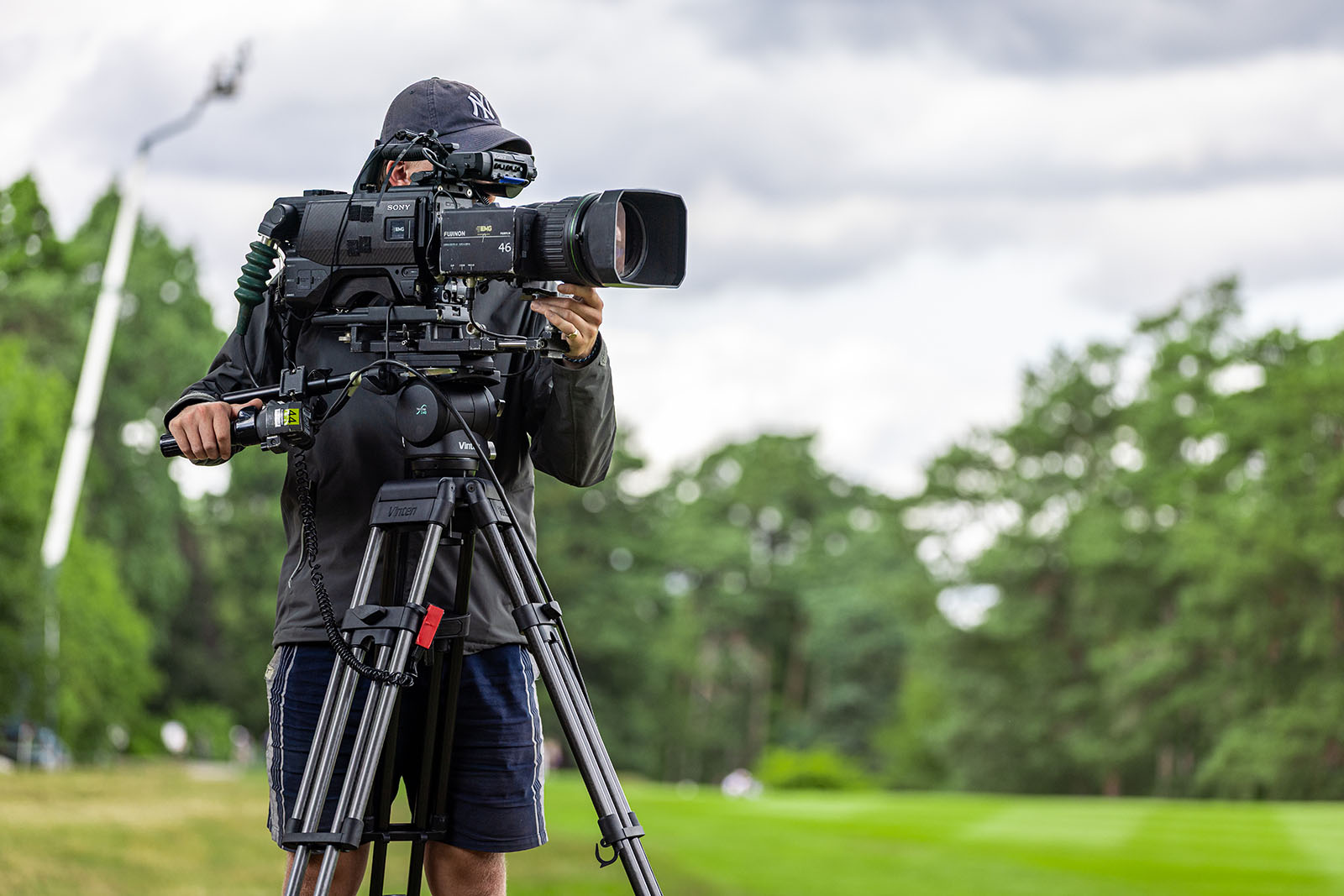
The Vinten Versine 240 fluid head made its NAB debut alongside the existing Versine 360, adding a lighter option in the Versine range designed specifically for live production and outside broadcast. With a payload capacity of up to 25 kilograms, the head was built for long-lens operation — the kind of precision work that demands stable, balanced support — in a chassis light enough for roaming OB setups and live event positions.
The second introduction was VEGA Lite, a PTZ-specific control system that sits below Vinten’s main VEGA platform in both price and scope.
Where the full VEGA system controls robotic pedestals and a full range of studio automation equipment, VEGA Lite was designed specifically for PTZ cameras and robotic heads, giving operators the same familiar interface, thumbnails, shot grid, multi-shot capability, configurable joystick movement profiles, at a price point that makes sense for PTZ-heavy installations.
Grove said the demand for a dedicated PTZ control option came directly from broadcasters looking to run hybrid studios where some cameras are traditional and some are PTZ, without needing two different control systems or asking operators to switch between unfamiliar interfaces.

“Major broadcasters are looking at maybe having a couple of these or a couple of those in the studio,” she said. “It just brings the cost down.”
VEGA Lite also integrated with Tecnopoint ceiling track systems, allowing broadcasters to build fully mobile PTZ studio setups, overhead-mounted cameras on smooth tracking systems, controlled from the same interface as floor-based units.
Prompters engineered for PTZs
The growth of PTZ cameras in broadcast has created a specific prompting challenge. Traditional teleprompters are designed around fixed cameras on pedestals with a clear sightline to the talent. PTZ cameras move, tilt, pan and are often mounted in positions , where a conventional prompter hood either will not fit or cannot follow the camera through its range of motion.
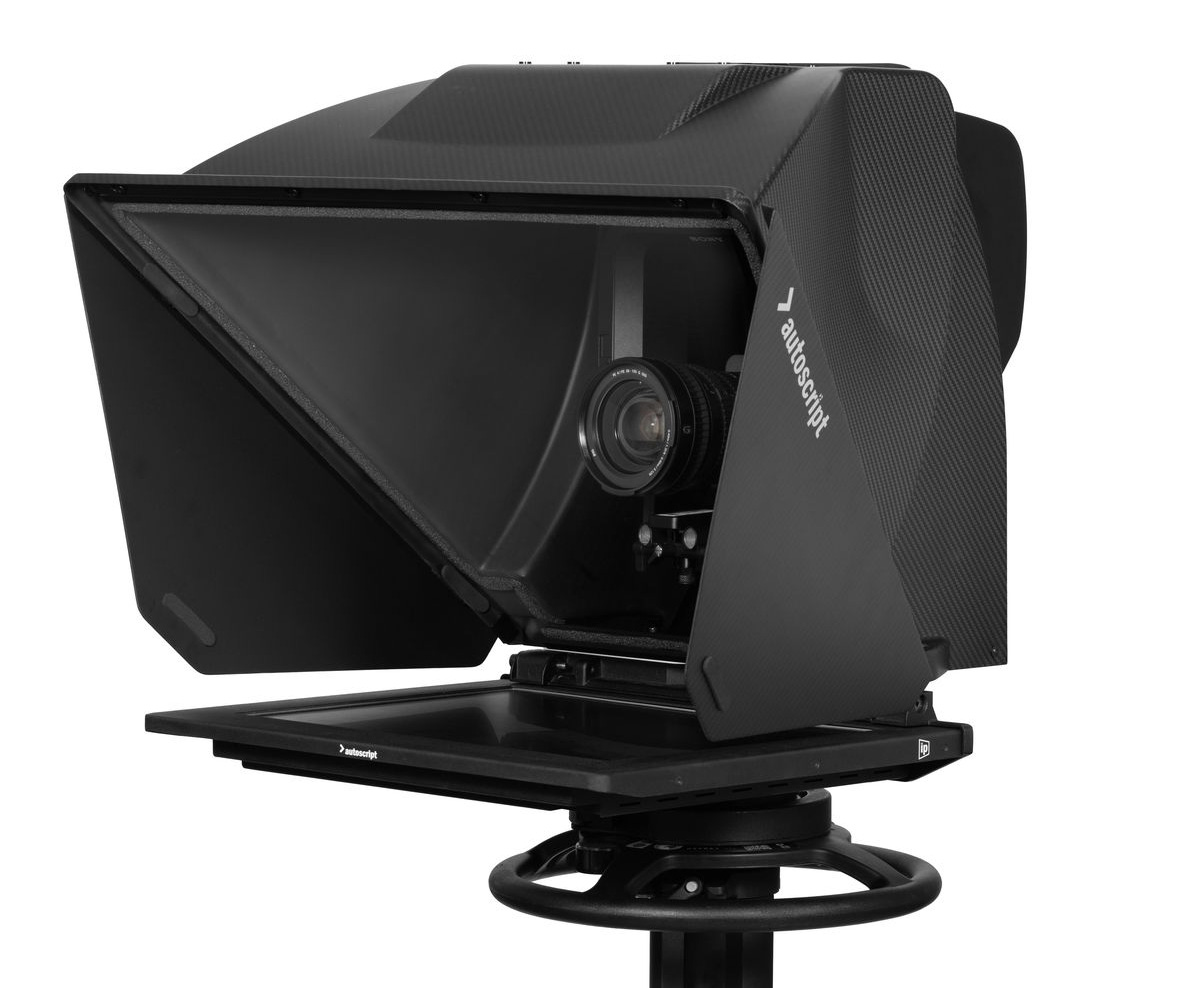
Both Autoscript and Autocue, the two prompting brands within Videndum’s portfolio, showed dedicated PTZ prompter solutions at NAB that addressed this directly.
Autoscript’s PTZ prompter, first shown at IBC 2025, used a carbon fibre hood with mounting points on the top, back and bottom, allowing installation on floor supports, ceiling mounts, trusses and walls. The system was demonstrated at NAB paired with Sony and other PTZ camera models. A key engineering challenge the product addressed was auto-calibration within the hood: PTZ cameras typically run a calibration sweep when powered on, and without geometric compensation built into the mount, that sweep can send the lens into the prompter glass. Autoscript solved for this by working out the geometry to allow auto-calibration to complete safely within the enclosure.
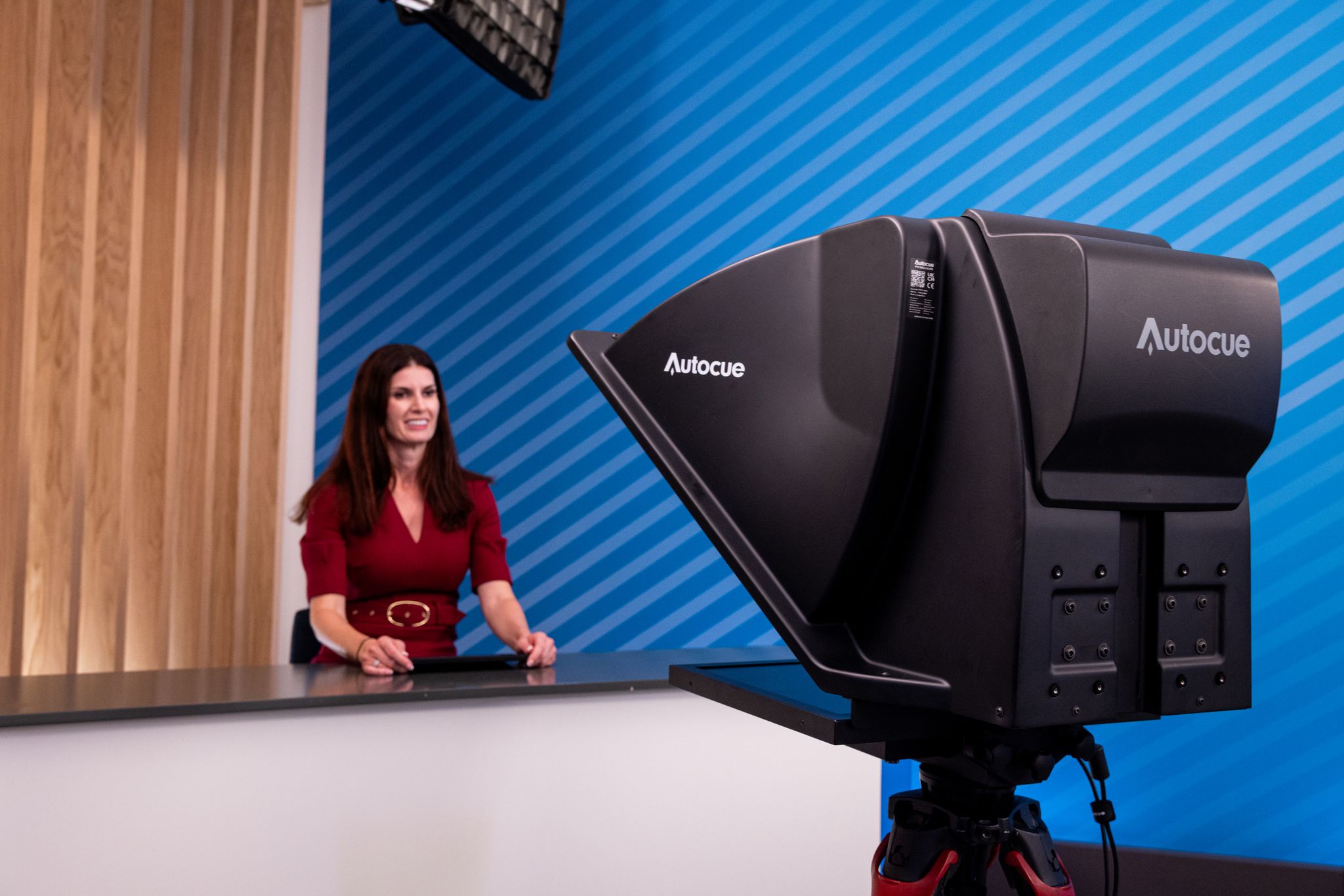
Autocue’s PTZ prompter, which launched in September 2025 and received three industry awards before the show, made its NAB debut demonstrated with a Sony FR7.
The system was positioned at a lower price point than the Autoscript equivalent, reflecting the broader positioning of the two brands within the Videndum portfolio. Grove described Autoscript as the flagship offering with full IP connectivity in the monitors and a more feature-rich software environment, while Autocue served productions where budget is a constraint but professional output is still required.
“If you really want all the bells and whistles, Autoscript is the way to go,” she said. “But if you have to budget it, Autocue gives you that option.”
Voice-driven prompting
Autoscript also highlighted its Voice product at the show, speech recognition software that allows the prompter to follow the presenter’s natural delivery rather than requiring an operator to manually scroll the script. The system, developed in collaboration with a U.S. network, handled ad libs, script format changes and interview segments without losing its place, addressing one of the most persistent friction points in traditional prompted broadcasts.
The practical appeal in a PTZ-heavy environment is straightforward: fewer operators, more automated workflows, less physical infrastructure between the camera and the talent.
As studios continue to reduce headcount and increase the number of camera positions they manage simultaneously, removing the dedicated prompter operator from at least some positions becomes an operational efficiency with real budget implications.
Also at the booth, Sachtler showed several products making their NAB debut following introductions in 2025, including the aktiv16T, aktiv18T, FSB 16T Mk II and FSB 18T Mk II fluid heads, high-payload systems aimed at ENG and documentary professionals. Sachtler also demonstrated PTZ tripod support and adaptor solutions alongside its lightweight flowtech tripod range for compact cameras, reflecting a similar push toward PTZ versatility seen across the rest of the Videndum portfolio at the show.
Rycote rounded out the booth with a focus on location audio, highlighting its Nano Shield next-generation windshield system, its range of low self-noise professional microphones and modular lavalier and boom solutions. The company also announced a new U.S. distribution partnership with Remote Audio, with representatives from both companies on the booth throughout the show.

tags
Autocue, Autoscript, Ginny Grove, NAB Show 2026, NAB Show News, PTZ Cameras, Rycote, Sachtler, Teleprompters, Videndum Production Solutions, Vinten
categories
Broadcast Equipment, Camera Control & Camera Robotics, Camera Mounts & Tripods, Camera Tracking, Featured, NAB Show, PTZ Cameras