

FCC’s Carr defends broadcast crackdown, spectrum deals in CNBC appearance
Weekly insights on the technology, production and business decisions shaping media and broadcast. Free to access. Independent coverage. Unsubscribe anytime.
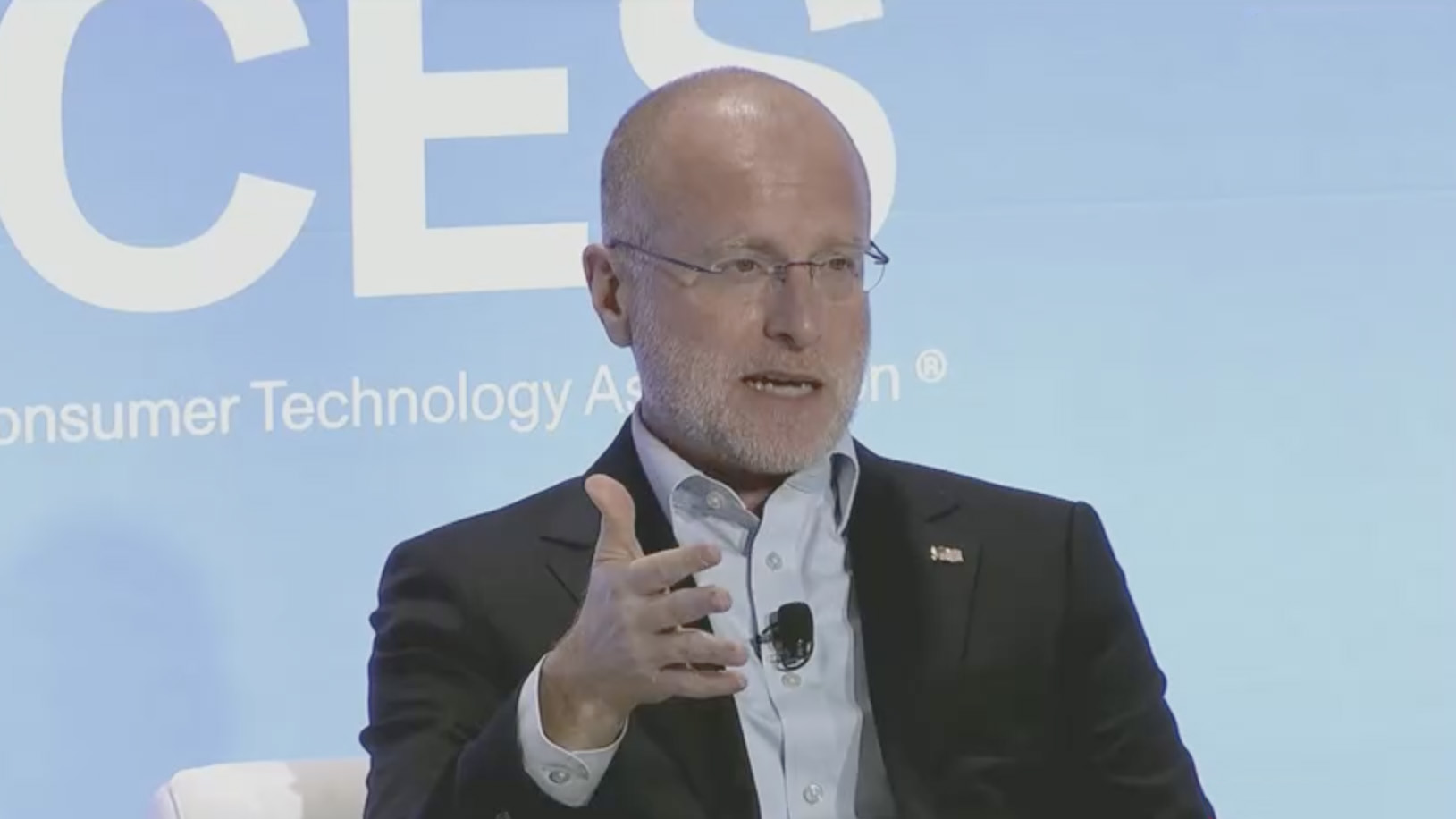
Federal Communications Commission Chairman Brendan Carr used a CNBC interview on “Squawk on the Street” to defend a series of FCC actions that touched nearly every corner of the broadcast and wireless industries, including the agency’s $40 billion approval of EchoStar spectrum sales to SpaceX and AT&T and the early renewal review of eight Disney-owned ABC television station licenses.
The wide-ranging appearance found Carr characterizing the FCC’s posture toward broadcast license holders as routine enforcement of long-standing public interest rules.
Critics, including a sitting FCC commissioner and First Amendment advocates, described the same actions as a coordinated campaign to pressure broadcasters whose coverage has drawn the ire of the Trump administration.
Carr opened the interview by framing the agency’s May 12 approval of EchoStar’s spectrum transactions as a consumer win. The deals transferred roughly 65 megahertz to SpaceX for Starlink’s direct-to-device service and approximately 50 megahertz to AT&T for its 5G network.
“These transactions that we approved just last week could be one of the most consequential weeks for the country in terms of connectivity and global leadership,” said Carr, chairman of the FCC.
Pressed on whether the SpaceX approval gave Elon Musk’s company an effective gatekeeper position in the emerging direct-to-cell market, Carr pointed to other entrants.
“Our vision is to have three or more providers of direct-to-cell connectivity,” Carr said. He cited Amazon’s planned acquisition of Globalstar spectrum, AST SpaceMobile’s existing authorization for up to 248 satellites and Lynk Global as additional competitors. Carr said he had not spoken with Musk recently about the transactions.
Early review of ABC station licenses
The interview turned to the FCC’s decision to call eight ABC television station licenses in for early renewal review. The stations, located in California, Illinois, New York, Texas, North Carolina and Pennsylvania, were not scheduled for renewal until between 2028 and 2031.

Carr said the action grew out of an ongoing diversity, equity and inclusion investigation the FCC opened against Disney in March 2025, and that internal staff had concerns about Disney’s responses to multiple rounds of subpoenas.
“There has been evidence coming to light that aligns with a legal memo DOJ put out last year for private companies that you can’t hire and promote based on race and gender,” Carr said.
He said the FCC had not made a final decision on the licenses and that Disney would have an opportunity to respond.
If the agency does not find that the stations met the public interest standard, Carr said, the matter could be set for a hearing through a hearing designation order.
The timing of the early renewal order has been a point of contention.
The FCC announced the action one day after Donald Trump publicly called for the firing of Jimmy Kimmel over a joke the late-night host made about first lady Melania Trump. Carr rejected any connection between the two events.
“The early renewal order that we directed was based on where we were in the enforcement of that DEI case,” Carr said.
The action drew immediate pushback.
FCC Commissioner Anna Gomez, a Democrat, called the move unprecedented and unlawful, and Jameel Jaffer, executive director of the Knight First Amendment Institute at Columbia University, said in a statement that the agency had no authority to cancel broadcasters’ licenses over perceived political views.
CNBC’s Sara Eisen noted that a Democratic FCC commissioner had told Disney’s leadership that ABC was the target of what the commissioner described as a sustained campaign of censorship and control.
Carr said disagreements among commissioners were routine and that the agency’s standards applied across the political spectrum. He pointed to early renewal action against the Spanish-language broadcaster NewsBridge and a short-term renewal of a Mississippi radio station as evidence the FCC was not targeting Disney alone.
‘The View’ and the bona fide news question
Carr also addressed Disney’s pushback against an FCC inquiry into ABC’s daytime program “The View.” Disney filed a petition with the agency arguing that the inquiry sought to chill protected speech and shape editorial content.

Federal equal-time rules require broadcasters to offer equivalent opportunities to political candidates appearing on programs that do not qualify as bona fide news programming. Carr said the central question was whether “The View” met that standard.
“Disney is claiming that The View is a bona fide news program, and we’ll see what the FCC says about that,” Carr said.
Broadcaster obligations versus other platforms
A recurring theme in the interview was Carr’s framing of broadcasters as categorically different from cable channels, streaming platforms and digital publishers because they hold licenses to use public airwaves.
“Broadcasters are fundamentally different than any other provider, whether you are a cable channel or a YouTube or a newspaper, and there are unique public interest obligations,” Carr said.
Carr said previous FCCs under Democratic leadership had taken broader actions against perceived conservative outlets, including what he described as an unprecedented refusal to renew Sinclair Broadcast Group licenses and consideration of Fox station license actions tied to Fox News content. He said he was applying existing law evenhandedly rather than expanding agency authority.
Civil liberties groups and Disney have characterized the current FCC’s posture differently. The FCC opened DEI investigations into Comcast and NBCUniversal in February 2025 and into Paramount before its merger with Skydance Media, in addition to the Disney probe.
Asked whether the conclusion this week of “The Late Show with Stephen Colbert” on CBS represented a political victory for the administration, Carr declined to characterize it that way and attributed the decision to prior CBS leadership.
“This was a decision made by prior CBS leadership,” Carr said. “My understanding, was made by prior CBS ownership because that show simply wasn’t making any money anymore.”
CBS announced in July 2025 that it would end the show and retire “The Late Show” franchise, calling the decision purely financial. The announcement came as parent company Paramount was pursuing FCC approval of its merger with Skydance Media and shortly after Paramount settled a Trump lawsuit against CBS News for $16 million.
Colbert’s final episode is scheduled for May 21.


tags
Brendan Carr, Disney, FCC
categories
Broadcast Business News, Featured, Local News, Policy