

Roku leads U.S. streaming platforms as Fox acquisition draws attention
Weekly insights on the technology, production and business decisions shaping media and broadcast. Free to access. Independent coverage. Unsubscribe anytime.
Fox Corp.’s planned acquisition of Roku has drawn attention to Roku’s reach among U.S. streaming consumers, with new Horowitz Research data identifying it as the country’s most commonly used streaming platform.

Nearly four in 10 streaming platform users chose Roku to access content, according to Horowitz Research’s “State of Media, Entertainment & Tech: Subscriptions 2026.”
Amazon Fire TV and Samsung Smart Hub were each used by almost one-third of streamers.
Despite Roku’s lead in penetration and usage, consumers rated competing platforms more favorably across several measures. Amazon Fire TV ranked above Roku for content discovery, lag time, screen casting and advertising experience, while Samsung scored higher for Wi-Fi connectivity and reliability.
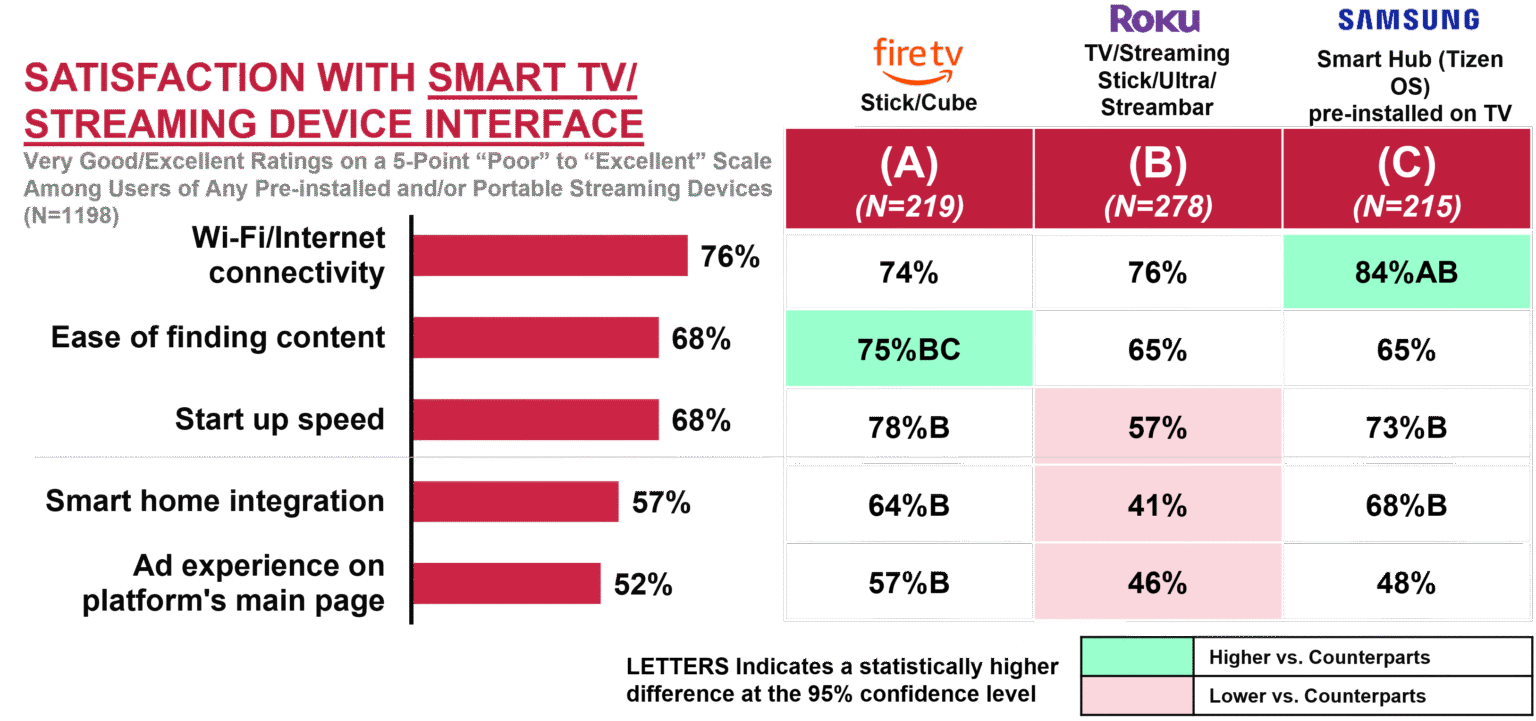
Both Amazon Fire TV and Samsung also outranked Roku in startup speed and smart-home integration. Google TV and Apple TV had lower household penetration but performed better than Roku on several attributes, the research firm said.
“Roku’s acquisition by Fox is a strategic move designed to deliver younger viewers to the aging Fox demographic. But as the market for smart TVs continues to evolve, we anticipate that consumers will increasingly choose their smart TV interfaces scrupulously, much like they do with their mobile devices. To continue to dominate the market, Roku will need to look not just at driving penetration but finessing their interface to meet the demands of Gen Z and younger consumers who will expect a robust, highly personalized, and tech-forward user experience,” said Adriana Waterston, executive vice president of insights and strategy for Horowitz Research.
Waterston also pointed to Roku’s Ad Manager, which is intended to give smaller businesses access to hyperlocal connected TV advertising.

“Also, Roku’s new Ad Manager, which will enable smaller businesses to leverage hyper-local TV ads, is exciting because it democratizes access to CTV advertising for local and emerging brands. However, it runs the risk of over-saturating the Roku viewing experience with repetitive, lower quality ads which could further alienate the younger audience that already has low tolerance for advertising,” Waterston said.
The Horowitz study tracks adoption, satisfaction, bundling and future plans across pay TV, streaming, home internet, mobile and smart-home services. It also examines smart TV operating systems, streaming devices, subscription retention and cancellation behavior.

tags
Adriana Waterston, Amazon Fire TV, Fox Corp., Fox Corporation, Horowitz Research, roku
categories
Featured, Market Research Reports & Industry Analysis, Streaming