

Inside the OB Truck: Display Production Technology That Keeps Up With the Action
Outside broadcast (OB) trucks pack the technical capabilities of a television studio into cramped quarters, rolling from one venue to the next. Racks of equipment line the walls with operators positioned inches apart during live events.
Modern productions deploy a fleet of cameras for major sports and entertainment events. Each camera feed requires real-time monitoring, color correction and technical analysis — all within the same fixed rack space the truck has always had.
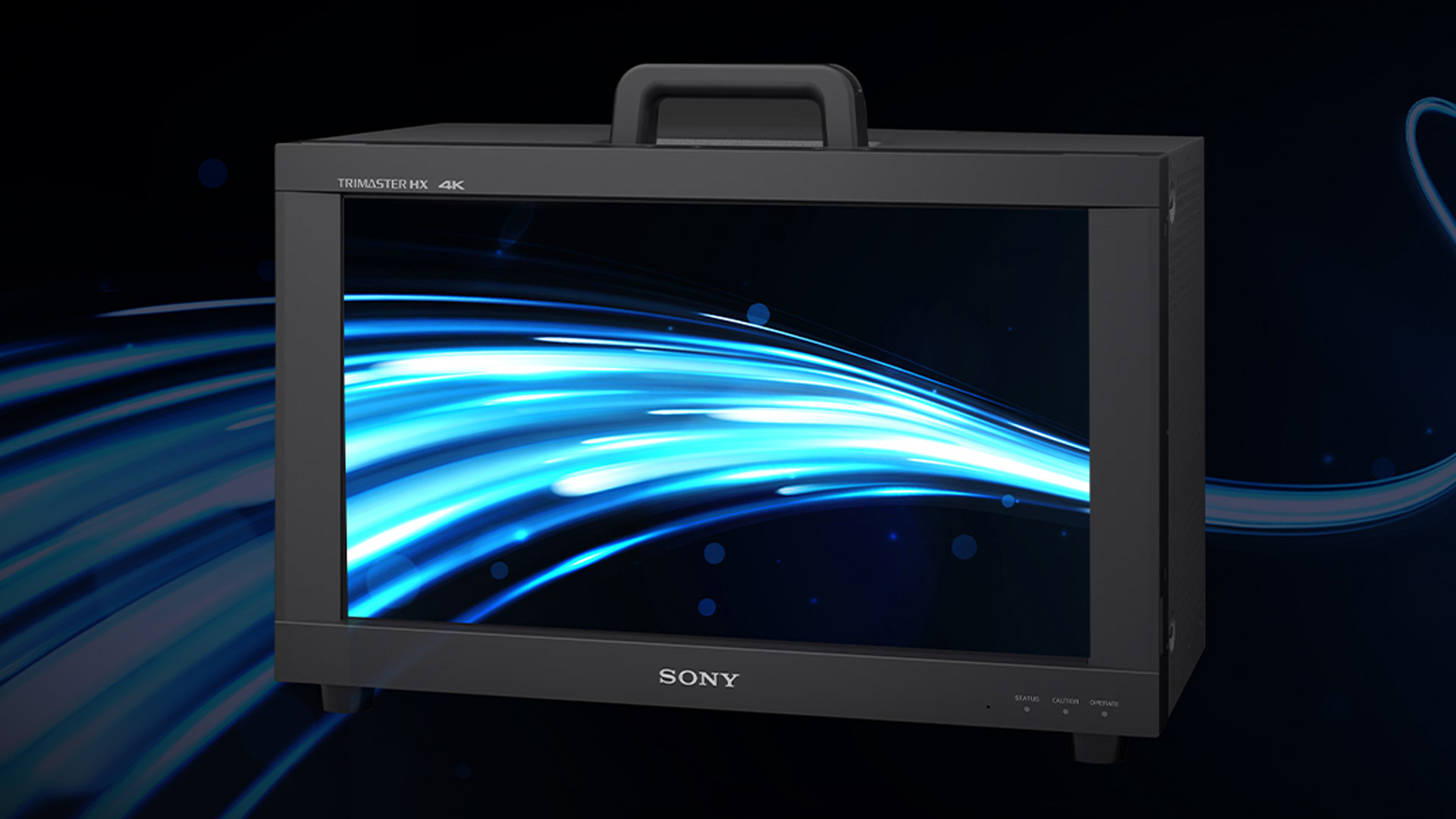
Sony Electronics designed the BVM-HX1710 to address those constraints. The 17-inch monitor targets OB truck and studio control room applications, fitting standard 6U rack mounting while meeting the monitoring demands of current 4K HDR workflows.
The shading challenge in modern workflows
Camera Shaders adjust camera settings in real time to ensure seamless transitions between camera angles. The process, called shading, requires matching multiple cameras for color rendering, exposure and contrast while live action unfolds.
The technical demands have increased substantially. HD workflows required matching cameras across Rec. BT.709 color space. Current 4K HDR productions require matching across wider color gamuts like Rec. 2020 and DCI-P3, with the added complexity of managing dynamic range from deep blacks to peak highlights that can exceed 1,000 nits.
Incorrect HDR shading creates visible problems in SDR conversion. Colors shift. Highlights clip. Disappearance of shadow details. These issues compound when multiple cameras operate under different lighting conditions during a live event.
The monitoring equipment must provide accurate color reproduction, sufficient brightness for HDR evaluation, built-in technical analysis tools and wide viewing angle capability for collaborative work. All of this must fit a 6U rack space.
Form factor and rack integration
Zack Pittman, President and CEO of CINELIVE, a cinematic broadcast truck service, evaluated the BVM-HX1710 for shading and colorist positions in the company’s truck. The form factor matched the existing rack configuration that previously held PVM-X1800 monitors.
“The 17-inch form factor works really well in our truck in the shading station because the way we designed the racks, just having rack mount monitors,” Pittman said.
Pittman noted the compact size also makes the monitor suitable for portable backstage monitoring where production directors and managers need reference-quality images outside the truck.
The physical specifications support this application. The monitor measures 17.17 by 12.62 by 9.06 inches with handle and stand, weighing approximately 26.46 pounds. Power consumption reaches approximately 280 watts maximum.
Technical specifications for HDR monitoring
The BVM-HX1710 achieves up to 3,000 nits peak brightness within a 10 percent window (4,000 nits within a 6% window). This specification addresses HDR monitoring requirements that have become standard in live production. Most professional HDR content is mastered between 1,000 and 4,000 nits, with current industry standards requiring 1,000 nits minimum for HDR content.
The monitor uses Sony’s dual-layer LCD panel technology with proprietary signal processing. The design maintains color accuracy while achieving high brightness. Black levels remain below 0.005 nits according to Sony specifications, creating the contrast ratio necessary for HDR evaluation.
Viewing angles measure 89 degrees in all directions. This allows multiple operators to evaluate the same display without color or brightness shifts, a requirement in OB trucks where space limits operator positioning.
The monitor includes anti-reflection coating that uses optical wave cancellation to minimize reflections from ambient light sources. OB environments often have uncontrolled lighting conditions where glare can interfere with accurate monitoring.
Built-in analysis tools
The BVM-HX1710 includes waveform monitor and vectorscope and color-gamut displays with automatic scaling for HDR or SDR signals. The graticules adjust based on the selected EOTF setting. This integration eliminates the need for external test equipment in space-constrained racks.
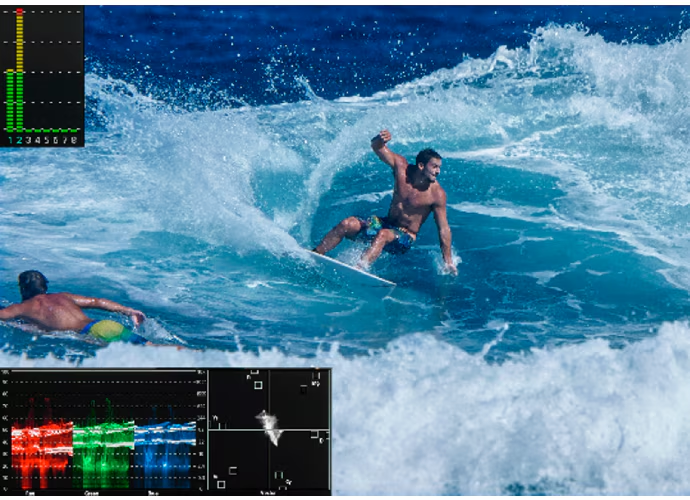
Waveform monitor and vectorscope displayed with scales for HDR or SDR.
Note: All screen images are simulated.
Waveform display modes include luma, RGB parade, YCBCR parade and RGB overlay. A color gamut scope maps signal values onto the CIE1931 chart with standard color space area display. Version 2.0 firmware allows scopes to be expanded to twice their original size when displayed on a single screen.
The monitor supports up to 30 user-loadable 3D LUTs via USB. High-quality tetrahedral interpolation allows LUTs to be used for HDR-SDR conversion as well as color grading applications. A quad-view display enables side-by-side comparison of up to four different display settings, including EOTF, color space, transfer matrix, color temperature, contrast, brightness and chroma.
Color matching across ecosystems
Color consistency across Sony monitors in CINELIVE’s truck factored into Pittman’s equipment decision. The company operates Sony’s BVM-series and PVM-X series monitors throughout the facility and needed the new monitors to match the colorimetric performance of existing references.
“The color gamut and the color reproduction of it matches really well with the whole series of Sony monitors that we have in the truck,” he said. “The color fits fantastic and matches across the board, but the 1710 has that extra depth of black and the perfect representation from black all the way up to the peak whites.”
The monitor supports multiple color spaces including ITU-R BT.2020, ITU-R BT.709, EBU, SMPTE-C, DCI-P3, S-Gamut3 and S-Gamut3.Cine. Electro-Optical Transfer functions (EOTF) include SMPTE ST 2084 (PQ), ITU-BT.2100 (HLG), S-Log3 and various SDR gamma curves.
Settings can be copied between BVM-HX3110, BVM-HX1710 and BVM-HX1710N units using USB storage or the BVMK-R10 monitor control unit, simplifying multi-monitor installations where consistent settings across positions are required.
Optional licenses and connectivity for production workflows
Sony offers optional licenses that extend the monitor’s capabilities for specific production workflows.
The BVML-F10 license enables faster pixel response for live sports and music productions, reducing motion blur on pan and tilt camera movements and keeping scrolling graphics like score tickers readable. The BVML-H10 license adds HDR-SDR conversion output via the enhanced monitor output, addressing the growing requirement for simultaneous HDR and SDR production. The license also includes 3D LUT and 4K-HD conversion output capabilities, with the screen display and conversion output operating independently — maintaining consistent signal output even when display settings change. Many broadcasters now produce both versions of the same content, with HDR serving newer distribution platforms and SDR serving broadcast delivery.
Pittman said CINELIVE uses the multi-view capability to monitor both signals at once. “Using the multi-view capability of the 1710 will be a perfect tool for us to be able to monitor what we’re doing in real time with SDR for the line cut, while also monitoring the captured HDR video feed for post-production.”
The monitor includes two 12G-SDI inputs, two 3G-SDI inputs and one HDMI input, with four SDI outputs and Ethernet-based remote control as standard. A single BVMK-R10 multi-monitor control unit can manage multiple BVM-HX1710 displays across a facility. The BVM-HX1710N variant adds SMPTE ST 2110 IP connectivity for networked production workflows.
Meeting evolving production requirements
Sony has continued to expand the BVM-HX1710’s capabilities through firmware updates since its release. Version 2.0 introduced several additions relevant to live production workflows, including simultaneous processing and output of two 4K or HD signals, expanded scope display sizing and adjustable maximum luminance settings ranging from 400 to 4,000 nits.
The latter provides compatibility with different HDR mastering workflows and content specifications. The update also added the ability to display a 4K image while feeding a separate 4K source with a 3D LUT applied through the enhanced monitor output.
The above Partner Content is sponsor-generated content from Sony Electronics. To learn more about sponsor-generated content, click here.

Categories
Partner Content
The content on this page is provided by the featured companies. NCS cannot guarantee the accuracy or veracity of any claims about products or services made in this content. The views expressed in this content do not necessarily reflect the views of NCS or its team. This content may contain trademarks owned by third parties, and those marks are the property of those companies.