

Younger viewers favor lower streaming prices over fewer ads

Weekly insights on the technology, production and business decisions shaping media and broadcast. Free to access. Independent coverage. Unsubscribe anytime.
Gen Z viewers were increasingly willing to accept advertising in exchange for lower streaming subscription prices.
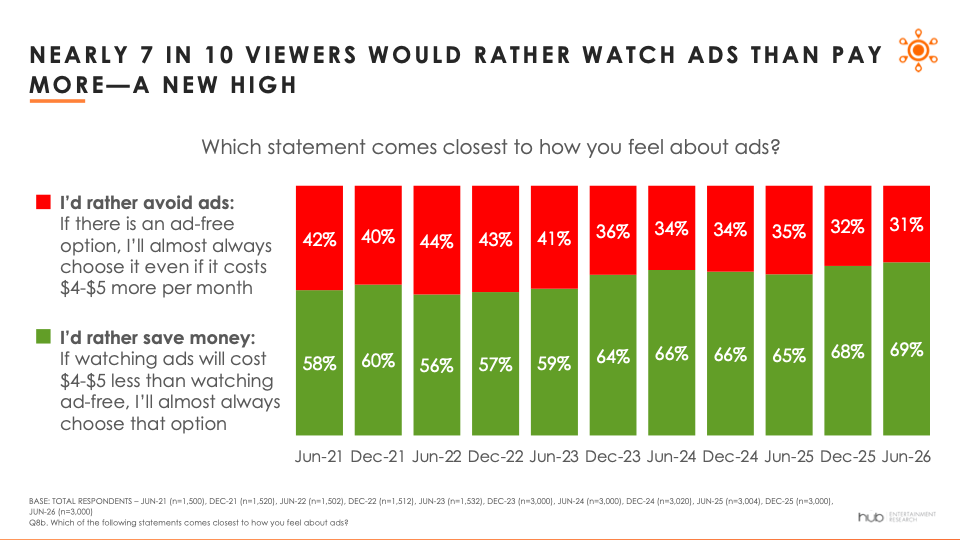
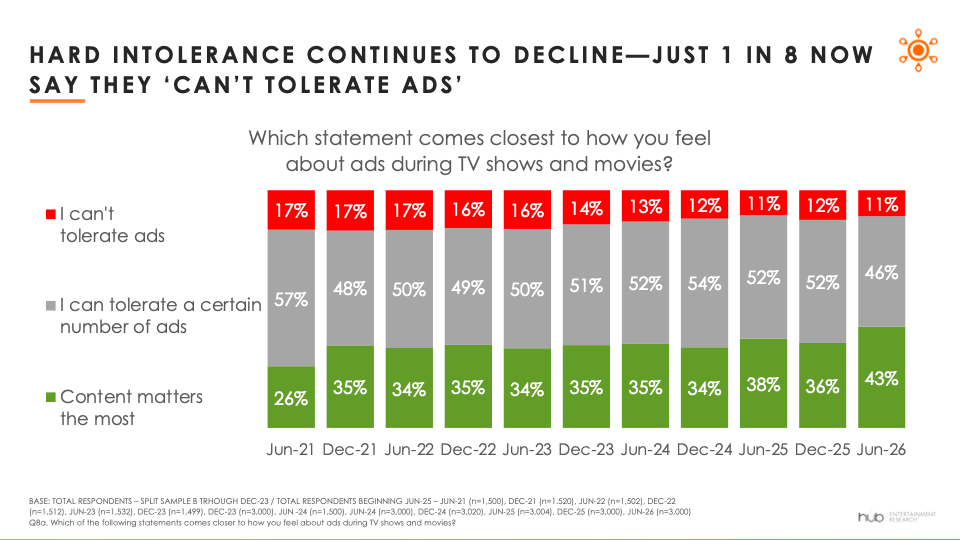
Hub Entertainment Research reported the finding in the 11th wave of its “TV Advertising: Fact vs. Fiction” study, which found that ad intolerance across TV audiences had fallen to its lowest level in five years.
About one-third of respondents preferred paying an additional $4 to $5 per month to avoid ads, while one in 10 said they could not tolerate advertising.
Gen Z respondents were more likely than older viewers to choose a higher ad load in return for lower subscription costs. More than one-third of Gen Z viewers also said they preferred fewer ads targeted to their interests, a higher share than among older age groups.
Respondents were most comfortable allowing advertisers to use viewing habits and basic demographic information, such as age and gender, for targeting. They were less willing to share social media activity, income information or AI chat histories.
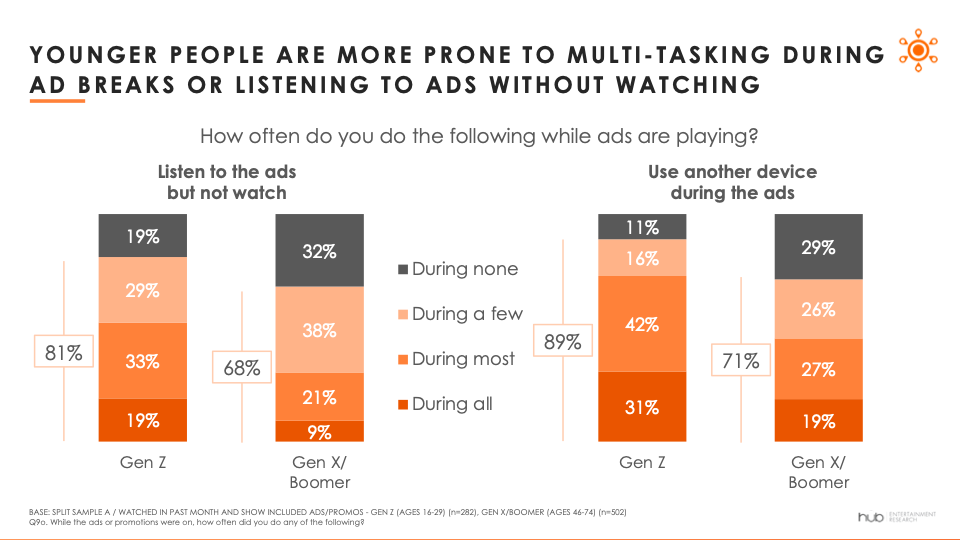
The study also found that nearly all Gen Z respondents used another device at least occasionally during commercial breaks. Despite that multitasking, eight in 10 said they continued listening to ads while using another screen.

Gen Z viewers were more likely than Gen X and baby boomer viewers to report awareness of TV ads during commercial breaks.
Across age groups, respondents generally trusted TV services more than social media platforms to use personal data responsibly for ad targeting. Viewers also considered targeted TV ads more appropriate than targeted ads on social media.
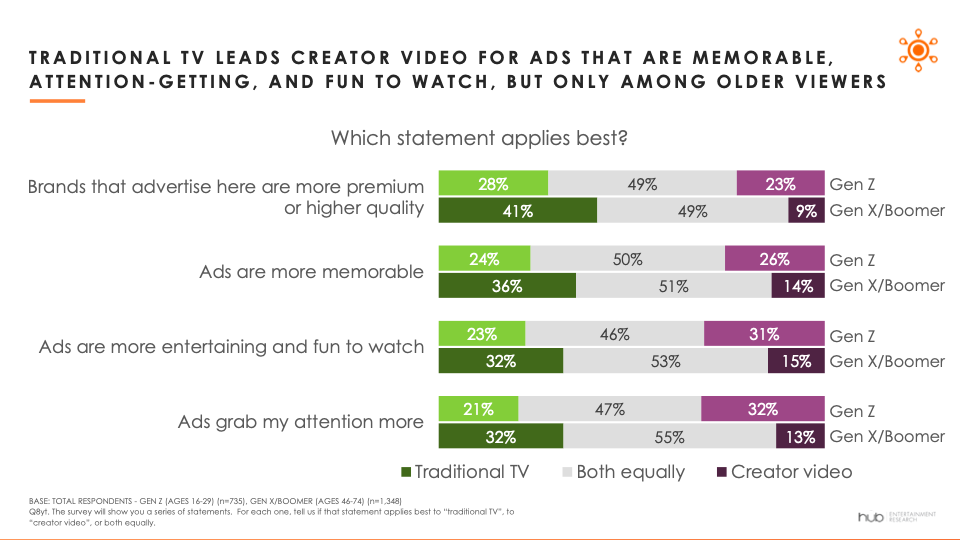
TV advertising performed more strongly among older audiences in measures including memorability, attention and entertainment value. Gen Z respondents rated TV ads and creator videos about equally on those measures.
Respondents were generally receptive to the use of artificial intelligence when it reduced repeated ads, made commercial breaks less disruptive or improved content and advertising recommendations. More than one-third, however, expressed a negative view of using AI to generate commercials or trailers.
“In the past few waves of this TV Advertising study, we’ve seen viewers concerned with costs and the general direction of the economy,” Mark Loughney, senior consultant at Hub, said.
“Those concerns have led to more viewers looking for ways to reduce costs. The TV advertising marketplace stands to benefit from consumers’ increased openness to advertising as a means of saving money on subscriptions. If streamers can continue to use tools at their disposal to make the ad experience better by including AI, it’s a win for both them and their viewers.”
The findings were based on an April 2026 survey of 3,000 U.S. consumers ages 16 to 74 who watched at least one hour of TV per week. The research examined attitudes toward advertising across video platforms and the effect of advertising strategies on viewer engagement.

tags
Hub Entertainment Research, Mark Loughney
categories
Featured, Market Research Reports & Industry Analysis, Streaming