

Pelley calls for Weiss removal, cites inexperience in first interview after ‘60 Minutes’ firing
Weekly insights on the technology, production and business decisions shaping media and broadcast. Free to access. Independent coverage. Unsubscribe anytime.
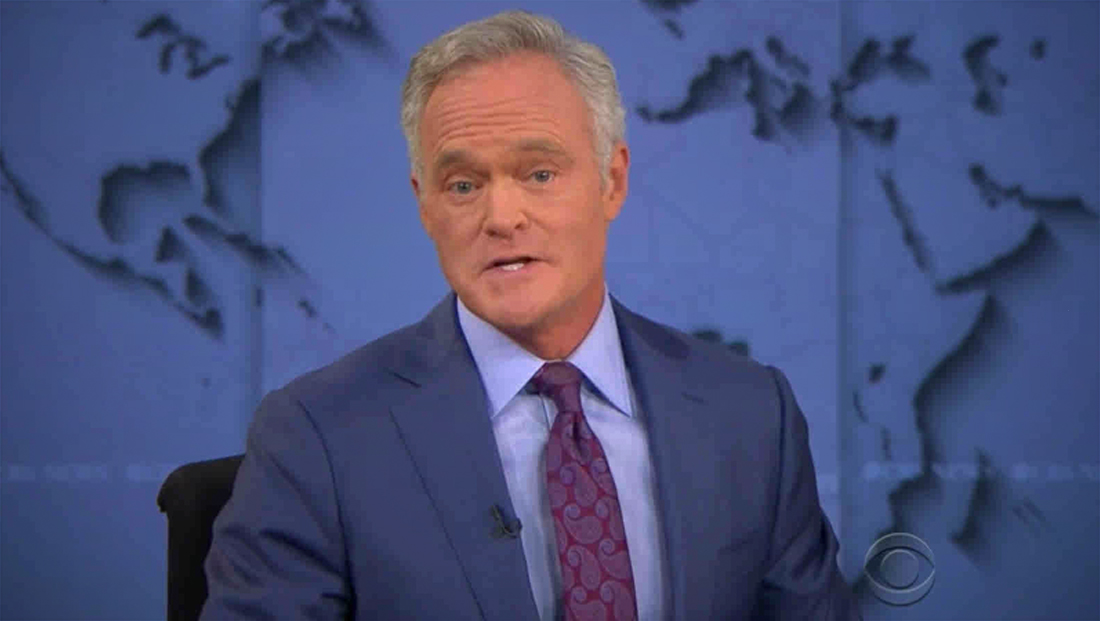
Former “60 Minutes” correspondent Scott Pelley said CBS News Editor-in-Chief Bari Weiss should be removed from her role and characterized her tenure as one defined by inexperience and operational missteps, in his first sit-down interview since his June 3 termination.
Speaking with Lulu Garcia-Navarro on The New York Times podcast “The Interview,” Pelley provided specifics on a February episode he said came within 19 minutes of missing air, and on disagreements over the program’s digital strategy.
Asked directly whether Weiss should be removed, Pelley said, “Oh, gosh, yes.”
“She’s a lovely person. And her free press organization that she founded has been very successful. She’s proven that. Great for her. But television’s not her thing,” he said. “She doesn’t know television. She doesn’t understand how it works. She doesn’t have management experience for a large organization like CBS News. So, yes, I do think that we would be far better off without her.”
CBS News has previously denied allegations of bias or editorial interference, characterizing disputes at “60 Minutes” as “the normal back and forth between editor and correspondent that happens in every newsroom.”
‘A 747’ analogy
Pelley returned several times to Weiss’s professional background as a print opinion writer and founder of the digital publication The Free Press, contrasting it with the operational demands of leading a global television news organization.
“This is like somebody walking up to me and saying, there’s a 747. There are 400 people on it. We need you to fly it to Paris. I’m going to decline because I don’t have a clue,” Pelley said. “And it would have been so much better if Barry Weiss had been offered this job and said, oh, that’s not for me. I don’t know how to do that.”
Pelley said he had not been familiar with Weiss prior to her appointment and conducted research on her background after the announcement.

“What concerned me was that she had zero television experience and had never managed a large global operation like CBS News,” he said. “Those were red flags to me, but I thought, you know, David Ellison thinks she’s the right person for the job. We are absolutely going to welcome her, listen to her, and give her the benefit of the doubt.”
Pelley said his initial assessment of the dynamic at CBS News later shifted.
“At a certain point, I began to think that a political bias was going to be our big problem. And then later, it occurred to me that it was the inexperience, the incompetence that was the bigger problem, the breaking of deadlines, all that kind of thing,” he said.
A February broadcast 19 minutes from air
Pelley provided new specifics about an incident he had referenced without detail in his initial parting statement. He said a February segment on protests in Minneapolis tied to immigration enforcement, which served as the lead-in to the Grammy Awards, came within 19 minutes of not making its broadcast window.
The “60 Minutes” production schedule locks segments at noon Eastern on Sundays for that evening’s 7 p.m. broadcast.
Pelley said Weiss sent notes on the segment approximately four hours after the deadline, asking producers to portray protesters as more violent and to describe Renee Good, who was killed during the protests, as driving toward an officer. Pelley said the video evidence did not support the requested description and that he declined to make the changes.
“The bigger problem, Lulu, frankly, is not any kind of political influence. The problem was the incompetence. You don’t break a deadline,” Pelley said.
Pelley said he subsequently pledged not to allow a similar deadline breach again, regardless of disagreements over editorial notes.
Disagreement over digital strategy
Pelley pushed back on framing from new “60 Minutes” Executive Producer Nick Bilton, a former technology columnist at The New York Times and documentary filmmaker who has not previously produced television news. Pelley said Bilton told staff that “broadcast is an ice cube that is melting” and questioned in an earlier email why the program airs only once a week at 7 p.m. Eastern on Sundays.
Pelley said the framing did not reflect the program’s existing operation, citing the 2010 launch of “60 Minutes Overtime” and the use of TikTok vertical video on field assignments. He said the program’s previous season included 9% audience growth on CBS, 190% growth in online viewing and total online views of 2.5 billion.
“It’s almost as if Barry Weiss and Nick Bilton were sealed in a time capsule in 1990, and it just cracked open. They’ve just discovered the Internet, and they’re running around telling everybody how important it is,” he said.

During the taping of the interview, correspondents Lesley Stahl, Bill Whitaker and Jon Wertheim released a statement confirming they would remain with the program.

Asked whether the remaining correspondents could trust assurances of editorial independence, Pelley said, “I would venture to say that trust is broken.”
Pelley joined CBS News in 1989 and was a “60 Minutes” correspondent for more than 20 years. He anchored the “CBS Evening News” from 2011 to 2017. Paramount, which owns CBS, was acquired last year by Skydance Media in an $8 billion merger led by David Ellison.

tags
60 Minutes, Bari Weiss, CBS News, scott pelley
categories
Heroes, Networks, People