

Trump threatens broadcast license revocations for ABC, NBC after networks declined primetime speech
Weekly insights on the technology, production and business decisions shaping media and broadcast. Free to access. Independent coverage. Unsubscribe anytime.
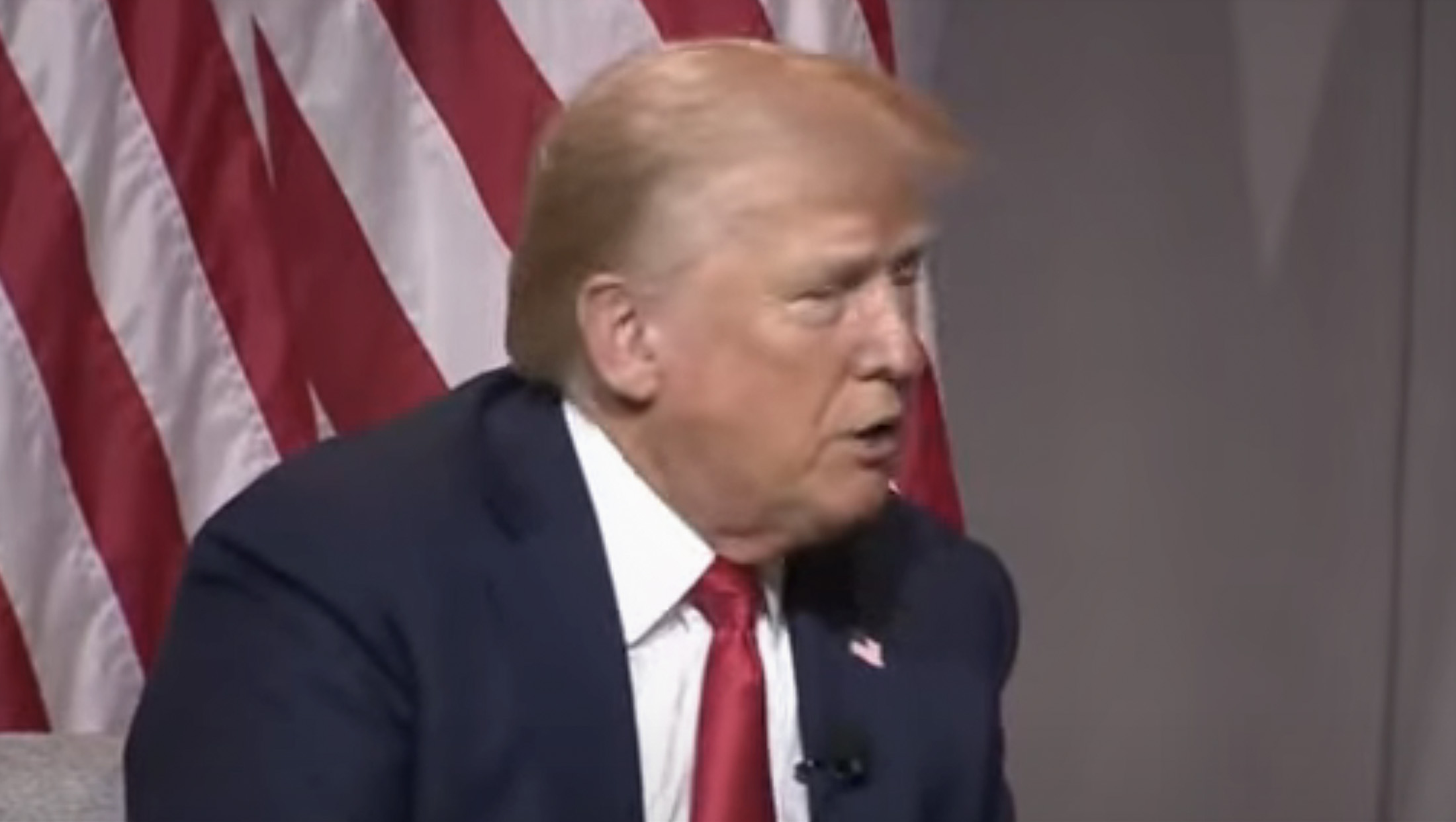
Two broadcast networks faced license revocation threats from Donald Trump on July 16, 2026, after ABC and NBC declined to carry his primetime address, the latest in a pattern of regulatory pressure tied to editorial decisions.
The remarks came roughly midway through a 25-minute speech that CBS, Fox and the CW carried on their broadcast networks, while ABC and NBC limited coverage to their streaming platforms. CNN did not air the speech live on its cable channel. MSNBC carried the opening minutes before cutting away.
“They want to continue this fraud for whatever reason. They want to keep it going. They want to protect the radical left,” Trump said of the networks that declined to air his remarks. “Fraud like this should mean a revocation of their licenses. They use our public multi-billion dollar in value airwaves for absolutely no money. They pay nothing.”
Trump provided no evidence for the claim that the networks were part of what he called a “plot.”
The carriage decisions
The split among broadcast networks underscored an ongoing tension in how television news organizations handle presidential primetime requests — and the consequences that can follow those choices.
ABC and NBC announced earlier that they would not carry the speech on their linear broadcast networks. Both made it available through their streaming services. The decision placed them opposite CBS, which aired the address but took the unusual step of tape-delaying the broadcast by approximately one minute. The delay allowed anchor Tony Dokoupil to open with a direct disclaimer.
“Honestly, much of what the president has said on this topic is false,” Dokoupil told viewers before the speech began. He then framed the network’s reasoning: “This speech will be made. It will be news. And it is our job to cover the news.”
CBS correspondent Major Garrett provided additional context before and after the address. After the network cut away from the speech, Garrett described Trump’s claims about noncitizens and deceased individuals on voter rolls as “unsubstantiated.”

“You have to ask yourself, what does that rhetoric about? Is that rhetoric about setting the stage for federal intervention in the midterms?” Garrett said, noting that primary elections conducted throughout 2026 under the same systems Trump criticized had been accepted by both parties without challenge.
Sinclair Broadcast Group said its network affiliates preempted regular programming to carry the speech through its news service, the National News Desk, according to a company spokesperson.
A question of precedent
Presidential primetime addresses have historically carried a high editorial threshold.
Networks have traditionally reserved the format for speeches tied to urgent matters of national importance — responses to national tragedies, major policy announcements or significant developments in armed conflict. Under both the Obama and Biden administrations, broadcast networks frequently declined requests for primetime carriage when speeches did not meet that standard.
The content of Thursday’s address largely centered on claims that had already circulated publicly.
Trump’s most prominent assertion, that China had acquired 220 million voter records, was addressed on CBS by David Becker, executive director of the Center for Election Innovation & Research.
“It sounds bad when you hear about it, right? But the reality is, voter files in the United States are public,” Becker said.
Trump also used the address to promote the Save America Act, legislation that would require proof of citizenship to register to vote and identification to cast a ballot. The bill would need 60 votes to advance in the Senate, a threshold that would require either Democratic support or elimination of the filibuster.
License pressure and the FCC
The threat of a license revocation against ABC and NBC was not the first time Trump has called for such action, but it came against a backdrop of ongoing regulatory proceedings.
“It is ridiculous to call for broadcasters to lose their license simply for making the same editorial decisions they’ve made under presidents of both parties,” said FCC Commissioner Anna Gomez in a statement. “Those editorial decisions are protected by the First Amendment, and the FCC has no authority to punish a station for refusing to air a blatantly political speech. This is a naked attempt to bully broadcasters, and the FCC should have no part in it.”
The FCC, chaired by Brendan Carr, has already ordered ABC to submit the licenses of its eight owned-and-operated stations for early renewal, a rare procedural step that opens those licenses to public challenges during the review process.
ABC has contested the early renewal, calling it an “extraordinary demonstration of power and coercion.”

Carr has said the action was tied to an investigation of the network’s diversity, equity and inclusion practices. The investigation was initiated after Trump publicly called on ABC to fire late-night host Jimmy Kimmel.
The FCC is also investigating NBC parent Comcast over DEI-related matters, though Carr has not indicated whether additional early license renewals would follow.
Networks devoted airtime to fact-checking after the speech concluded, or in the case of some, cutting away mid-speech.
Sen. Mark Warner of Virginia, the ranking Democrat on the Senate Intelligence Committee, posted on X that accessing voter file data was not equivalent to election interference. Warner called the framing “pretty laughable,” noting that voter registration information is publicly available for purchase by any statewide candidate.
Warner also appeared on CBS, where he criticized the network for carrying the speech. Dokoupil responded that Warner’s appearance was part of the network’s effort to provide context, fact-checking and analysis alongside its coverage.

tags
donald trump
categories
Broadcast Industry News, Featured, Policy