

AI gains ground in TV discovery, but personal recommendations still lead

Weekly insights on the technology, production and business decisions shaping media and broadcast. Free to access. Independent coverage. Unsubscribe anytime.
Finding something to watch remained a challenge for streaming viewers in 2026, even as artificial intelligence emerged as another way to discover television shows and movies. Consumers increasingly turned to AI-powered search tools while continuing to rely on personal recommendations, trailers and advertising to find new favorites.
Hub Entertainment Research examined those trends in its annual “Conquering Content” study, which surveyed 1,601 U.S. consumers ages 16 to 74 in October 2026.
The research found that 47% of viewers had difficulty distinguishing the unique content offered by different streaming services, up from 41% in 2025. Another 56% said they wished it were easier to track when new movies became available on streaming platforms, compared with 49% the previous year.
AI tools were becoming a more common part of the content discovery process. The study found that 41% of respondents used tools such as ChatGPT, Claude or Google AI to help find shows, with adoption reaching 54% among viewers ages 16 to 34.
Among respondents who used AI for content discovery, 57% said the tools worked better than traditional search engines. Additionally, 52% of viewers considered AI-generated summaries appearing at the top of Google search results to be a form of AI use.
Despite growing interest in AI, personal recommendations and conventional promotional channels remained the primary sources of new favorite shows.
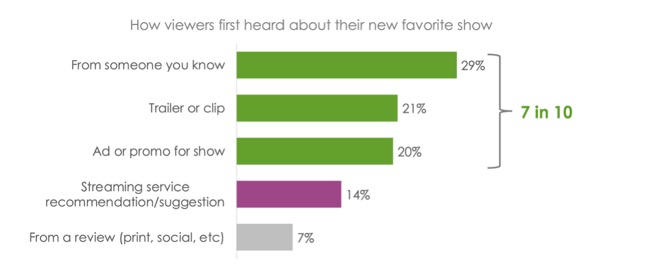
The study found that 29% of viewers first discovered their new favorite show through someone they knew, while 21% discovered it through a trailer or clip and 20% through advertising or promotions. Streaming service recommendations accounted for 14% of those discoveries.

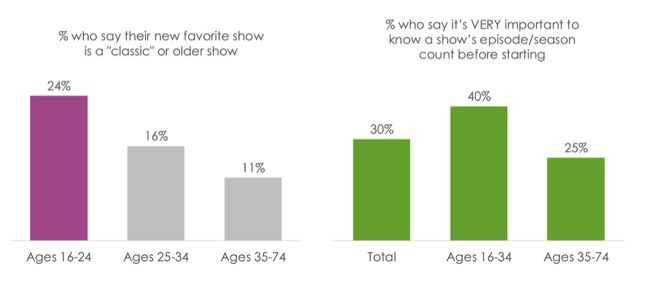
Older television series also continued to attract new audiences, particularly among younger viewers. Nearly one-quarter (24%) of respondents ages 16 to 24 said a classic or older series was their favorite new discovery during the previous year, compared with 11% of viewers ages 35 and older.
However, extensive episode catalogs presented a potential obstacle to attracting new audiences. The research found that 30% of respondents considered it very important to know how many episodes or seasons a series contained before starting it. That figure increased to 40% among viewers ages 16 to 34.
When researchers tested series with varying episode counts, shows with more seasons and episodes received the lowest scores for definite viewing interest.
“Viewers have plenty to watch, they just need better ways to find it,” said Jason Platt Zolov, study author and senior consultant at Hub Entertainment Research.
“Older shows are winning over a new generation of fans, but only when it’s easy to jump in. As more viewers ask AI tools where to watch, streamers need to make sure their shows turn up in those answers, not just on their own home screens,” Zolov said.
The findings were published in Hub Entertainment Research’s 2026 “Conquering Content” report, part of its syndicated Hub Reports series. The company made an excerpt of the findings available on its website.

tags
Artificial Intelligence, google, Hub Entertainment Research, Jason Platt Zolov
categories
Featured, Market Research Reports & Industry Analysis, Streaming