

CBS stations roll out AR/VR election centers across 15 markets
Weekly insights on the technology, production and business decisions shaping media and broadcast. Free to access. Independent coverage. Unsubscribe anytime.
CBS Television Stations is expanding its use of augmented and virtual reality technology to election coverage, introducing virtual election centers at all 15 of its owned-and-operated stations for the 2026 midterm elections on Tuesday, Nov. 3, 2026.
The new election centers will allow anchors and reporters to present results, explain ballot measures and examine voting trends using three-dimensional graphics, interactive maps and digitally created studio environments.
Jennifer Mitchell, president of CBS Television Stations, announced the rollout, which builds on the station group’s investment in AR/VR technology for local news, weather and sports coverage. Select stations also used the technology during the 2024 election cycle.
CBS says it is the only television station group in the United States operating news studios driven by augmented and virtual reality technology.
Unlike conventional election graphics displayed on studio monitors, the virtual election centers will place journalists inside computer-generated environments where election data and visualizations can appear around them, though CBS stations are not alone in using this approach — it’s been popular at the network level for years.
The technology will allow reporters to move through interactive representations of election results, examine geographic voting patterns and illustrate how individual races could affect political representation at the local, state and national levels.
“Elections can be complex, and our responsibility as journalists is not only to report the results but also to help viewers understand what those results mean for their neighborhood, county and state,” Mitchell said in a statement.

“Our AR/VR election centers combine innovative storytelling with the deep local knowledge of our news teams, helping audiences better understand the races, issues and outcomes that matter most where they live.”
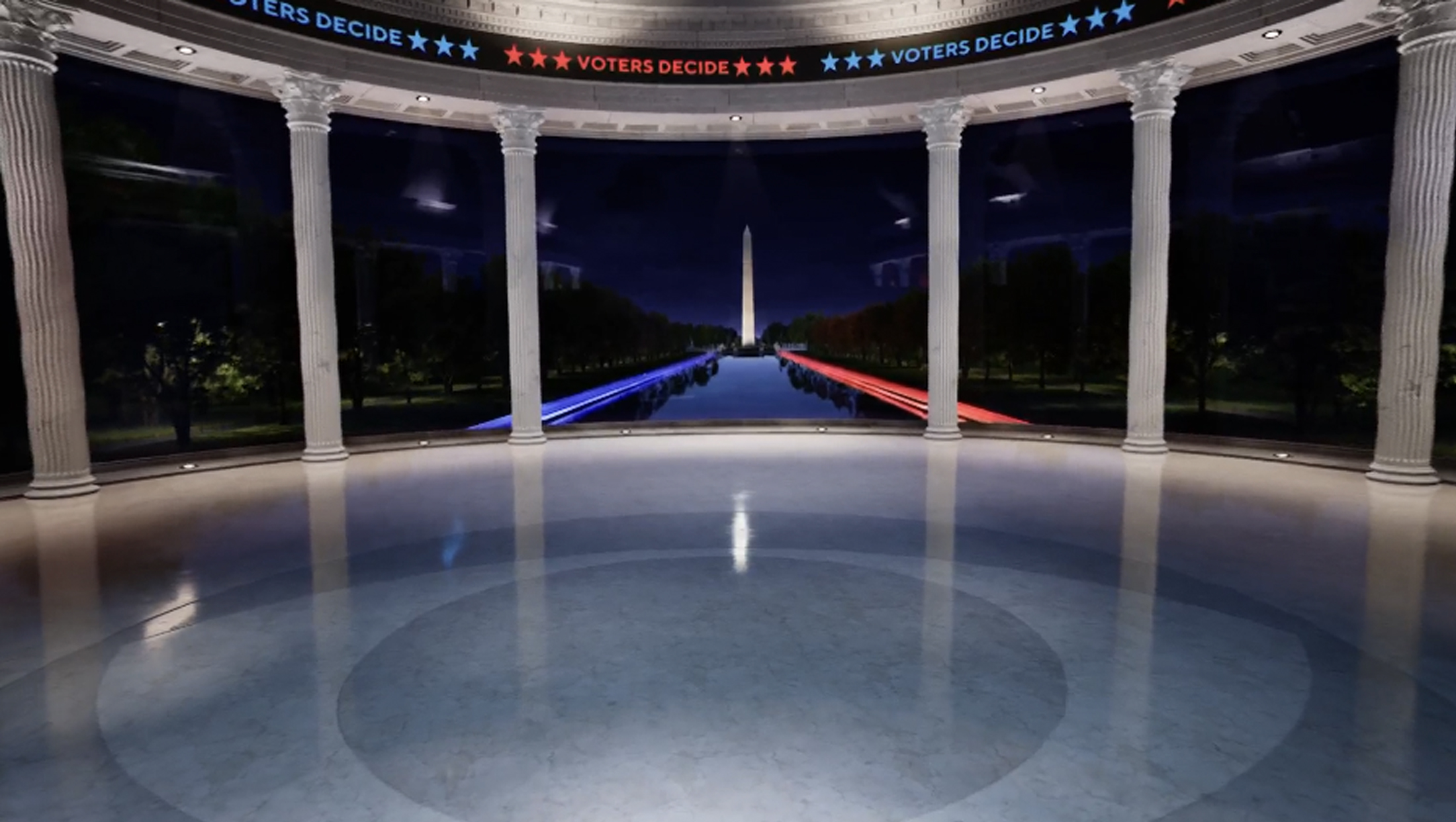
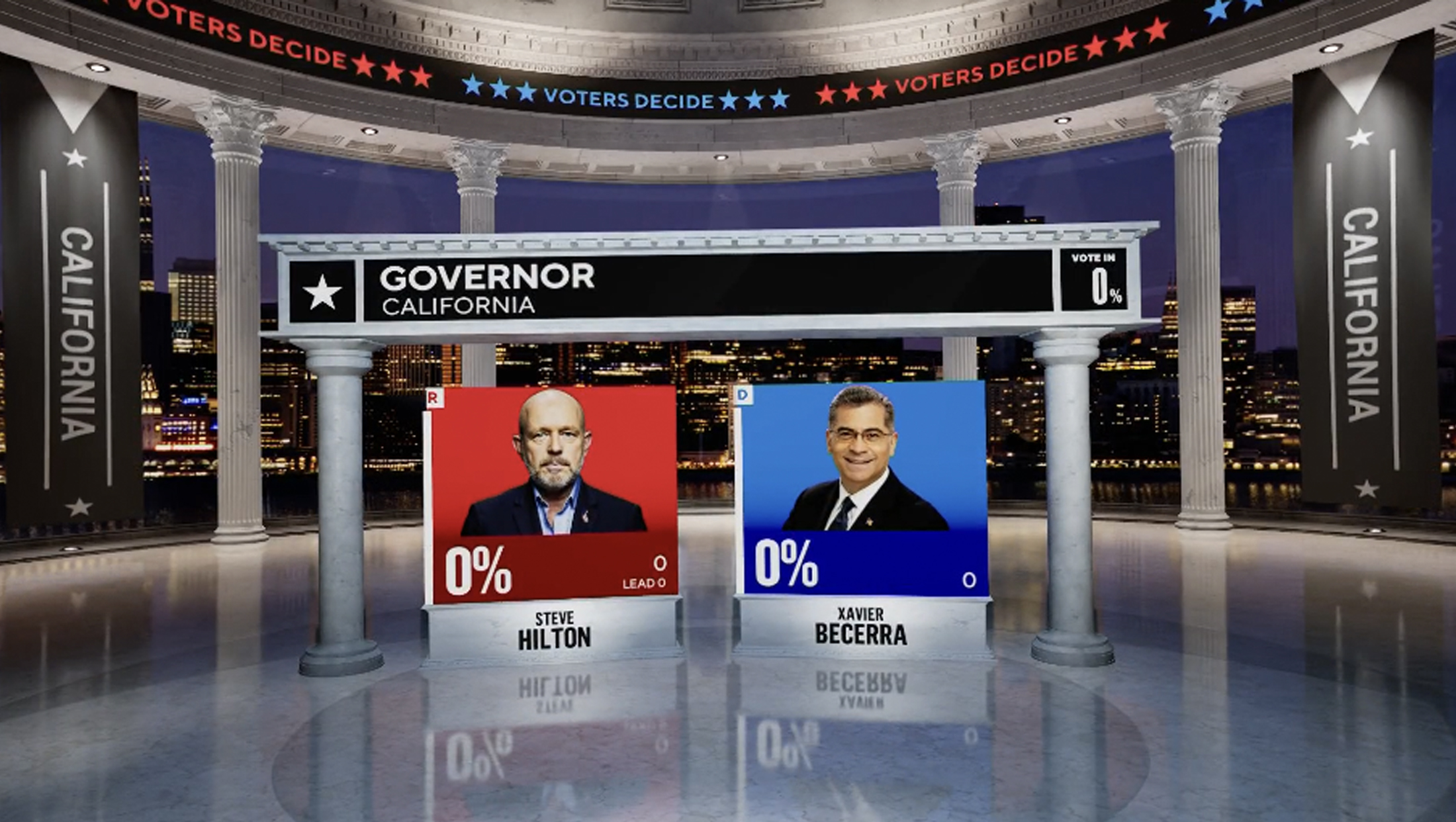
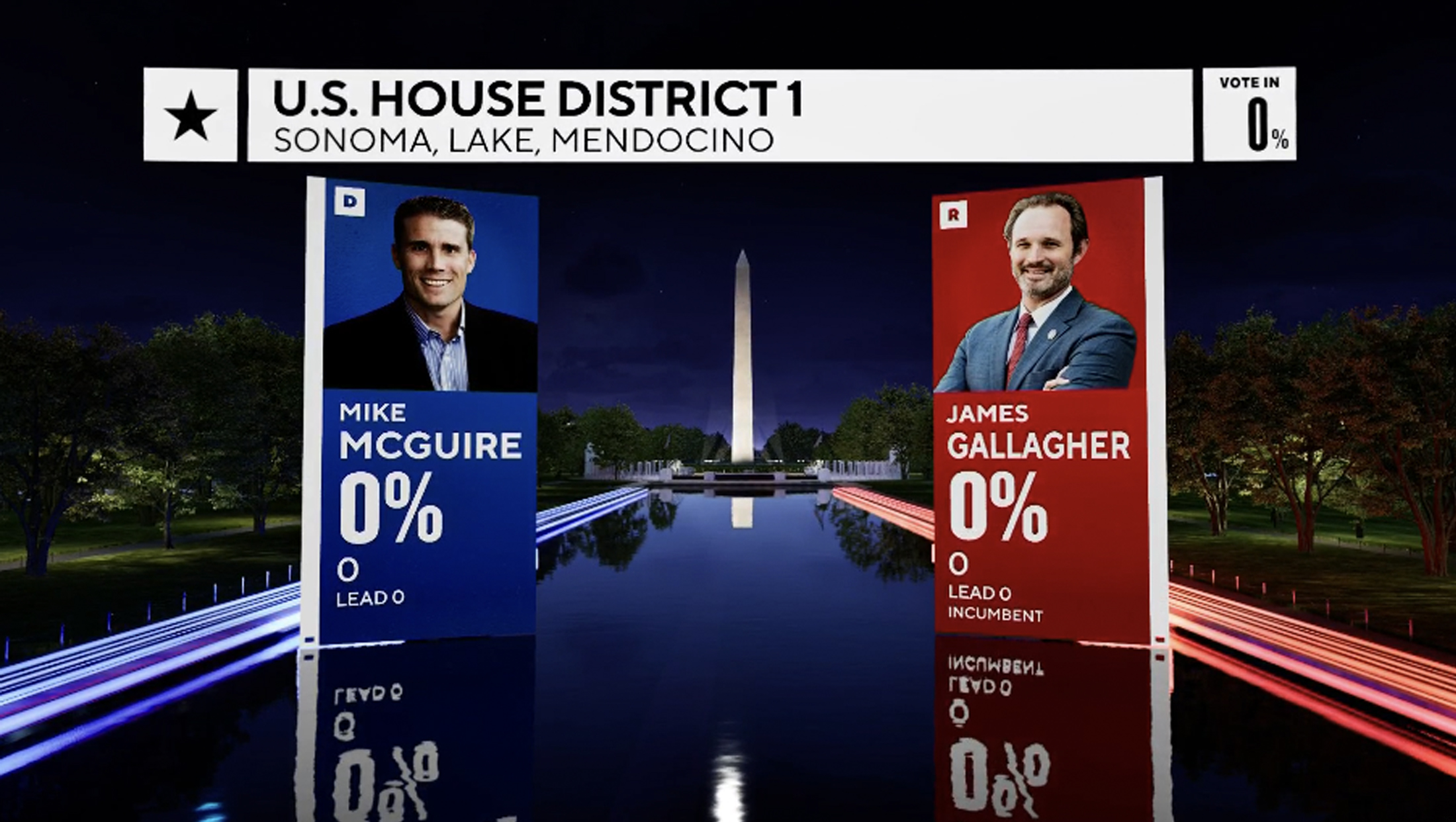
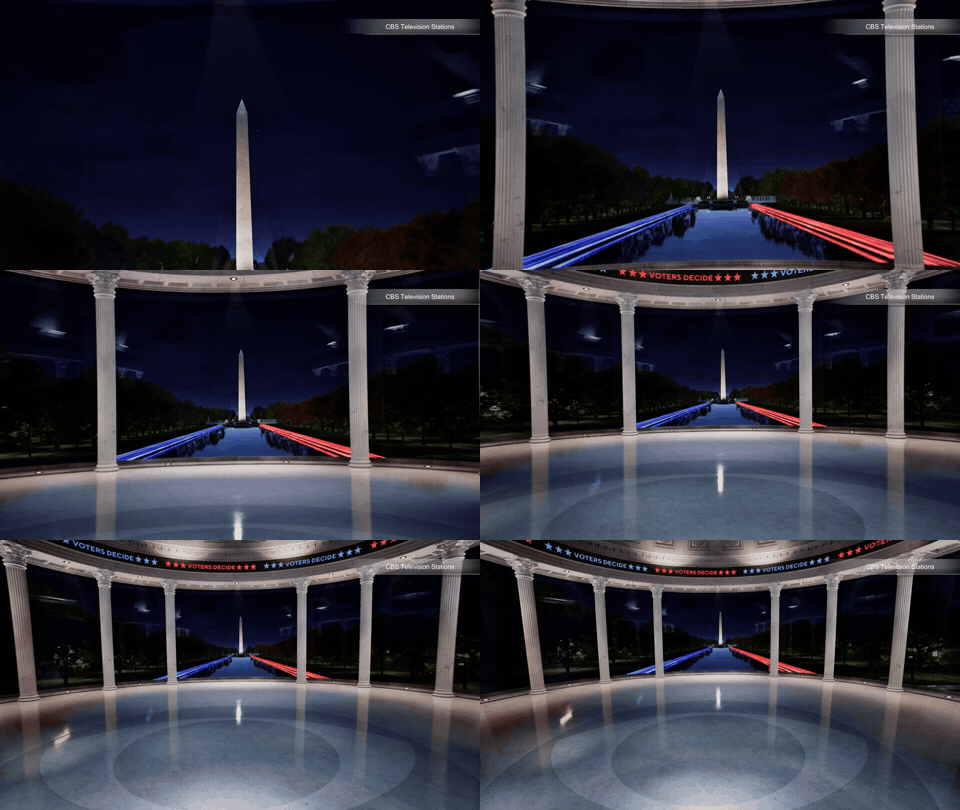
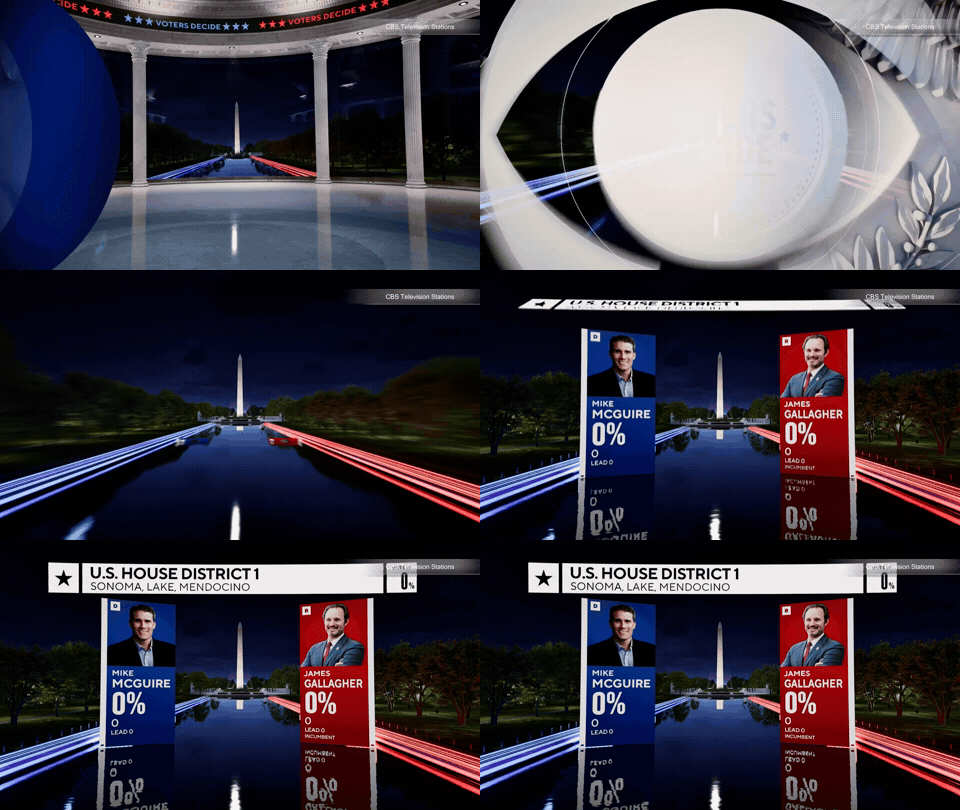
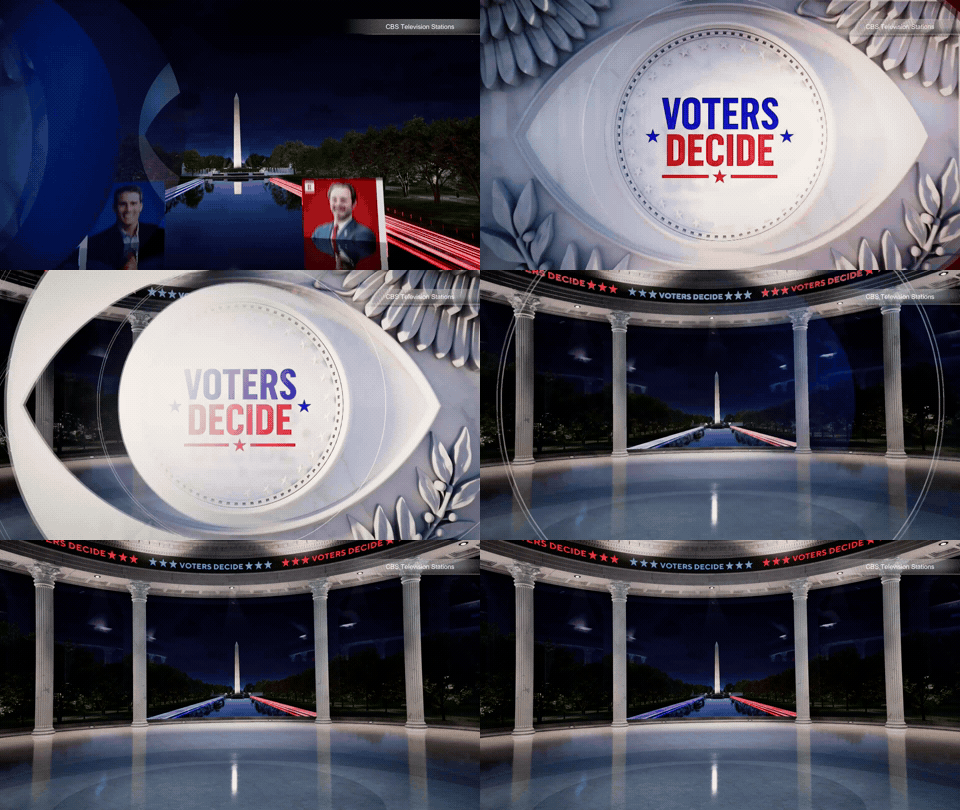
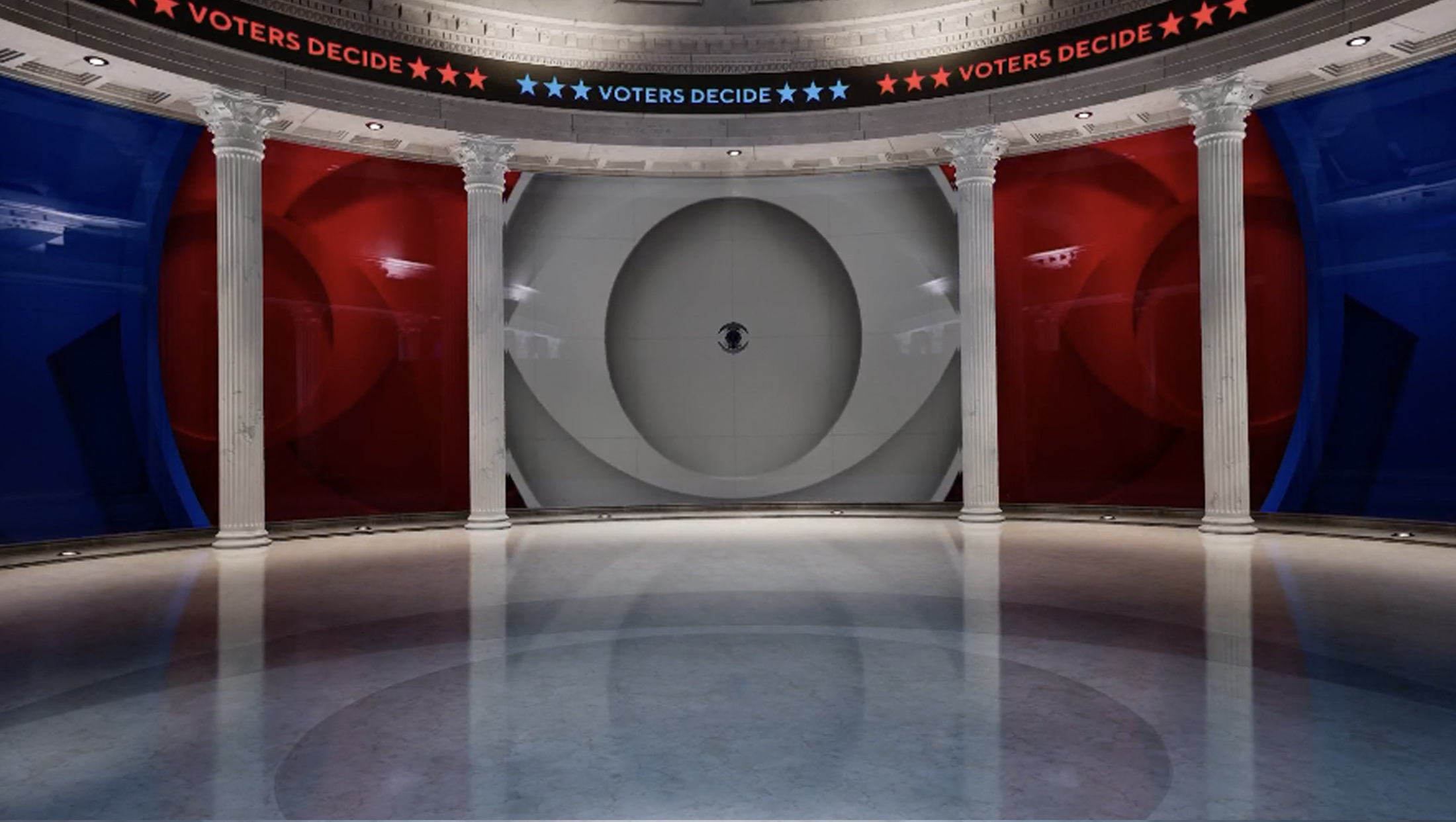
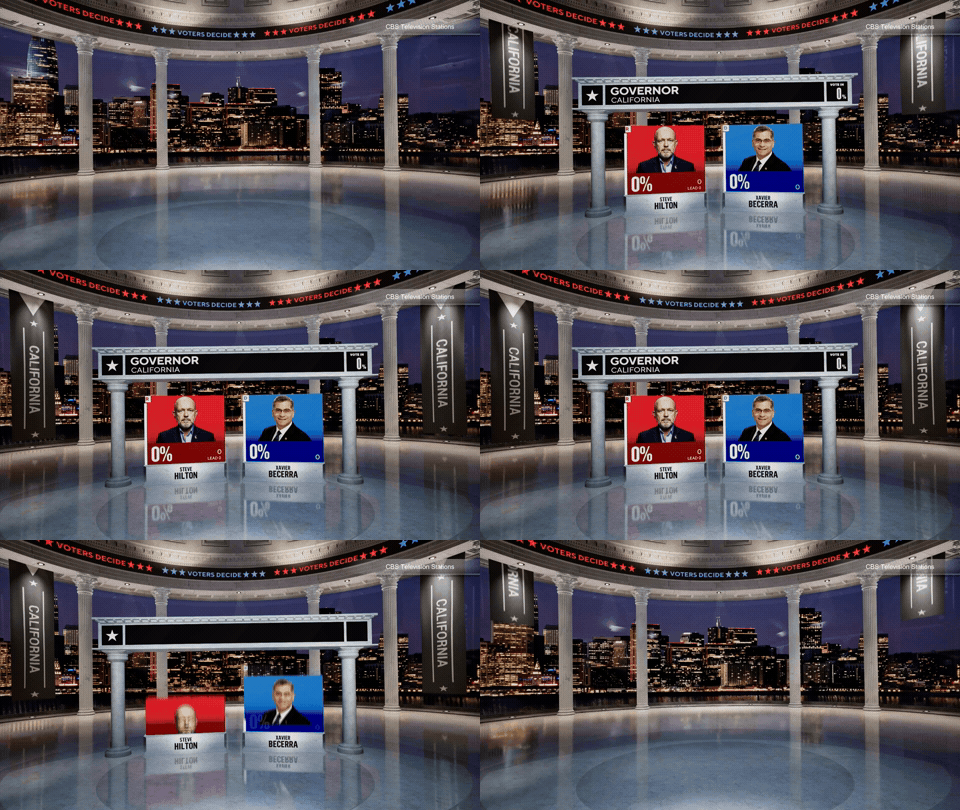
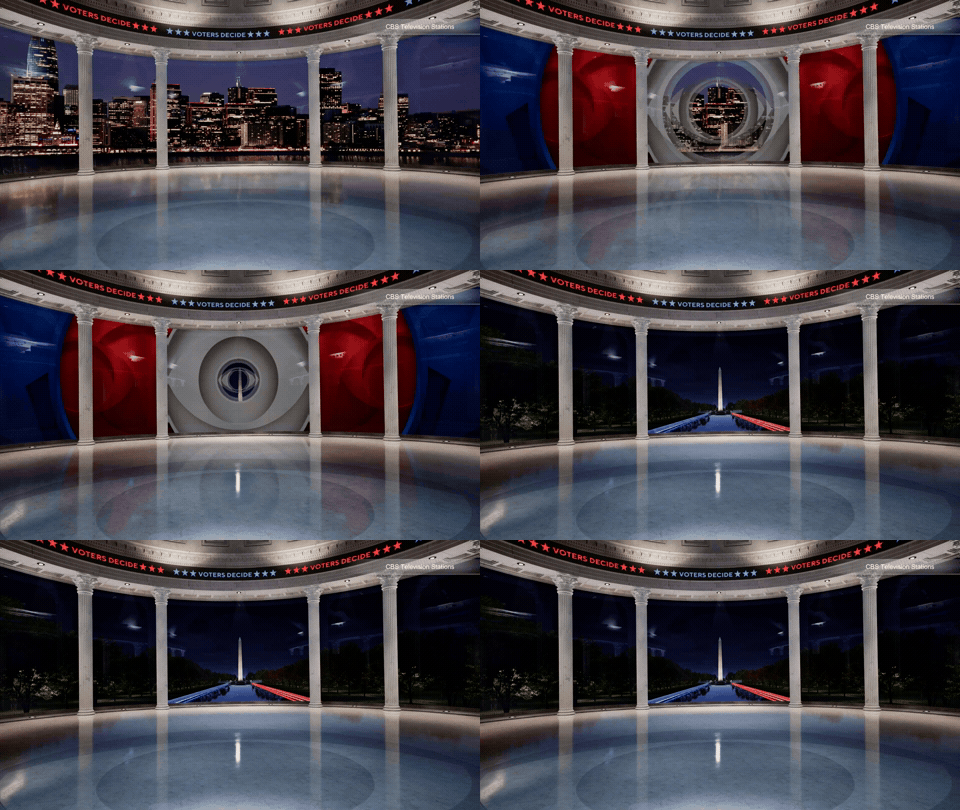
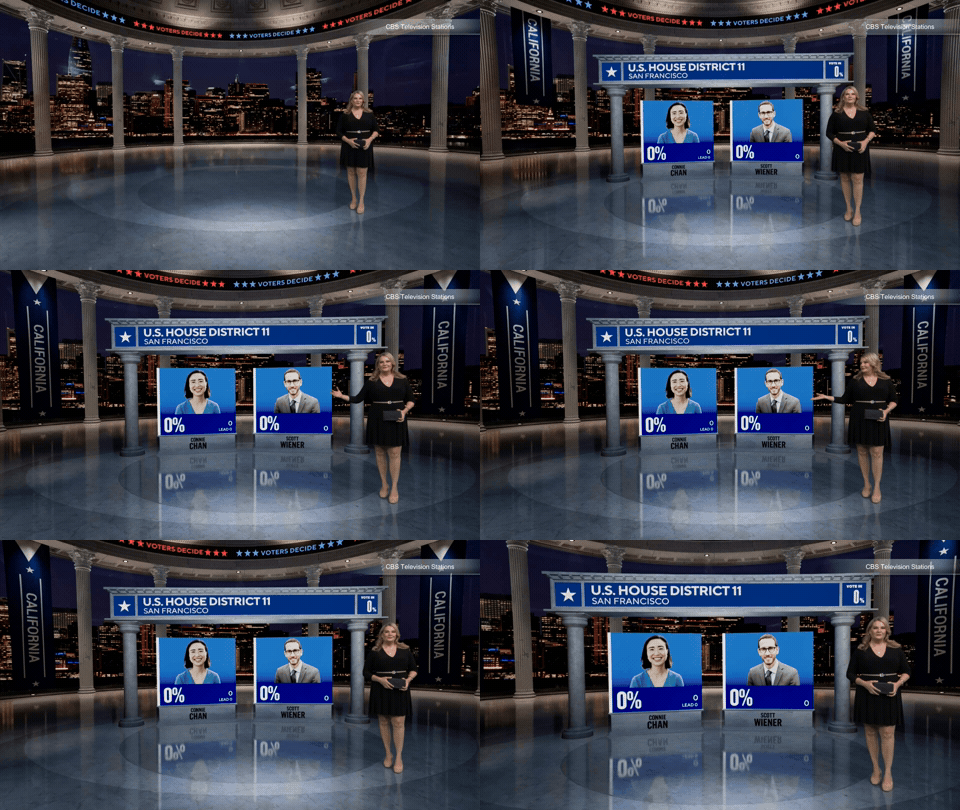
In preview imagery the network released, the environments show a circular space with a marble floor and rings with traditional Corinthian columns with the option to overlook the Reflecting Pool in Washington, D.C., or graphic panels. Results float in the middle of the space framed out with a virtual two-column structure topped with a ticker-like header inside a traditional carved stone element.
Graphics can also float directly beside the VR Reflecting Pool, which is also accented with bold blue and red lines — one on each side of the water.
The election centers are built on CBS Stations’ proprietary AR/VR platform, which was originally developed within the company’s local television operations.
The technology made its debut in 2023 at KPIX in San Francisco, California, where CBS Bay Area introduced the station group’s first augmented and virtual reality news studio.
The initial framework and operational blueprint were developed internally at KPIX before being adapted for use at other CBS-owned stations.
Under Mitchell’s leadership, the company has gradually expanded the technology across its station group, incorporating virtual environments and immersive graphics into weather forecasts, news reporting and sports presentations.
The election centers represent another application of that existing infrastructure, rather than a separate technology developed exclusively for election night.
Augmented reality allows computer-generated graphics and objects to appear within a real-world setting, while virtual reality creates digitally constructed environments.
In CBS Stations’ studios, the technologies can be combined to make anchors, reporters and meteorologists appear to stand inside virtual scenes or alongside three-dimensional data displays.

For election coverage, those capabilities will be used to illustrate vote totals, compare results across geographic areas and provide visual explanations of ballot initiatives and competitive races.
Interactive maps will allow journalists to focus on particular communities, counties and states, while dynamic graphics will display election information as results become available.
The approach is intended to provide additional context beyond traditional election night graphics, which typically rely on numerical vote totals, percentages and two-dimensional maps.
CBS says the technology is designed to supplement the work of its journalists rather than change the underlying reporting.
Anchors and reporters will continue to gather information, analyze developments and explain election results, using the virtual environments as another way to present that information to viewers.
The company has positioned AR/VR as a tool for making complicated subjects more accessible, particularly when stories involve geographic relationships, large amounts of data or developments that are difficult to illustrate through conventional studio presentations.
That approach has already been incorporated into weather coverage, where meteorologists can use virtual environments to demonstrate storm systems and other weather events.
CBS Stations has also applied the technology to general news and sports coverage, allowing journalists to present information within computer-generated settings.
The election rollout will extend those capabilities to political reporting across the station group’s local markets, with journalists using the technology to explain races and issues relevant to their respective communities.
CBS says the initiative is part of its continuing investment in local journalism and audience engagement, with an emphasis on combining local reporting expertise with new presentation tools.

The company will distribute its election coverage through its local television broadcasts and digital platforms.
Viewers will also be able to follow CBS Stations’ election reporting through CBS News’ local news website, Paramount+, Pluto TV and the CBS News 24/7 streaming service.

tags
Augmented Reality, CBS Television Stations, Jennifer Mitchell, November 2026 Midterm Elections, virtual reality
categories
Augmented Reality, Virtual Production and Virtual Sets, Broadcast Industry News, Elections, Featured, Local News