

Case Study: Inside Bell Media’s 72-hour return to air following Montreal flooding
Weekly insights on the technology, production and business decisions shaping media and broadcast. Free to access. Independent coverage. Unsubscribe anytime.
A flash flood in downtown Montreal brought Bell Media’s primary broadcast infrastructure to a standstill, forcing production off-air and creating an urgent need for recovery.
Within 72 hours, the broadcaster was back on air, powered by a rapid shift to a fully virtualized production environment built on existing IP infrastructure.
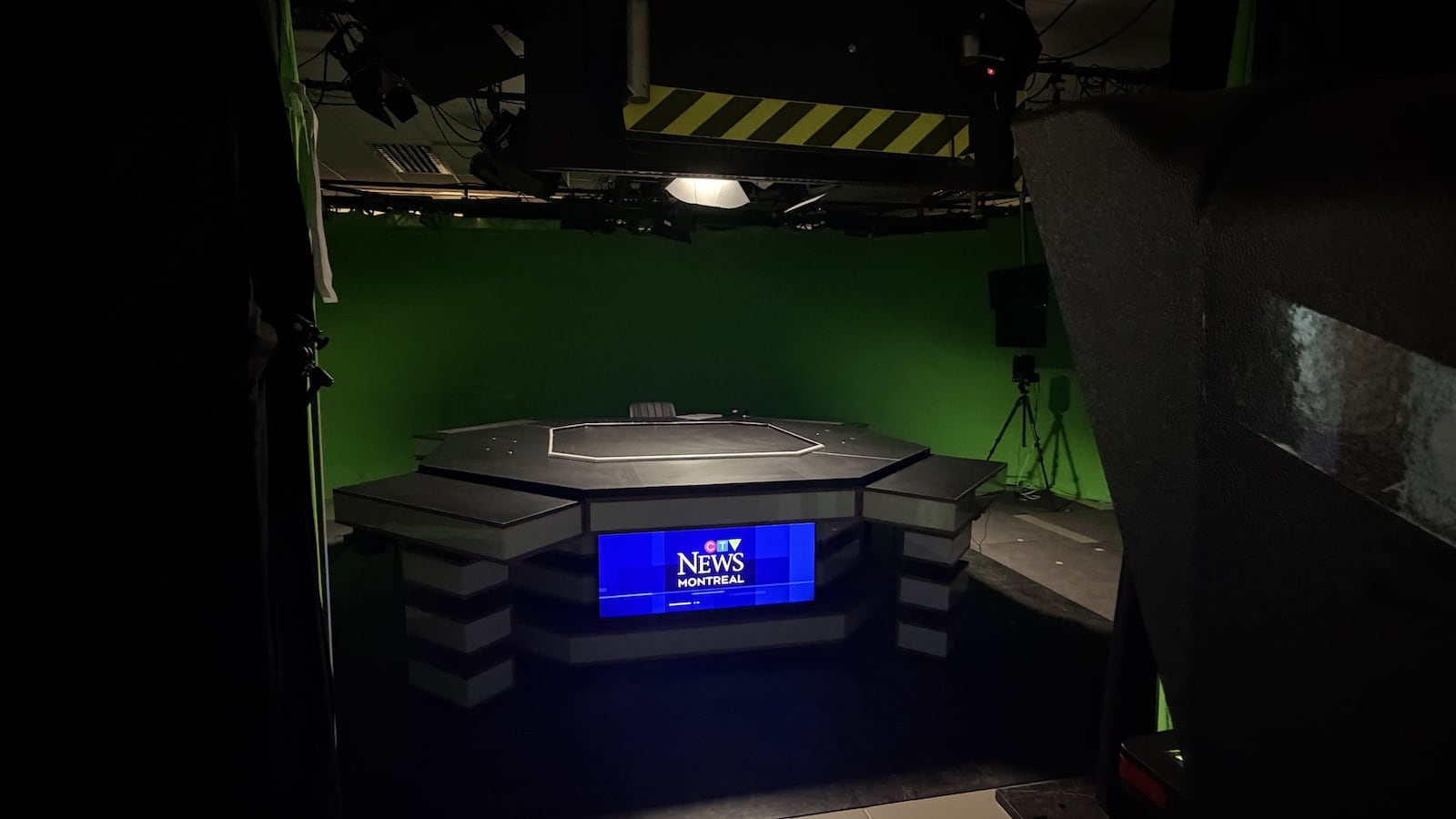
The speed of that turnaround was not accidental. Bell had already invested in virtual and augmented reality production capabilities, giving its team the foundation needed to pivot quickly. In the immediate aftermath of the flood, all Montreal-based production moved to virtual sets rendered by real-time graphics engines, while operators relocated to repurposed on-site spaces, including cafeterias, to continue production.
At the center of this transition was a distributed production setup enabled by IP-based KVM technology.
Using Matrox Extio 3, Bell’s operators were able to remotely control 17 systems across four control rooms, maintaining full access to critical production resources despite the disruption. Multiview 4K capabilities allowed operators to monitor and manage multiple servers simultaneously, supporting a streamlined and efficient workflow under pressure.
The deployment leveraged Bell’s existing secure IP network, eliminating the need for additional switching infrastructure or security reconfiguration. This significantly reduced setup time and allowed the team to focus on restoring operations rather than rebuilding the underlying network. The system supported real-time video and peripheral control through standardized multicast and enabled plug-and-play configuration across the existing environment.
Behind the scenes, the virtual production environment scaled quickly. More than 16 Unreal Engine servers were used to render virtual sets, supported by 17 Extio 3 units mapped across four control rooms. Operators worked from distributed stations set up in repurposed areas, while Matrox I/O cards were deployed in six of ten media servers, taking advantage of native Unreal Engine plug-in support.
“Once our operators started using Matrox Extio 3, there was no going back. They’ve experienced the responsiveness, reliability, and multiview flexibility it offers, and now they won’t use anything else,” said Jonathan Fortin, CTO of Rec4Box.

The outcome highlights how IP-based workflows can simplify deployment in high-pressure scenarios. By avoiding the need for additional VLANs or new switching equipment, Bell reduced complexity at a critical moment. Hardware was delivered and deployed quickly, enabling the broadcaster to resume on-air services in under three days.
The project also represents a broader shift in how broadcasters approach resilience.
Bell is now operating what it describes as a fully virtualized production workflow at scale, setting a new benchmark for disaster recovery and remote production in Canada.
Following the success of the Montreal recovery, Bell is now exploring how this architecture could be extended to additional facilities in Toronto and Vancouver. Each deployment will be evaluated independently, but the events in Montreal have already demonstrated what is possible when virtualized workflows and IP-based control are in place before disaster strikes.

tags
Bell Media, Epic Games Unreal Engine, KVM, Matrox Video, montreal, natural disasters, Rec4Box, Virtual Production
categories
Augmented Reality, Virtual Production and Virtual Sets, Case Study, Featured, IP Based Production, Voices