

NBC News goes vertical to create ‘direct connection’ with viewers, fuel subscription offering
Weekly insights on the technology, production and business decisions shaping media and broadcast. Free to access. Independent coverage. Unsubscribe anytime.
After quite literally giving consumers a different way to frame the world, media organizations are now being challenged to find ways to use the format to deliver timely, accurate and vetted updates to viewers, including leveraging these assets across NBC News’ digital products and presences.

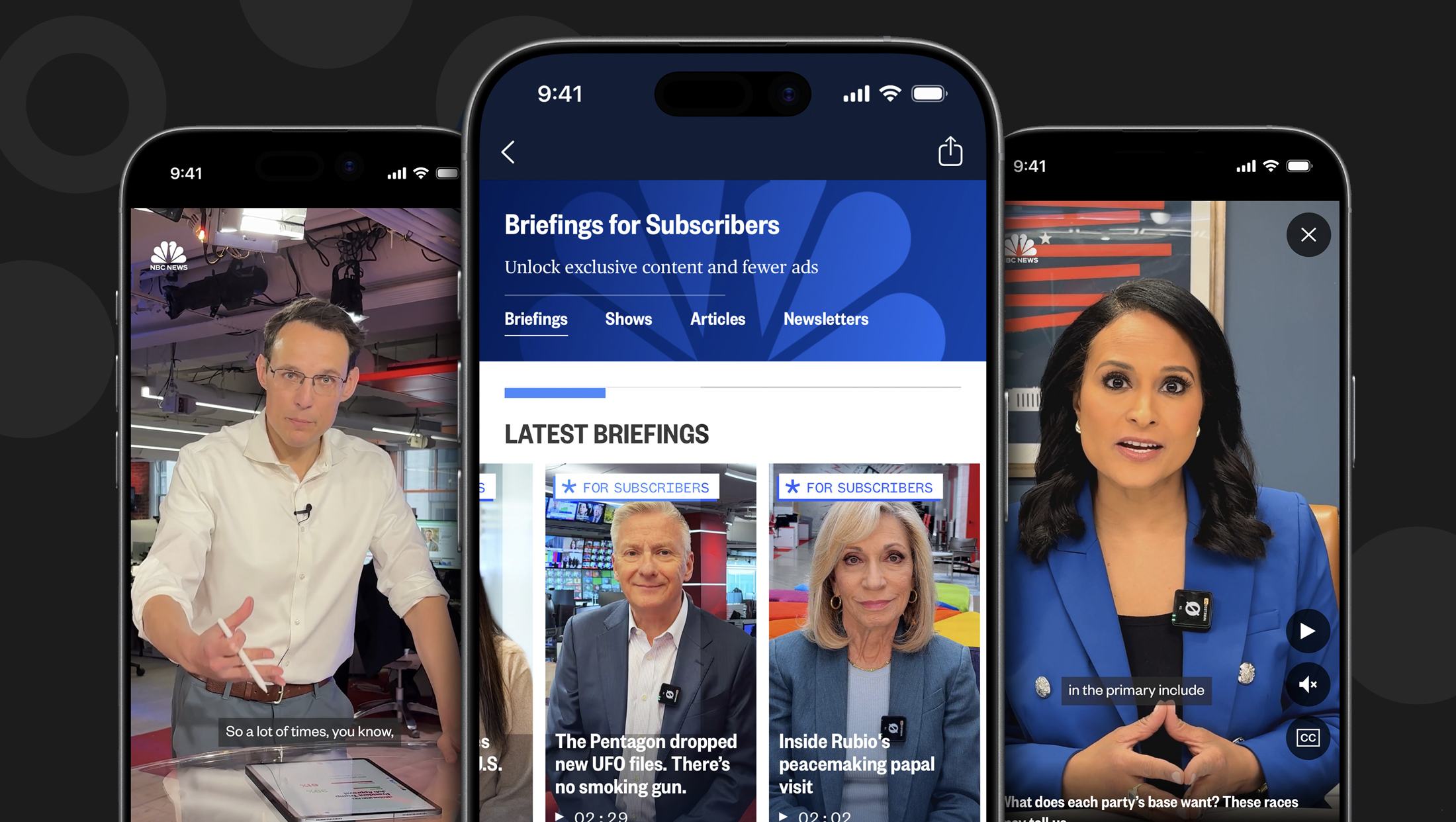
It’s doing that by leveraging vertical video shorts as a way to enhance its overall digital presence while also bolstering the paid subscription service it launched in December 2025.
The network’s newsrooms and reporting teams around the globe are currently producing around 500 vertical videos per month for NBCNews.com and its apps, with a similar count on TikTok.
One spin that NBC is putting on its vertical videos in a subscription-based monetization approach. While many video shorts are available on TikTok for free, NBC saves select clips to be exclusive to its website and own apps — while still others are then reserved for those who pay for a subscription plan, dubbing these offerings “exclusive video briefings.”
The free clips tend to focus on quick updates, often created selfie-style by the correspondents themselves using mobile phones, while subscriber-only content often dives deeper and provides context to the day’s stories.
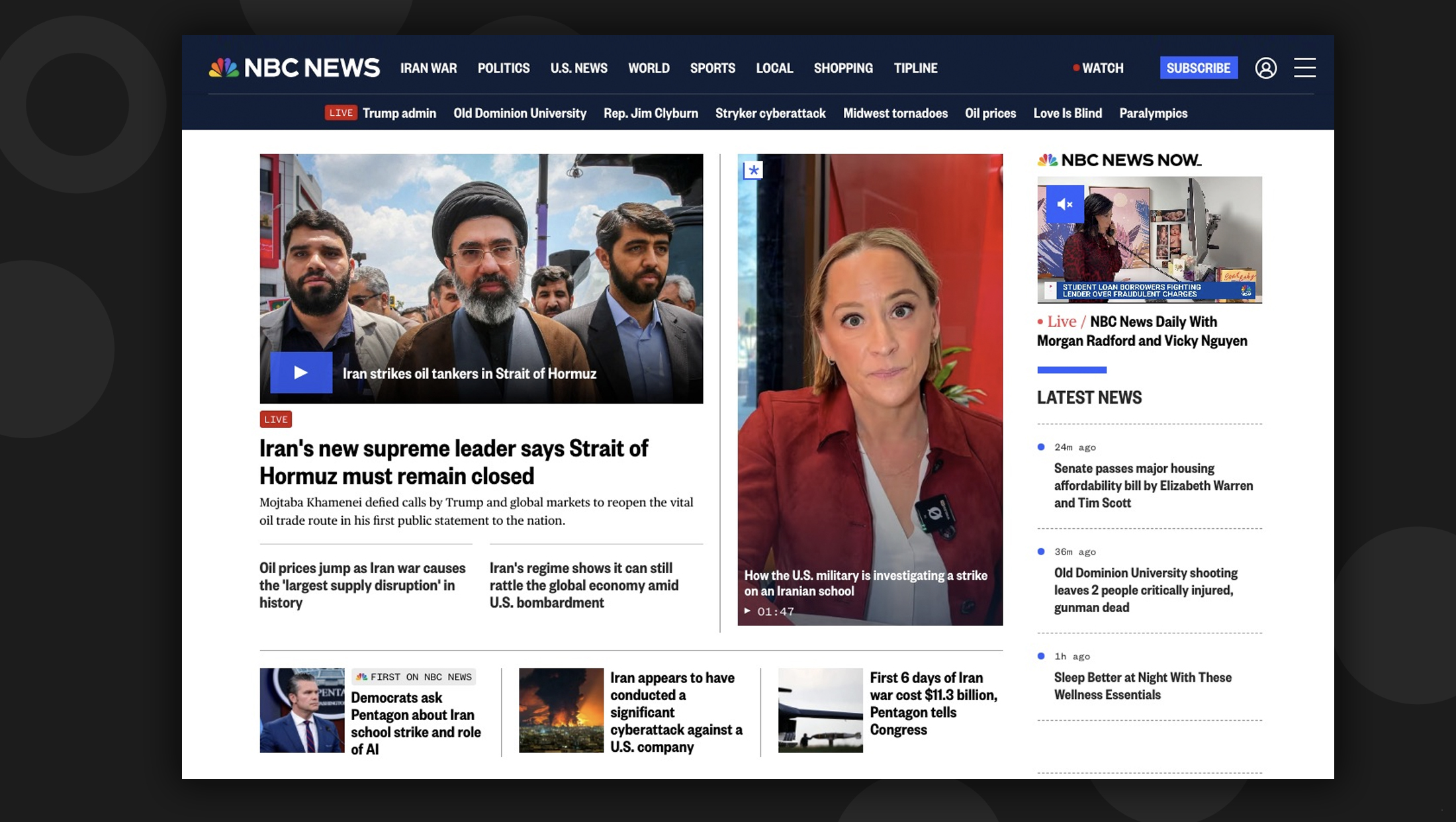
In this March 12, 2026, screenshot of the NBCNews.com homepage, a vertical video clip is showcased prominently as a hero element.
The network has also been prominently posting the vertical format on its website, which is accessible to users on horizontal screens as well. The portrait orientation is preserved across devices, creating a stronger visual relationship with mobile viewing habits.
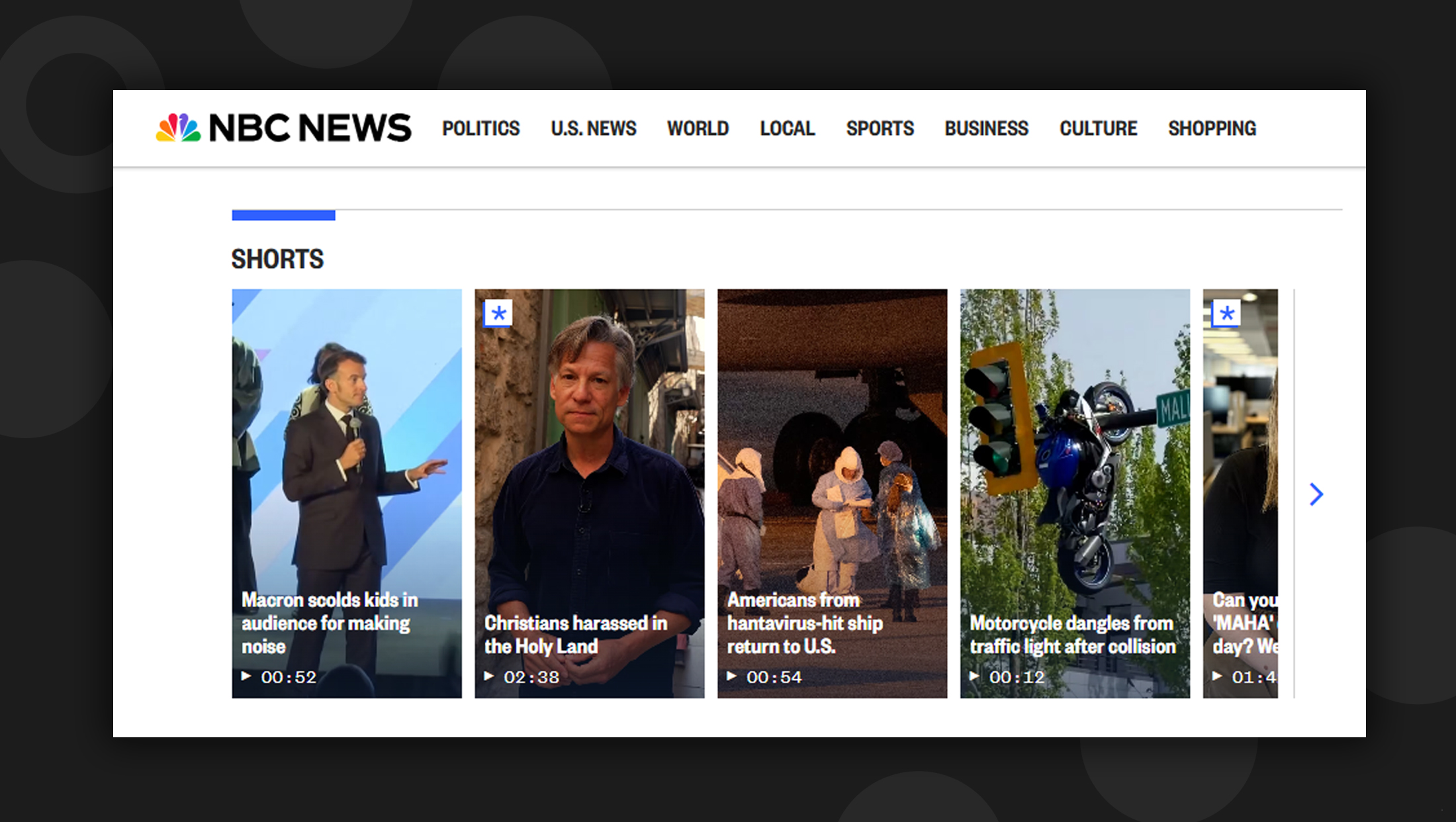
This can also include embedded vertical players mixed in alongside more traditional hero images and headline scrapes on the homepage of NBCNews.com while also being showcased in more traditional scrolling carousel layouts.

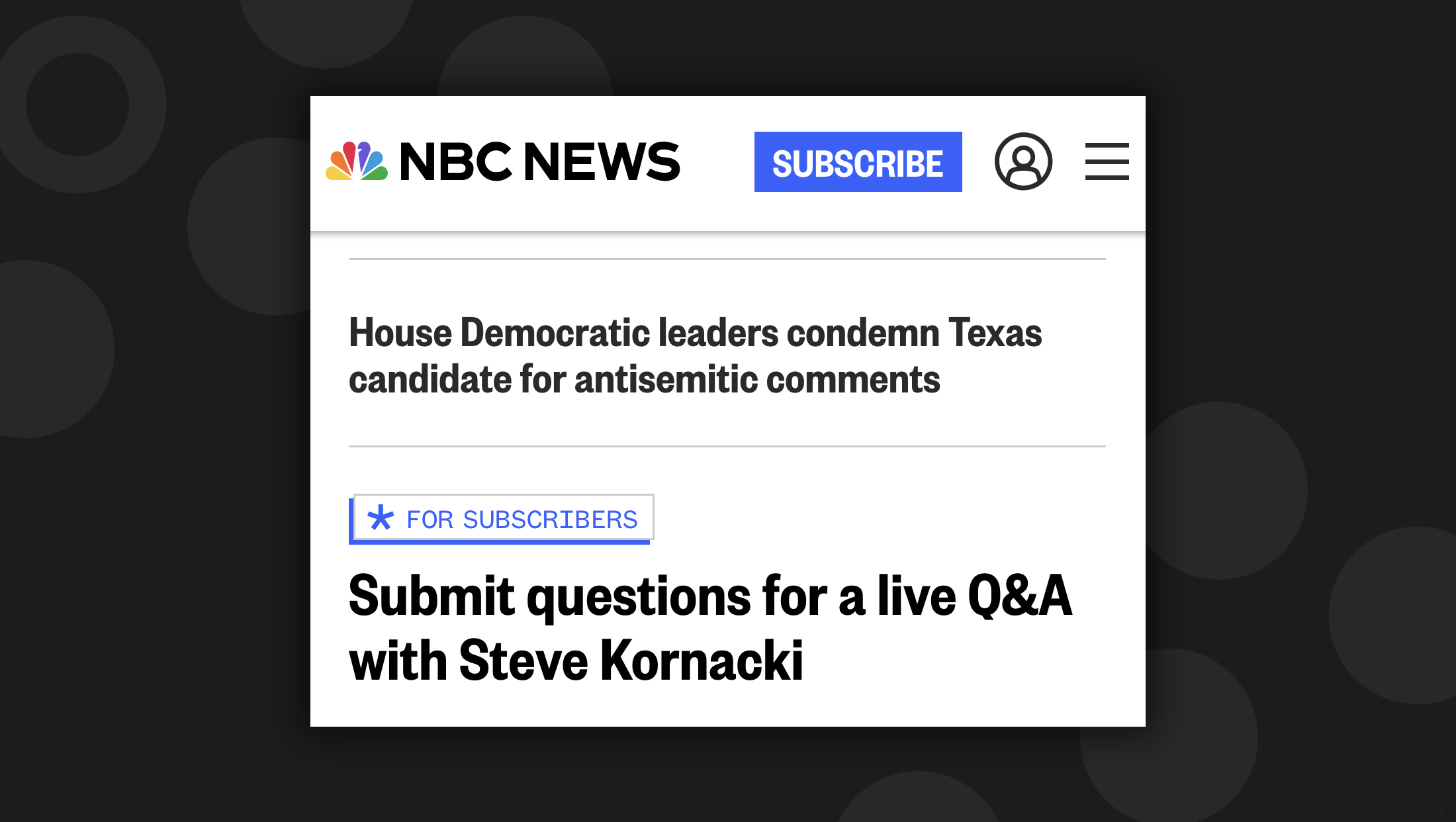
After launching its subscription offering Dec. 2, 2025, NBC began using the lighter shade of blue shown here for key calls-to-action as well as the asterisk symbol, which is shown here with the ‘for subscribers’ label spelled out. In other instances, it is used on its own in a similar box.
Throughout its properties, NBC has been using a blue asterisk icon to denote subscriber-only content, including video shorts. For non-subscribers, a vertical format user interface encouraging sign-ups has also been created.
It’s not clear how well the subscription offering is doing. NBC declined to provide subscriber counts or more specific data on short-form video usage from within its own site and apps.
However, the network cited data from ListenFirst that puts it as the top broadcast network on TikTok in 2026 so far, with its content registering over 888 million views as of early second quarter. Content from its chief data analyst Steve Kornacki has also proven popular, having racked up over 150 million views since 2024, while a playlist featuring 2025 election results has over 8 million views.
The network also noted that its video offerings across NBCNews.com and its apps showed 14% growth, according to Adobe Analytics.
While it’s difficult to tell just how well video shorts are doing, especially on-net and since the subscription offering launched, it is clear the network is making purposeful decisions about how it handles the format on a platform-by-platform basis.
It’s also clear, based on its own marketing materials and real estate being devoted to showcasing short-form vertical video, that the network is eager to showcase its talent and reporting using the vertical video format.
“Video shorts let us deliver deeper reporting and analysis in a more accessible, mobile-first format,” Shalini Sharma, senior vice president, content development, NBC News, told NCS.
“They showcase our correspondents’ expertise while offering added value for subscribers, including behind-the-scenes context that breaks the fourth wall. At the same time, they build on what NBC News has always done by deploying journalists to the story and connecting directly with audiences. It is just now offered in an additional format that matches how many people consume news today,” she added.
The network has also been producing shorts that are designed to be more standalone pieces of content, while others focus on adding to reporting done via legacy platforms.
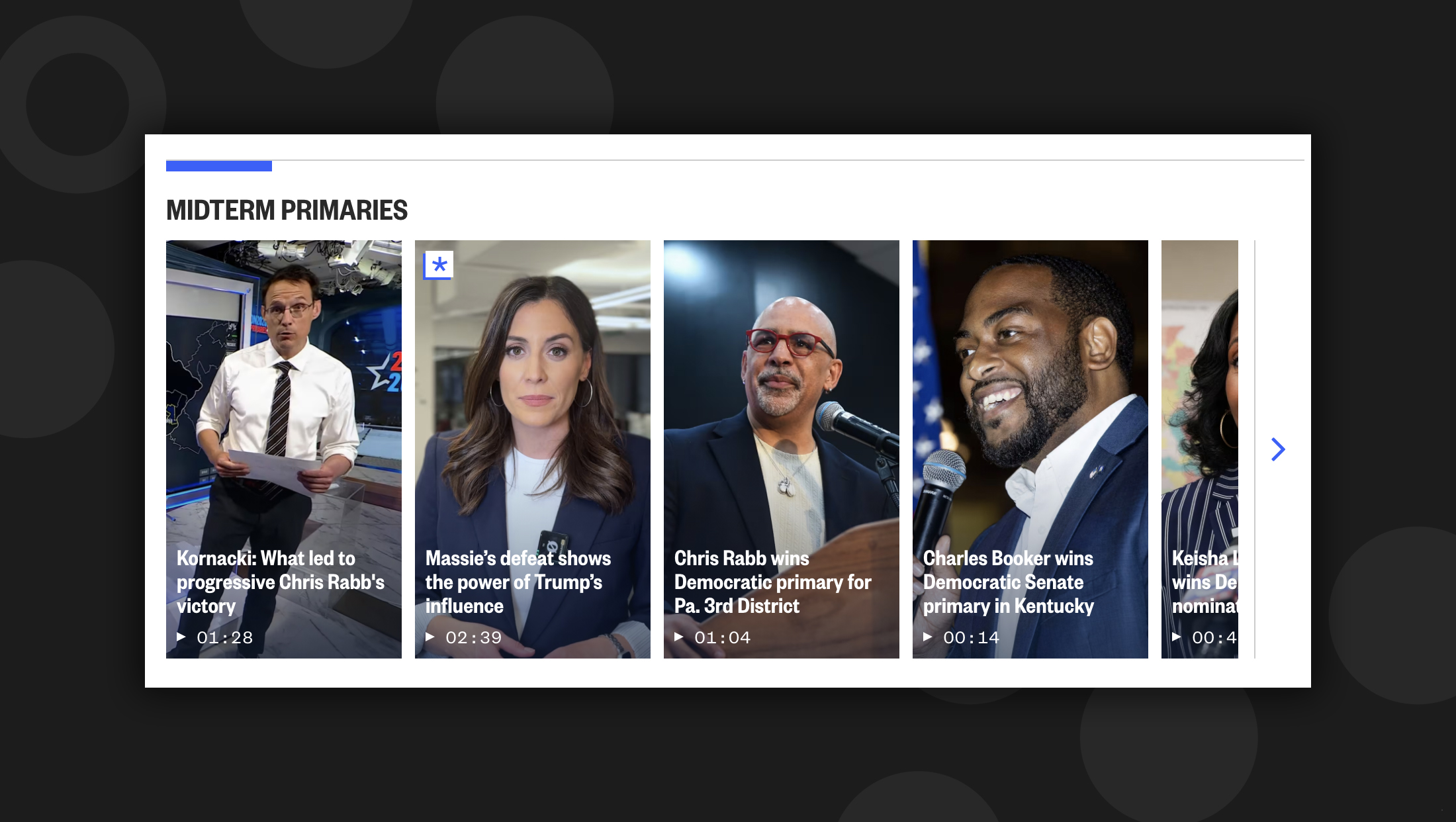
NBC News is also going all-in with vertical video for its political coverage, often adding to reporting available from its other platforms and in a variety of formats. The second clip from the left in the image above includes the asterisk icon designating that content as subscriber-only.
“Shorts work as standalone pieces because each delivers a complete, focused story in a quick, vertical format,” said Sharma.
“At the same time, they complement our broader coverage by offering another way to engage with news, both on-demand and on mobile. They extend our strong vertical video and social presence while going deeper than typical social content, giving subscribers more context and analysis.”
The NBC News editorial team has also been mindful about how and when the short format is the best way to tell the story.

“We’re constantly balancing breadth and depth, covering the most important stories without overwhelming audiences,” Sharma explained. “That means being intentional about volume while ensuring each piece delivers meaningful reporting and insight. For subscribers especially, the priority is depth, clarity and value over sheer quantity.”
Within the newsroom workflow, shorts are also still subject to the same editorial standards as any other piece of reporting.
“The standards are the same. Every piece, whether vertical, horizontal, live, or taped, meets NBC News’ expectations for accuracy, fairness and editorial rigor,” said Sharma.
“And given that we are set-up as a news organization to deliver reporting quickly while ensuring accuracy, we have those checks and balances in place for vertical video as well.”
Like all newsrooms, NBC News has evolved from the days of when breaking news was first delivered in audio-only formats as technology has worked its way from studio cameras requiring warm-up time to ones that fit in the pocket of a correspondent.
“We often shoot on phones but when correspondents are in position, we can use cameras,” said Sharma. “And we edit vertical videos on software that is commonly used in high production edits to streamline and unify the look of the videos,”
Shorts are already proving to be a key component of being nimble and dynamic in a world with constantly shifting news cycles and quickly developing stories at flash points around the globe.
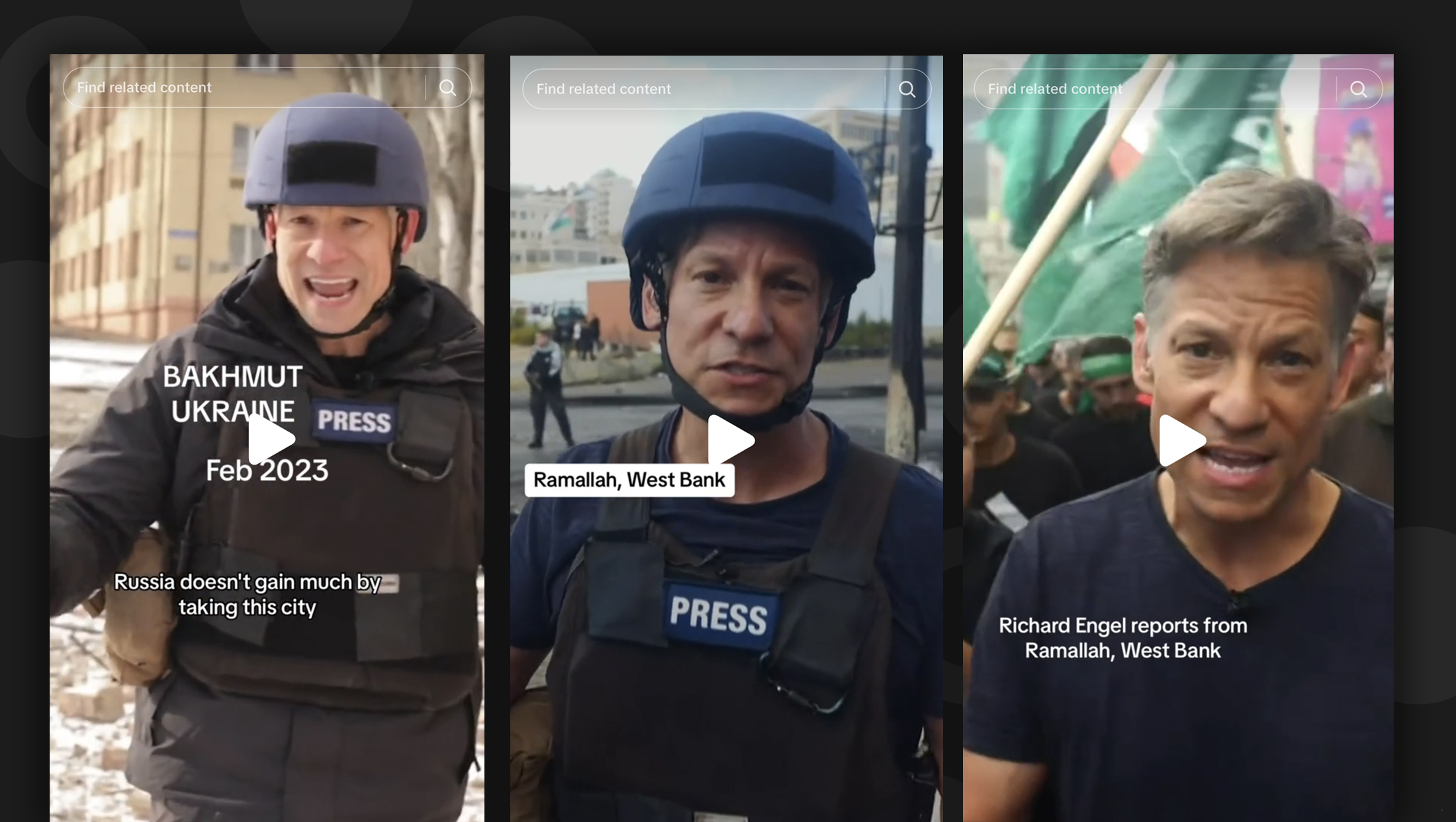
NBC News correspondent Richard Engel frequently reports from regions in conflict, and vertical video shorts are a key way to deliver updates to viewers as storylines shift.
“Shorts are especially effective for fast-moving stories because they allow us to publish quick, on-the-ground updates from correspondents in near real time,” said Sharma. “As new information comes in, we can continuously add updates. We also organize these into playlists or rails, so audiences can easily follow the full progression of a story in one place.”
The format has also cemented itself as a valuable approach to storytelling. In addition to the notion of being reserved for bite-sized updates in a format optimized for mobile devices, shorts also help build connections with viewers.
“They create a more intimate, direct connection between correspondents and the audience. They shoot closer, with minimal production layers and no traditional narration,” said Sharma.

“There is a bit more flexibility with the length of the video, so the correspondent or reporter can take the time they need to share more with the viewer. The result is a more conversational, authentic experience that feels native to how people consume content on their phones,” she said.
“From an editorial standpoint, there’s very little downside. The format is flexible, fast, and highly accessible. Correspondents can produce and file from anywhere without any special equipment. Rather than limiting storytelling, it expands it, enabling more nimble, creative reporting.”
The shorts have also proven popular with correspondents, whose bread and butter is working sources and developing new reporting.
“What I like about this format is that you can go directly to the audience,” Richard Engel, chief foreign correspondent, told NCS.
“It’s less structured, it’s less formal. Of course, we still do the traditional broadcast … and they meet the audience expectations for a set format that people look for in those shows and have been looking for decades. This is a different kind of approach, where you can put together a story, quickly, directly with video or graphics elements and communicate them to an audience.”
“I’ve been doing several shorts focused on the Iran war, and I’m especially proud of how they’ve allowed us to add context and analysis that often doesn’t make it into daily reporting,” Engel added. “When you’re covering fast-moving events, including tracking who did what, which countries are escalating or observing ceasefires, and verifying details in real time, the priority is getting accurate information out quickly.”
Engel also sees the approach as a way to broaden context for viewers.
“These videos create space to step back and explain what it all means,” he said. “In an environment flooded with both information and misinformation, being able to provide clear context, connect the dots, and offer informed analysis is incredibly valuable. That’s what we’ve been aiming to do with these shorts, help audiences better understand not just what’s happening, but why it matters.”
Correspondents also take an active role in the editorial and production process for the shorts.
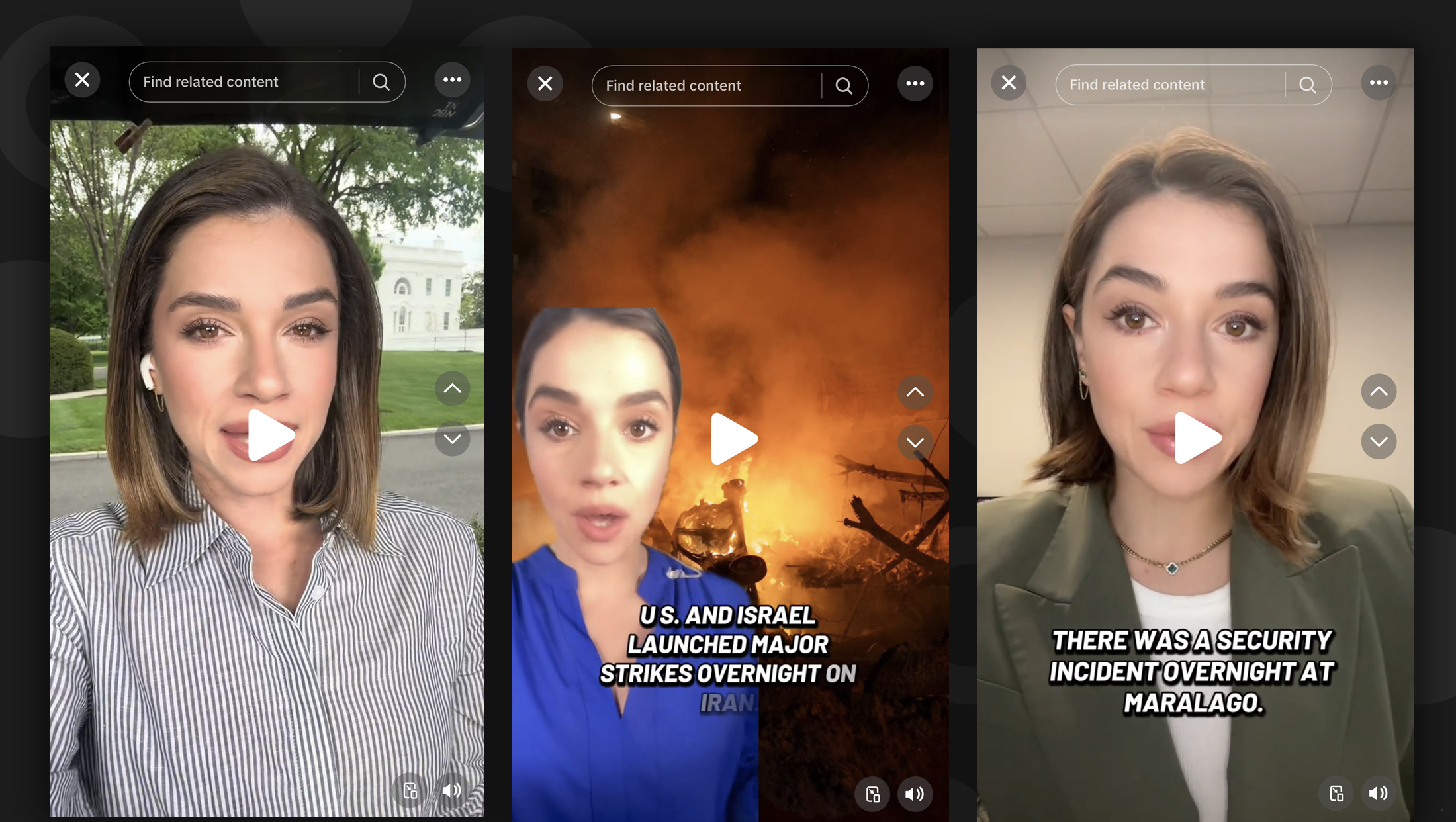
“The fantastic NBC News social team will reach out when I have a story coming for TV or digital that they think would translate well to a vertical video audience,” White House correspondent Julie Tsirkin explained.
“When there’s breaking news, I’ll film a quick video for my TikTok and Instagram right after I wrap a TV hit. When I’m producing content for my personal accounts, time is usually tight, so I’ll ad-lib the main points, film it selfie-style and cut it down as much as possible while preserving the important context. In those cases, it’s completely hands-on: I’m my own shooter, producer and editor all at once.”
On the other hand, NBC has also been able to leverage its decades of experience covering the news in a visual format and that comes into play when it comes time to produce content.
“The content we produce for NBC News platforms is more polished than a typical reel or short. We’re using professional mics, making sure the lighting is right and often a producer or photojournalist is behind the camera,” said Tsirkin. “There’s also a dedicated team handling script drafts, pulling elements and editing, which sets it apart from what I post on my own page. But beyond production value, I think the bigger shift is the intention behind it. As a journalist in 2026, you have to reach people who just aren’t tuning in through traditional platforms anymore. We have to meet the audience where they are, and that means creating content built for how people may consume news today. It isn’t just socials or a network hit: it’s all of the above.”
Not only does this type of content reach viewers on platforms they are already familiar with, it also encourages reporters to build unique relationships with viewers while also giving them the inside track on the latest developments.
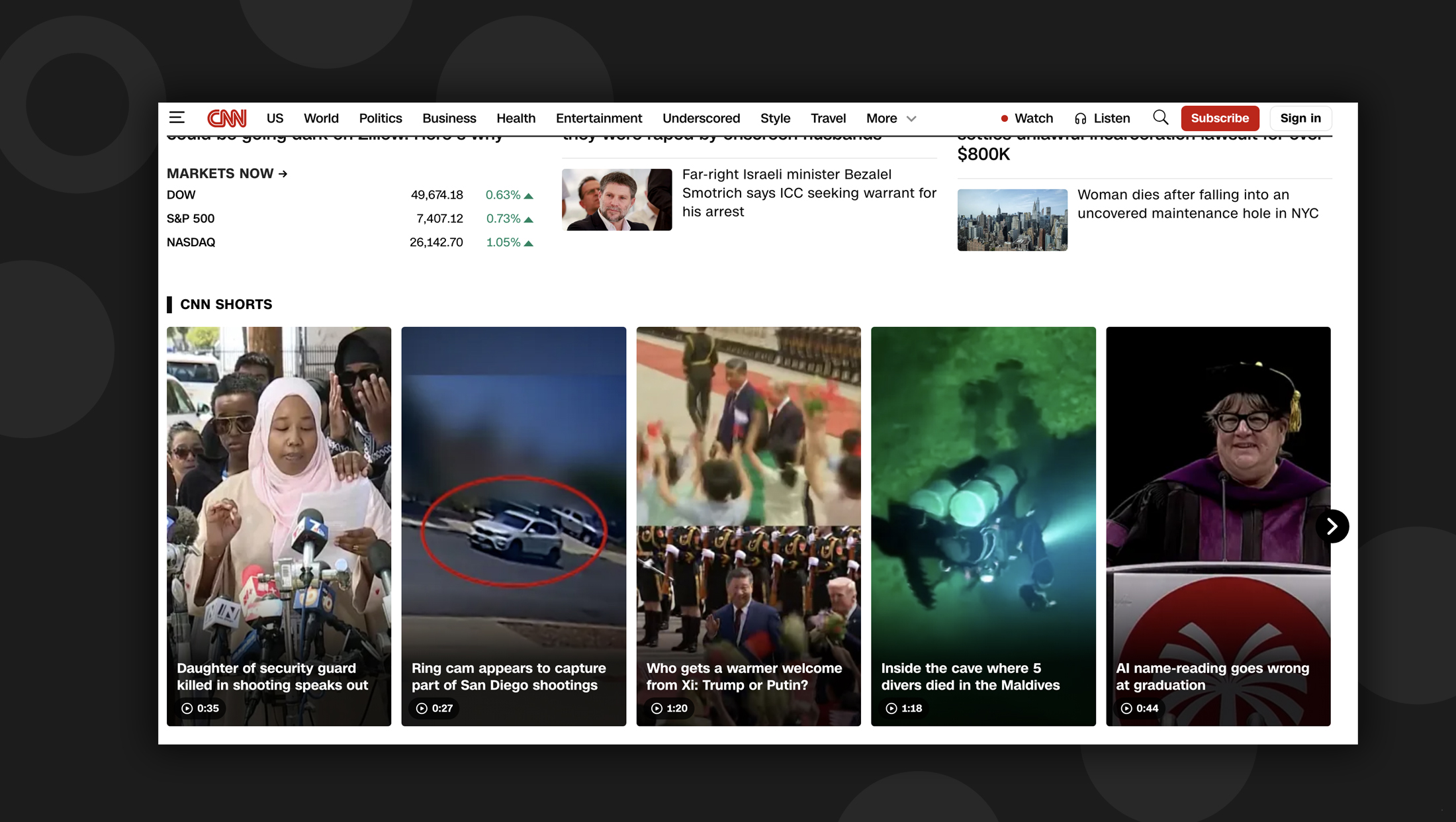
NBC certainly isn’t alone in embracing vertical video shorts. CNN has also been focusing heavily on the format to provide quick updates, including selfie-style clips, to viewers. Other networks and media organizations are also trying out their own takes on the approach. Other organizations are also feeding content to social media platforms.
That said, both NBC and CNN stand out as shifting away from the notion that vertical video shorts are only for social media. Instead, both organizations are making prominent moves to mix in vertical video alongside clips in the familiar widescreen orientation.
So far, much of the monetization strategy around short vertical clips has been advertising. While ads still appear within streams NBC News has created, the network’s move to monetize shorts via a direct-to-consumer subscription adds a layer that will certainly be closely watched.
NBC, like many other news organizations, has dabbled with a blend of social and vertical video in the past, including its notable 2017 launch of “Stay Tuned” — a network-quality newscast offering on Snapchat. It also had a short-lived content deal with Quibi, a startup that was attempting to sell consumers on short-form content ranging from news updates to weather to entertainment that adapted in real-time to a device’s orientation.

tags
DTC Subscriptions, Julie Tsirkin, NBC News, richard engel, Shalini Sharma, Short Form Videos, TikTok, Vertical video
categories
Broadcast Industry News, Heroes, Mobile Apps, Networks, Online and Digital Production, Social Media Video Platforms