
FCC chairman says he doubts multistate challenge to Paramount-WBD merger will succeed
Weekly insights on the technology, production and business decisions shaping media and broadcast. Free to access. Independent coverage. Unsubscribe anytime.
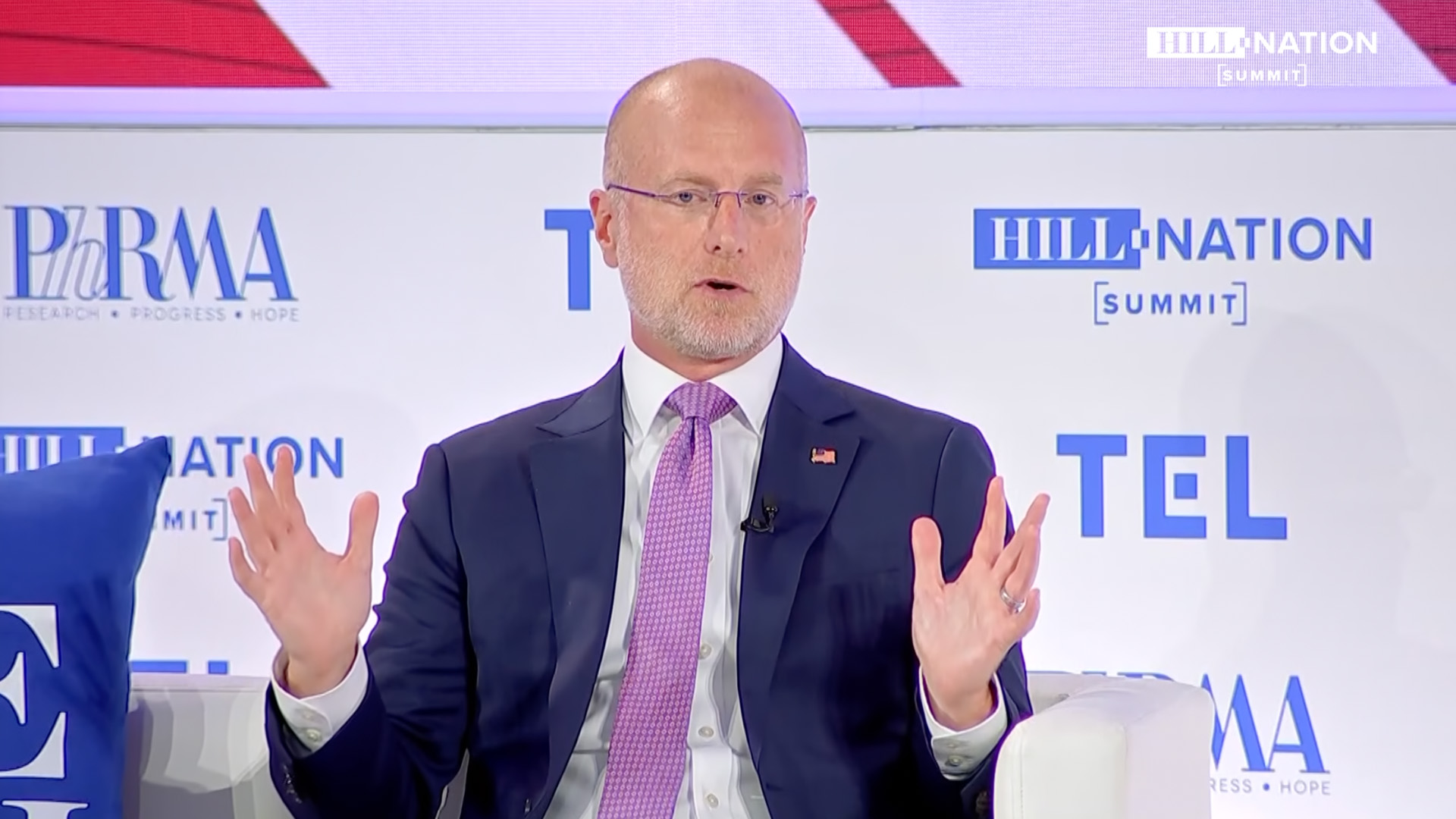
FCC Chairman Brendan Carr said in an interview on July 15, 2026, that he does not believe the coalition of 12 state attorneys general challenging the Paramount Skydance acquisition of Warner Bros. Discovery will prevail, calling it something other than “a legitimate antitrust case.”
“There was a story that broke a couple weeks ago that said that California was floating the idea, according to news reports, of dropping all of the antitrust litigation if there was one condition that was met, which is that the purchase involved the spinning off of CNN,” Carr said during an appearance at the Hill Nation Summit in Washington.
“Now, I don’t understand what antitrust theory you have that says there’s a problem with this acquisition that is made or broken based on one cable channel being included, so I think that’s a bit of a tell that this really isn’t a legitimate antitrust case, but ultimately that’ll be up for the courts to decide,” Carr said.
The remarks came during a wide-ranging interview with The Hill’s Julia Manchester, who disclosed at the outset that The Hill and NewsNation are both owned by Nexstar Media Group, which operates more than 250 local stations regulated by the FCC.
Asked about a letter from Rep. Jamie Raskin, D-Md., the top Democrat on the House Judiciary Committee, accusing Paramount Skydance CEO David Ellison of taking content direction from the Trump administration, Carr dismissed the claim.
“I have no idea what the basis for that is. I mean, it sounds like it has zero basis at all,” Carr said.
Ownership cap framed as local news issue
Carr used the appearance to make the case for the ownership cap vote the FCC announced earlier on the same day, framing the 39% national audience reach limit as a rule that now works against the local broadcasters it was designed to protect.

“Over the years, that regulation, this 39% rule that was meant to constrain the power of the national programmers, has been doing the exact opposite,” Carr said. “It’s really been holding back local broadcasters from reaching the scale necessary to invest in local news and journalism reporting.”

He cited a figure of 8% of Americans expressing “a great deal of trust in the legacy media” and contrasted that with what he described as continued trust in local news. He also pointed to an op-ed by the editor of the New York Times that reported 3,500 newspapers have closed in recent years and 80% of local journalism jobs have been lost.
“I think if you care about local news, local information, we have to do something other than this trajectory of newsroom shuttering, local news jobs closing,” Carr said. “And I think removing this outdated limitation at least gives local journalists a fighting chance.”
Manchester noted during the interview that the cap change could affect Nexstar’s pending acquisition of Tegna.
Disney investigation ongoing, no decision made
Carr said the FCC has made no determination on the review of Disney’s broadcast licenses, either on the merits or on timing.
He said the investigation began in March 2025 after concerns were raised that Disney “may have been discriminating against people based on race and gender or other protected characteristics.” During that process, Carr said, the FCC concluded Disney was “being disingenuous in terms of how it was engaging with the FCC and producing or not producing documents and information,” which led the agency to call Disney’s licenses in for early renewal.
“Petitions to deny have been filed. Disney has a chance to make its case in response and will simply follow the facts and the record wherever that may go,” Carr said.
He rejected the suggestion that the FCC’s enforcement actions have targeted specific political viewpoints, pointing to actions against smaller, lesser-known broadcasters as evidence of consistency. He cited a short license renewal for a radio station in Mississippi and an early renewal called on Bridge News, a broadcaster he said “most people haven’t heard of.”
Carr cites previous Democratic FCC actions
Asked whether a future Democratic administration could reverse his actions or use the same authorities against different targets, Carr pointed to what he described as a record of similar conduct by Democrats.
He said Democrats at the FCC previously pursued non-renewal of a local Fox broadcast station based on complaints about content on the separate Fox News cable channel. He also said Democrats in Congress urged the FCC to investigate Sinclair because “Democrats thought that Sinclair was too conservative in their viewpoints,” and that a Democratic-led FCC “refused to renew hundreds of routine license renewals for Sinclair.”
“The list of actual weaponization by Democrats when they have gavels goes on and on and on,” Carr said.
Manchester also asked about the Supreme Court’s June 29 ruling in the Slaughter case, which expanded presidential firing power over leaders of independent agencies. Carr said the decision does not change anything at the FCC because the Communications Act of 1934, which created the commission, does not include the same removal protections at issue in the case.
“Unlike the Federal Trade Commission, which was the case that made its way to the Supreme Court, the Communications Act does not have what we call for-cause removal protection,” Carr said. “So it’s really a non-event in terms of the FCC.”
Carr said the FCC has processed approximately $130 billion in deal flow since he took over, much of it related to the space economy. He described direct-to-cell technology — which allows smartphones to connect directly to low-Earth orbit satellites — as an area where the commission has been working to position the U.S. competitively.
On the wireless front, Carr said a spectrum auction completed roughly a week ago cleared more than $3 billion, exceeding expectations. He said the FCC plans to vote next week on another auction covering 160 megahertz of spectrum, which he said would create a “super band” of 400 megahertz suitable for 5G and 6G services. A separate auction of C-band spectrum, scheduled for next year, is expected to raise between $30 billion and $60 billion for the U.S. Treasury, according to Carr.

tags
Brendan Carr, Deregulation, FCC, Paramount Skydance, Warner Bros. Discovery
categories
Broadcast Business News, Featured, Policy