
NAB Show 2026 opens with record company representation and a changing attendee mix

Weekly insights on the technology, production and business decisions shaping media and broadcast. Free to access. Independent coverage. Unsubscribe anytime.
For decades, NAB Show has been where the broadcast industry comes to see itself. Engineers, executives and equipment vendors descended on Las Vegas each spring to evaluate gear, close deals and take stock of where television and radio were headed.
That description still fits. It just no longer tells the whole story.
This year, attendees arrived from more than 18,000 companies, up from 12,000 in 2025, and nearly half of them had never been to the show before.
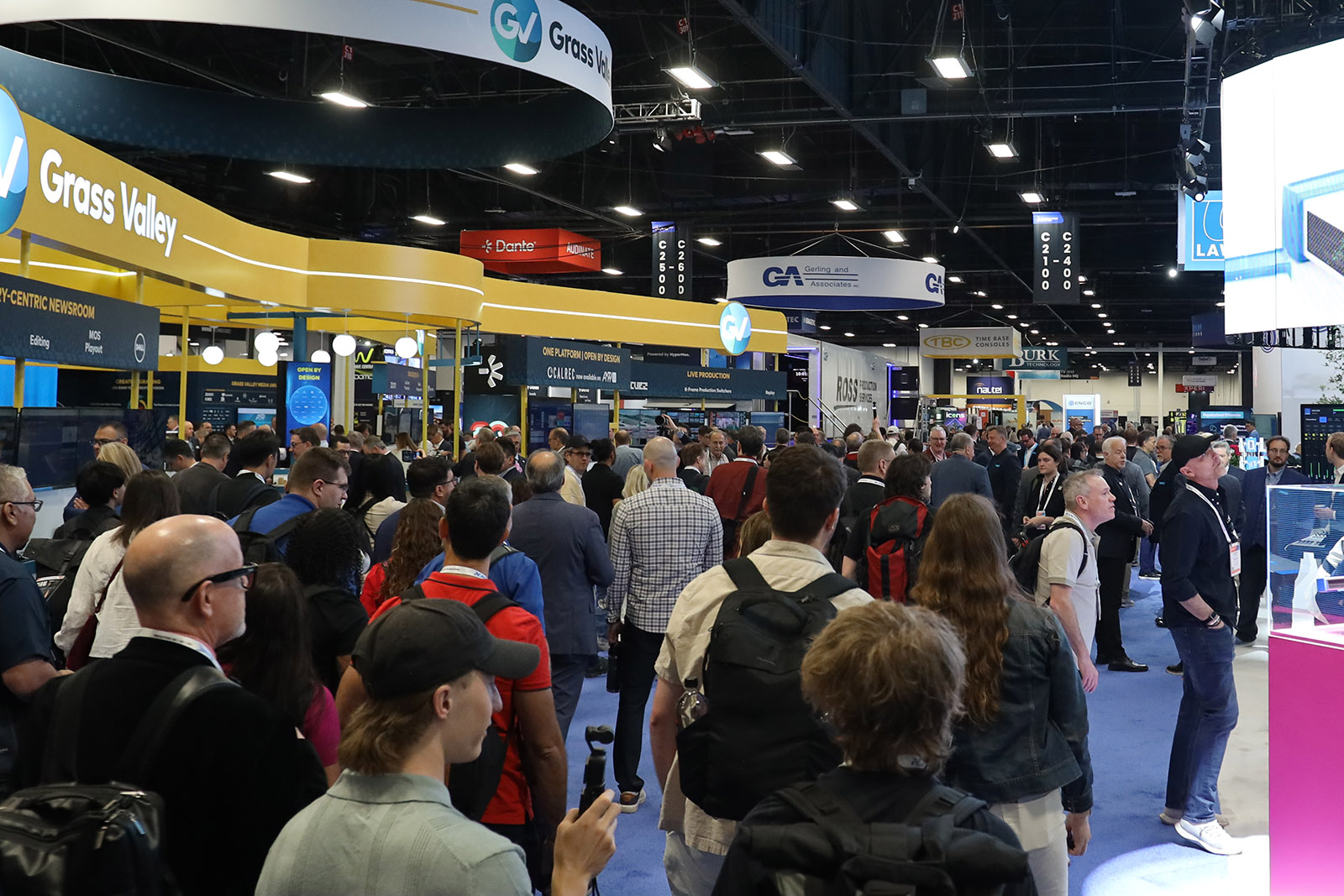
Alongside the traditional mix of broadcasters, network engineers and post-production houses were sports venues, corporate media departments, independent creators and streaming platforms. The creator economy segment nearly doubled year over year. Corporate enterprise attendance was up more than 45%.
“Legacy media know the discipline of how to put content out at scale,” said Karen Chupka, executive vice president and managing director of NAB Show. “Creators know how to do it at speed. Putting those two together is where the magic happens for the next generation of storytelling.”
This year’s show registration is a unique mix that represents the current state of broadcasting, with sports, enterprise and creators showing signs of growth. The corporate and Broadcast AV segment now sits at more than 8,000 registrants.
For Chupka, that segment represents a meaningful shift in who the show is for.
A new home for a changing show
The growth is happening inside a convention center that itself just finished a transformation.
The Las Vegas Convention Center completed major renovations ahead of this year’s event, with updated lighting, contemporary finishes and clearer sightlines across the campus. For Chupka, seeing the finished building for the first time was something she had been waiting nearly two decades for.
“I started this in 2008 with them — what could this convention center look like,” she said. “To finally see it done after 18 years and to see how fabulous it is.”
The physical upgrade matters beyond aesthetics. The show’s footprint and the convention center’s capacity have effectively grown together, and Chupka argued that Las Vegas remains difficult to replicate as a host city at this scale regardless of the industry’s periodic interest in alternatives.
Creators and broadcasters in the same room
The Creator Lab returned in an expanded format in Central Hall, with a larger theater and classroom space, a new networking lounge and brand activations focused on artificial intelligence, creator strategies and business development.
Chupka sees the coexistence of those two groups, legacy broadcasters and digital-native creators, as one of the show’s defining opportunities.
She cited Dhar Mann, a YouTube-native filmmaker with a large audience, as an example of a creator who eventually needed traditional production infrastructure to scale. The inverse is also true: Broadcasters increasingly need to understand how creators build and retain audiences and, importantly, how they utilize platforms broadcasters have often shied away from.
“As a creator, how do you scale up your business?” she said, describing a panel session on the floor. “We’re trying to bring in some of those interesting and important voices.”
That framing is also reflected in the show’s programming strategy, with more content on the show floor intermixed with vendors.
Last-minute arrivals and economic signals
Chupka acknowledged that economic uncertainty over the past year created a pattern of late decision-making around attendance, a trend she said the show is seeing normalize, though not disappear. Some companies sent smaller delegations than in prior years. Others made last-minute decisions to attend.
“There’s been something in the last few weeks where clearly there’s been some last-minute decisions breaking in the direction of coming,” she said.
She described the shift as consistent with a broader stabilization in confidence among media and entertainment companies, though she stopped short of characterizing it as a full recovery from the uncertainty of recent years.
The broader context for that uncertainty is visible on the show floor.
Regulatory questions have moved from the margins to the center of the industry’s agenda with NextGen TV, c-band and ownership reform front and center. Chupka noted that those pressures, while genuinely disruptive, also generate opportunity.
“As these things get figured out, they’re just going to create new opportunities for businesses,” she said.
The show floor’s composition this year seems to reflect exactly that dynamic.
Major new vendors, like Google, have arrived on the show floor, while mainstays have rotated to new halls with new focuses. The mix of established names and newer entrants suggested an industry working through transition rather than standing still.
“I came to NAB Show,” Chupka said, describing what she hopes first-time attendees take away, “and discovered something I didn’t know that could help me.”
Overall, the show is navigating a complex time for broadcasters, with consolidation, regulatory uncertainty and an eroding economic model for traditional broadcasters, meanwhile, creators and corporate teams are arriving with different needs and no particular allegiance to legacy technology.
Collectively, the groups see value in visiting in person, especially as product research moves to new avenues and new tools like AI.
“It’s going to be more important for people to have those face-to-face connections, to come here and actually touch the products, because it’s going to be too easy to not know what’s real,” added Chupka.

tags
Karen Chupka, NAB Show 2026, NAB Show News
categories
Heroes, NAB Show