
Ted Turner, ‘maverick’ founder of CNN and TBS, dead at 87
Weekly insights on the technology, production and business decisions shaping media and broadcast. Free to access. Independent coverage. Unsubscribe anytime.
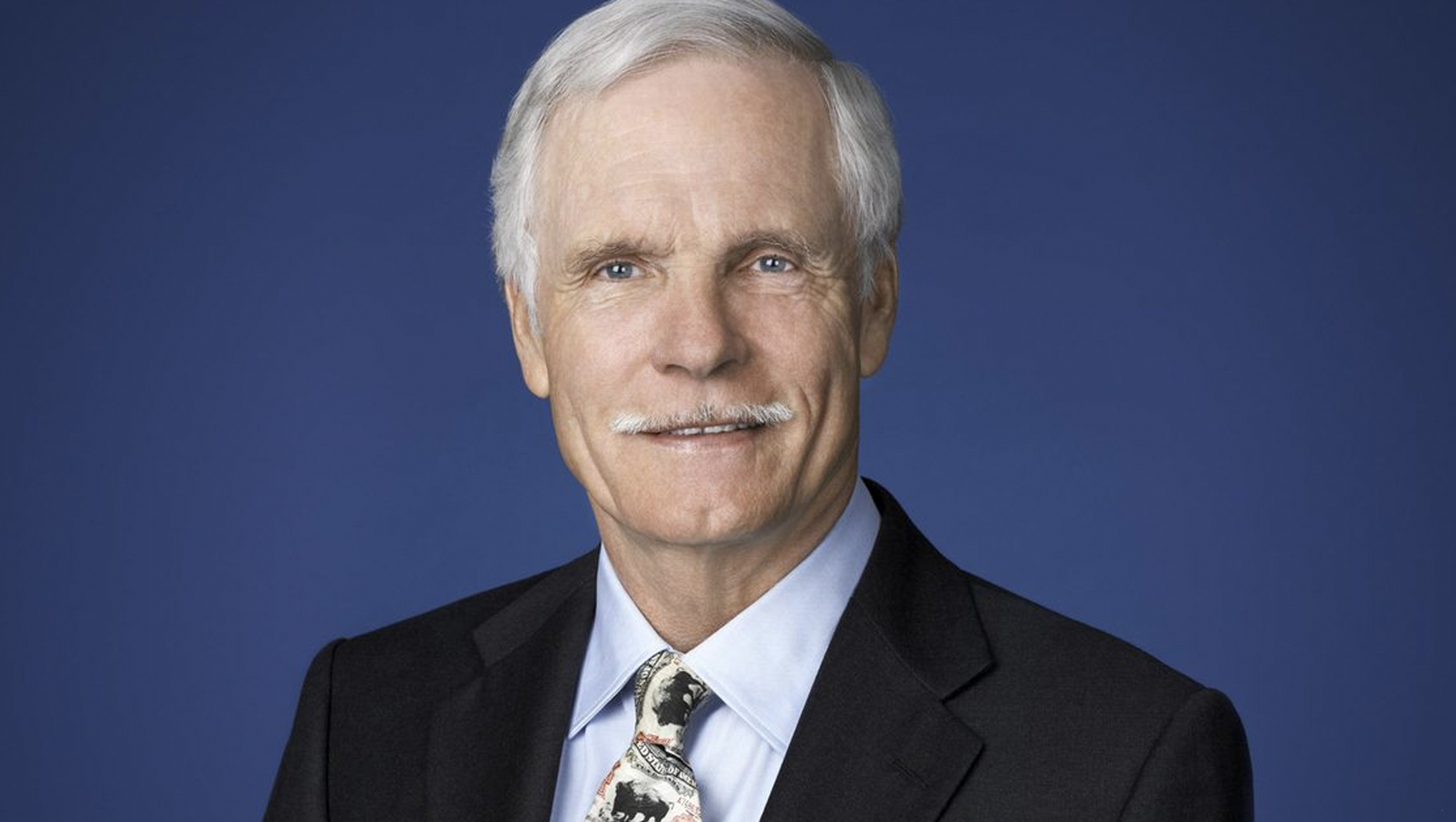
Ted Turner, the media maverick and mogul credited with creating the concepts of both superstations and cable news, has died.
Turner died May 6, 2026, at 87.
Born Robert Edward Turner III on Nov. 19, 1938, Turner was a media entrepreneur who transformed a modest billboard company into a cable television empire and changed the pace of modern journalism by founding CNN.
His death closed the life of a businessman whose career stretched across television, sports, film libraries, philanthropy, environmental conservation and international diplomacy.
Turner was born in Cincinnati, Ohio, and grew up in a family shaped by ambition, privilege and volatility.
His father, Robert Edward Turner Jr., built a successful outdoor advertising business and expected toughness from his son. Turner attended Brown University but did not graduate, later returning to the family business after his father’s death in 1963. At only 24, Turner took control of Turner Outdoor Advertising, a company then valued around $1 million.
During that time, Turner saw opportunity in struggling broadcast stations and the emerging cable industry. In 1970, he bought an Atlanta UHF television station and eventually turned it into WTBS, a local station distributed nationally by satellite. That move helped create the “superstation” model, allowing one station’s programming to reach cable viewers across the country.
Turner’s instincts were both entrepreneurial and theatrical. He understood that cable television needed content, identity and constant promotion. He filled schedules with sports, movies, reruns and bold branding, building Turner Broadcasting System into a major force.

His biggest gamble came in 1980, when he launched Cable News Network. At the time, the idea of a 24-hour television news channel seemed risky, expensive and, to many observers, unnecessary. Network news still revolved around nightly broadcasts from ABC, CBS and NBC.
CNN started with limited resources, but its around-the-clock format gradually changed public expectations.
Breaking news became something audiences could watch as it unfolded. During major world events, CNN’s presence gave the channel credibility and made Turner’s vision appear less eccentric and more prophetic.
By the early 1990s, CNN had become a global news brand. Time magazine named Turner its Man of the Year in 1991.
Turner’s media empire kept expanding. He founded TNT (once short for “Turner Network Television”), helped develop Cartoon Network and used his purchase of MGM/UA Entertainment Co. in 1986 to acquire a vast library of classic films and television programming. Although the MGM deal left him with enormous debt and forced him to sell parts of the company, he retained valuable film rights that became central to Turner’s cable channels.
Turner eventually sold most of Turner Broadcasting to Time Warner.
During that period, the company launched co-branded channels CNNSI (short for CNN Sports Illustrated) and CNNfn (CNN Financial Network) as part of corporate synergy efforts between the TV channel and Time’s magazine properties. This period also saw “CNN Newsstand,” a series of programs that offered content in conjunction with magazines, such as a celebrity and entertainment news program co-branded with the People magazine title.
Turner Broadcasting remained under Time Warner after it merged with AOL. It was eventually sold to AT&T, who then spun it off into WarnerMedia before being sold to Warner Bros., who used the broadcasting assets to former Warner Bros. Discovery after it merged with Discovery Communications.
His ambitions extended well beyond news. Turner owned the Atlanta Braves and Atlanta Hawks, helping make the Braves a nationally recognized franchise by broadcasting their games on his superstation. He was also connected to professional wrestling through World Championship Wrestling and created the Goodwill Games, an international sports competition intended to ease Cold War tensions through athletic exchange.
Turner was also a serious yachtsman. In 1977, he skippered his vessel Courageous to victory in the America’s Cup, adding to his image as a competitive, risk-taking public figure. He enjoyed winning and often presented himself with the confidence of a man who expected to do so.
His public personality was part of his legend. Turner was known as “the Mouth of the South,” a nickname that captured both his Southern business identity and his habit of saying exactly what he thought. He could be funny, blunt, visionary or offensive, sometimes in the same interview. His remarks occasionally drew criticism, but his energy made him one of the most recognizable business figures of his era.
In 1996, Turner Broadcasting merged with Time Warner in a deal that made Turner one of the company’s largest shareholders. The merger marked the peak of his formal power in the media industry, but it also began a period in which he gradually lost control over the company he had built. Time Warner later merged with AOL in one of the most infamous deals in corporate history, and Turner’s fortune declined sharply as AOL Time Warner’s stock collapsed.
Even after losing much of his direct influence in media, Turner remained a major public figure through philanthropy. In 1997, he announced a pledge of up to $1 billion to support United Nations causes, an extraordinary gift that led to the creation of the United Nations Foundation in 1998. The foundation has supported work related to global health, women and population, children’s health, the environment and peace and security.
Turner later co-founded the Nuclear Threat Initiative with former U.S. Sen. Sam Nunn of Georgia. The organization focuses on reducing the risk of nuclear, biological and chemical threats. His interest in global security reflected a broader worldview: Turner believed private wealth should be used to confront problems that governments alone often failed to solve.
Environmental conservation became another major part of his later life. Turner owned vast ranchlands across the United States and Argentina and became one of the largest private landowners in North America. His properties were closely associated with bison conservation, sustainable ranching and ecological restoration. Through the Turner Foundation, founded in 1990, he funded efforts connected to land conservation, biodiversity, clean energy and water protection.
Turner’s personal life often attracted attention. He was married three times, including to actress and activist Jane Fonda. He had five children. In later years, he disclosed that he had been diagnosed with Lewy body dementia, a progressive neurological disease.

tags
Cartoon Network, CNN, Deaths, Obituaries, Ted Turner, TNT, Turner Broadcasting, WTBS
categories
People