

Gadi Schwartz bringing more personal approach to election night with vertical video, interactive coverage
Weekly insights on the technology, production and business decisions shaping media and broadcast. Free to access. Independent coverage. Unsubscribe anytime.
NBC News‘ Gadi Schwartz is spearheading a different approach to covering the 2026 midterm elections, combining the resources of the network’s traditional television operation with the more personal, interactive style of social media livestreaming.
On Tuesday, Nov. 3, 2026, Schwartz will lead a vertical video livestream designed to take viewers beyond the polished reports and carefully produced segments that have long defined network election coverage. Instead, audiences will get a firsthand look at the conversations, experiences and behind-the-scenes moments that typically never make it to television.
The effort expands NBC News’ experiments with digital- and social-first journalism, bringing together traditional broadcast production, mobile technology, and real-time audience participation.

Gadi Schwartz’s ‘Stay Tuned’ Snapchat newscast, shown in these 2017 screenshots, laid the groundwork for much of NBC News’ continued ventures into social-first journalism and livestreaming.
For Schwartz, who has helped develop the network’s digital storytelling efforts first through the Snapchat show “Stay Tuned,” which launched in 2017, and today via his streaming show “Stay Tuned Now, the goal is not to replace conventional election coverage but to offer something that television’s traditional format cannot always accommodate.
“The things that are definitely going to be the same, number one North Star for us on election night is the decision desk,” Schwartz said in an interview with NCS. “That is where everything comes from.”

In this 2017 photo, Schwartz is shown anchoring ‘Stay Tuned’ from the NBC News newsroom on the fourth floor of 30 Rockefeller Plaza.
NBC News’ decision desk will remain the authoritative source for election results and race calls, while the network’s television specials and Steve Kornacki’s analysis will provide the foundation for the broader coverage.
Schwartz’s livestream, however, will also focus on the experiences surrounding those results, particularly interactions between journalists and voters across the country.
Schwartz will report from Texas, while other NBC News correspondents will contribute from battleground states and locations nationwide.

Savannah Sellers will report from Pennsylvania, Steve Patterson from Alaska and Shaquille Brewster from Michigan, among dozens of other reporters.
Rather than relying on traditional live shots, Schwartz plans to connect with those correspondents through FaceTime calls. Viewers will be able to follow reporters as they travel, interact with voters and share observations that might otherwise be left out of their television reports.
The approach is intended to capture the atmosphere of election night beyond the vote totals, including conversations in diners, encounters with people waiting to cast ballots and the local perspectives that emerge as journalists move through communities.
Describing the aspect of the coverage he is most excited to share, Schwartz said, “I think it’s going to be the stuff that happens in between the polished live shots.”
Those informal exchanges are already a familiar part of reporting, Schwartz explained, but what is changing is the opportunity to bring audiences into those moments as they happen.
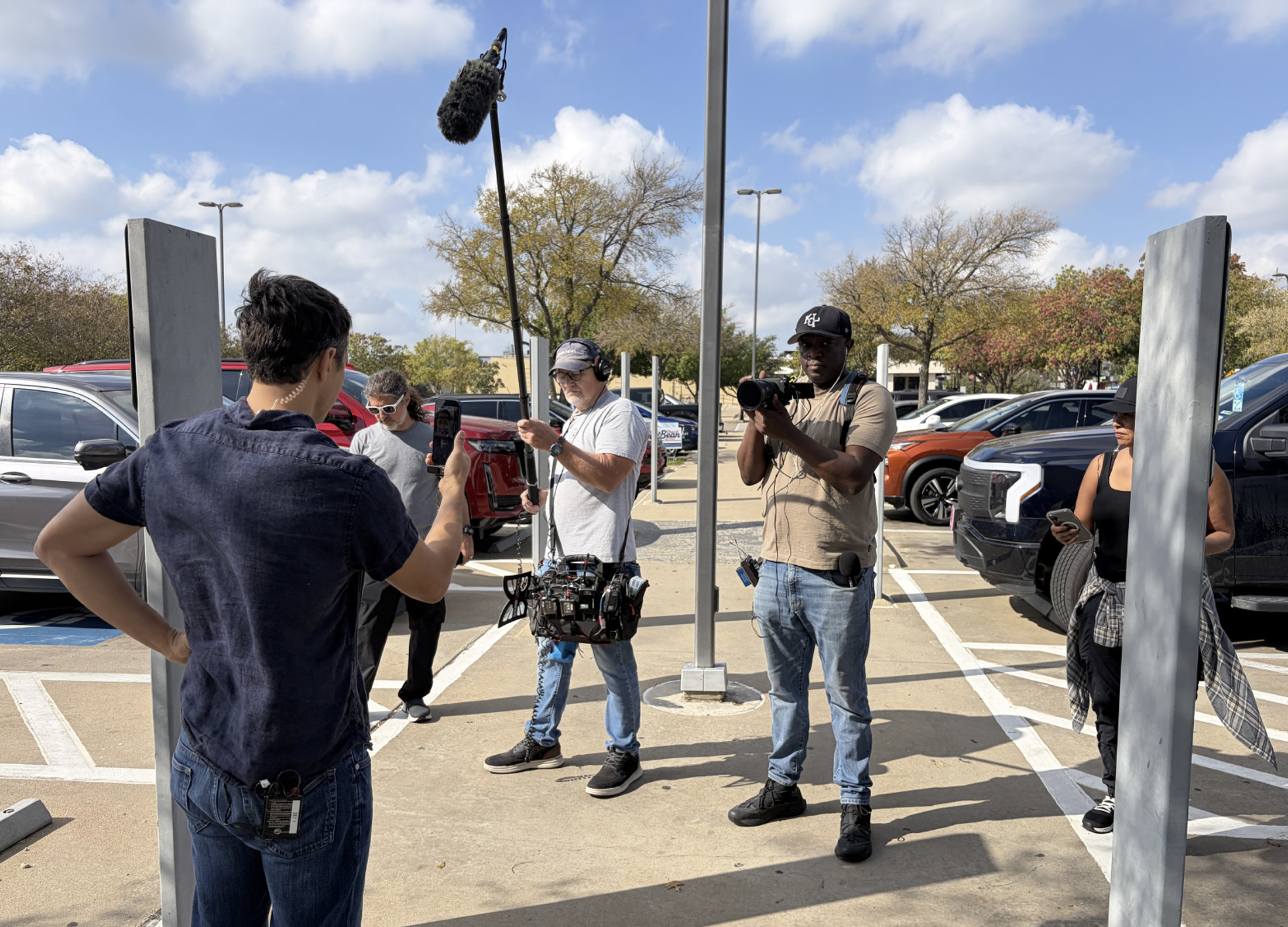
The format also offers a different way for correspondents to interact with voters. Schwartz believes people sometimes respond more naturally when approached by a journalist holding a phone rather than standing in front of a conventional television camera with a producer and other crew members.
That less imposing setup could allow reporters to capture conversations that feel more personal and spontaneous.
Despite its informal appearance, the livestream will rely on much of the same infrastructure used for NBC’s traditional broadcasts.
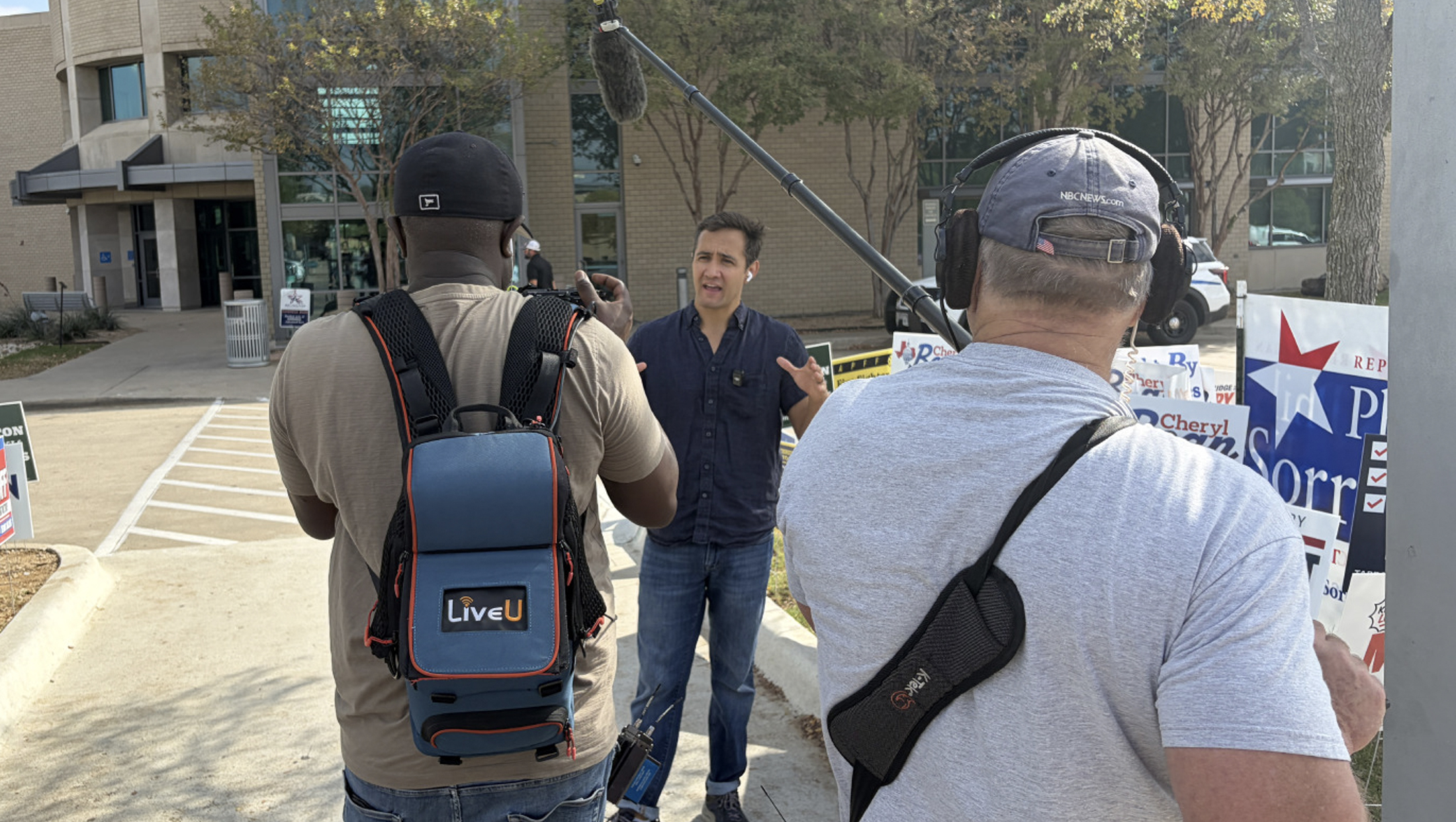
The network plans to use LiveU technology to transmit video from mobile devices to a control room at NBC’s headquarters at 30 Rockefeller Plaza in New York City, New York. Producers will manage the various feeds, coordinate conversations with correspondents and incorporate information from the network’s election coverage.
The technology is designed to deliver the appearance of a casual video call while providing the reliability required for an extended live broadcast.
“It may look like a FaceTime call, but unfortunately, it’s not as easy as just doing a FaceTime call,” Schwartz said.

Unlike an ordinary video chat, the production must accommodate multiple live feeds, changing editorial priorities and the need to deliver accurate election information without interruptions.
Schwartz will also be contributing to NBC’s traditional television coverage throughout the night, adding another layer of coordination between the livestream and the network’s broader election operation.
Viewers can expect to see some of that production process firsthand. Schwartz hopes to keep his phone camera running for extended periods, providing a window into how reporters prepare for television appearances, monitor incoming results and coordinate with producers.
The network is also exploring ways to make the experience more interactive by allowing viewers to submit questions through livestream chats.
NBC News has already been experimenting with audience participation through livestreams of “Stay Tuned Now” on TikTok, YouTube and Twitch. Those broadcasts have allowed journalists to respond to questions while simultaneously covering breaking news and conducting interviews.
For election night, producers are expected to monitor viewer comments and relay selected questions to Schwartz, who could then direct them to correspondents, analysts or voters.
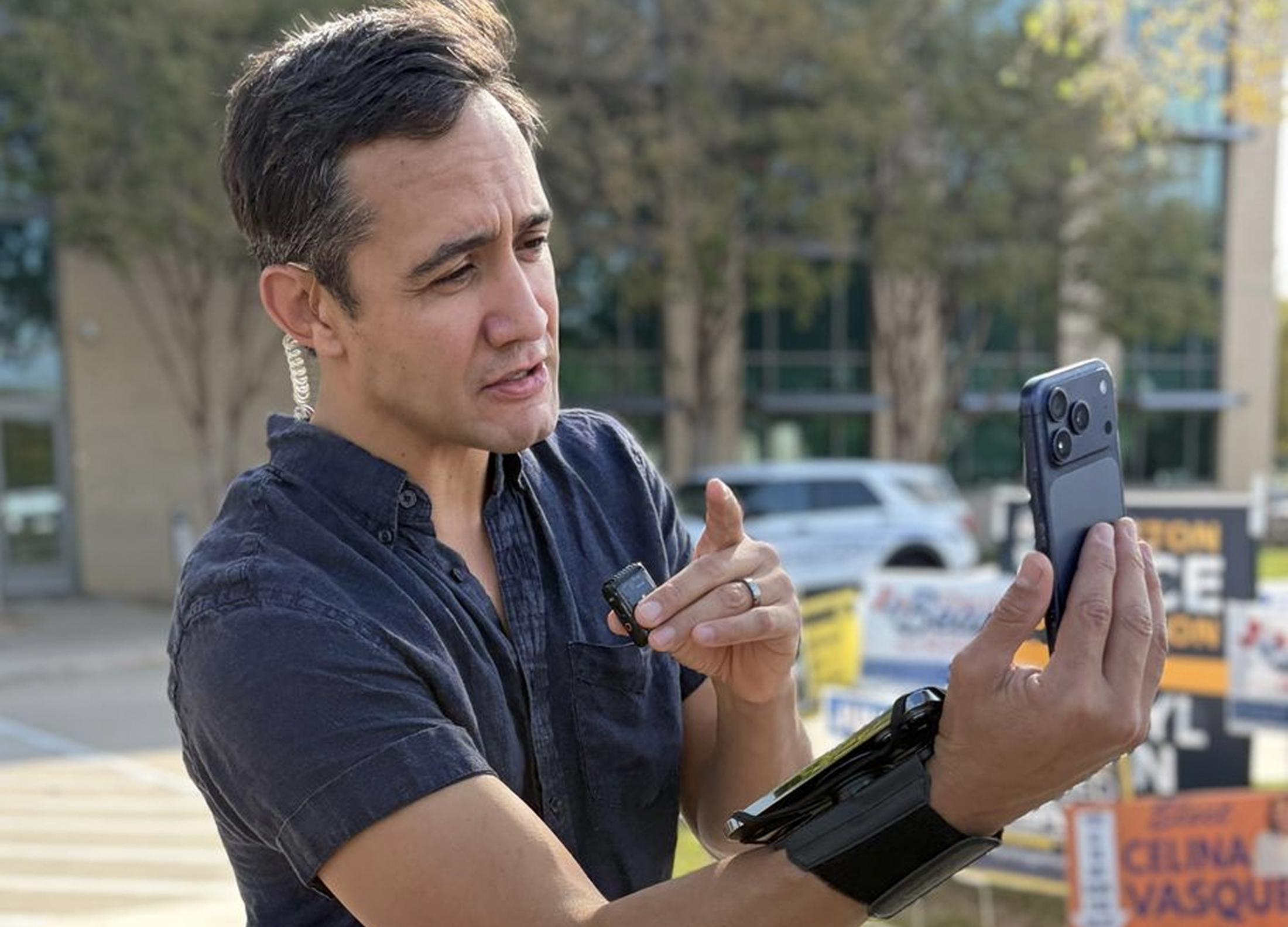
Schwartz has even floated the idea of wearing a second phone strapped to his forearm, giving him a way to monitor audience comments and internal communications while holding his primary camera.
The arrangement would allow him to remain mobile without constantly looking away from the livestream to check another device. Its final configuration and implementation are yet to be determined, a nod to Schwartz’s panache for developing new ideas and using collaboration and creativity to integrate them into the control room and, ultimately, out to viewers.
On a broader scale, Schwartz is focused on making election coverage a two-way conversation rather than a presentation in which audiences simply receive information. Schwartz sees that interaction as a defining characteristic of livestreaming, particularly when viewers can influence the questions being asked in real time.

It is also an approach NBC has been developing without drawing significant attention to the experiments.
Schwartz said the “Stay Tuned Now” team has been testing livestreaming formats for some time, gradually building a community of viewers and learning how to balance audience interaction with the demands of covering the news.
The experience has helped drive the network’s election night plans, although Schwartz acknowledged that the production will involve considerable coordination.
Another distinction will be the presentation itself.
The livestream is being designed specifically for vertical video, using the 9:16 aspect ratio familiar to audiences on social media platforms. Rather than adapting a conventional widescreen television broadcast for mobile devices, NBC is building an experience around how people naturally use their phones.
Schwartz said the vertical livestream will also appear natively on NBC News’ website similar to how the network has been boosting visibility of vertical video “shorts” from its correspondents on a variety of topics, allowing it to coexist with the network’s broader election coverage.
On larger screens, viewers will have access to election statistics, exit polling and decision desk information alongside the livestream. On mobile devices, however, the emphasis will remain on the people and conversations rather than elaborate graphics.
Schwartz believes that distinction is particularly important because vertical video can create a stronger sense of connection between viewers and the people appearing on screen.
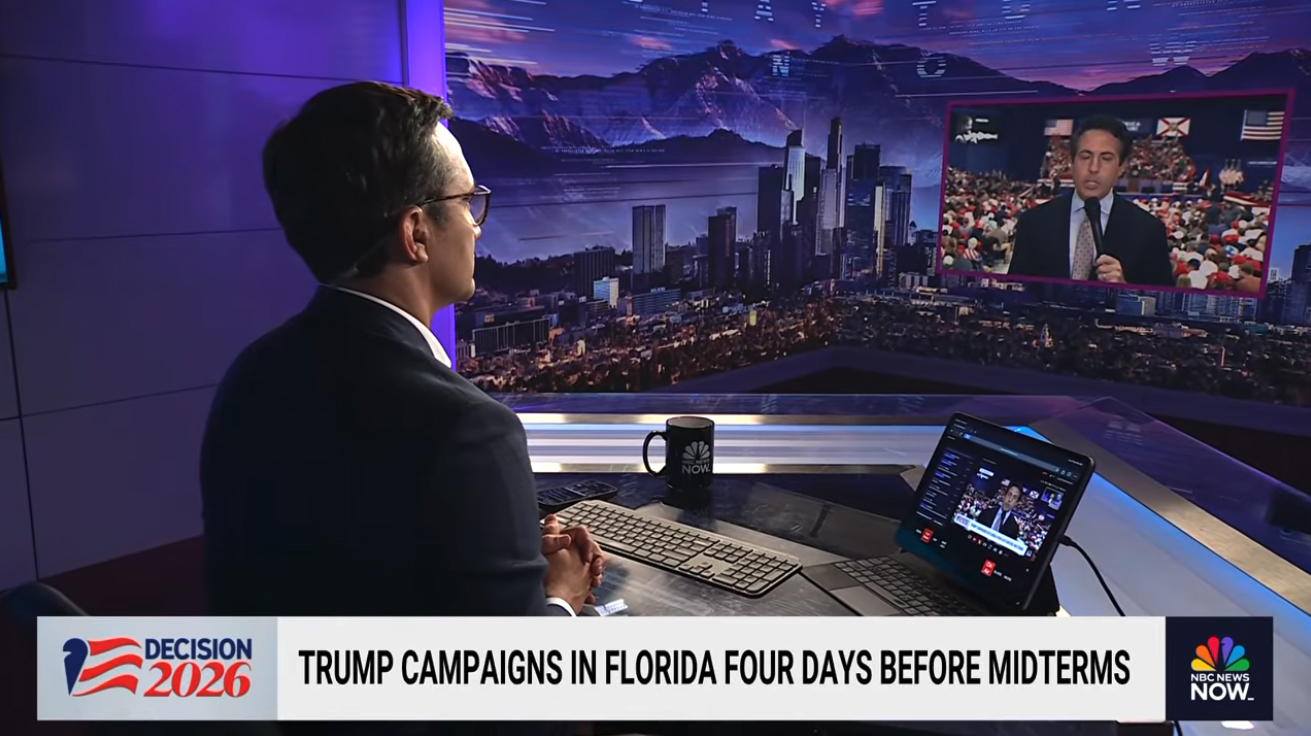
On the Oct. 30, 2026, edition of ‘Stay Tuned Now,’ anchor Gadi Schwartz is shown facing a video wall with correspondent Gabe Gutierrez’s live shot shown on it in 16:9. Schwartz’s election night livestream, however, will use the 9:16 aspect ratio, so shots like this won’t appear. Also visible is a tablet Schwartz uses to monitor social livestream chats.
“We are vertical beings. We’re not horizontal beings,” Schwartz said. “The body shape is vertical.”
He argues that while traditional 16:9 video is effective for showing locations, visual context and multiple elements within a scene, vertical video can be better suited to conversations. The narrower frame directs attention toward a person’s face, allowing viewers to concentrate on expressions, eye contact and the exchange of ideas.
Schwartz acknowledged that his preference for vertical video has generated considerable constructive conversations with videographers who favor the additional visual information available in widescreen formats.
But he believes the two formats serve different storytelling purposes, and that election night provides an opportunity to demonstrate how they can complement one another.
The experiment also reflects a broader change in how established news organizations approach social media.
For years, television networks have used digital platforms primarily to distribute clips and repurpose material produced for conventional broadcasts. NBC’s election night initiative takes a different approach, treating the mobile livestream as its own editorial product while retaining the reporting resources and oversight of a national news organization.
That distinction matters to Schwartz, who said the network is trying to embrace the immediacy of independent streamers and citizen journalists without sacrificing the editorial standards of professional journalism.
He believes traditional news organizations have sometimes been reluctant to reveal the less polished aspects of reporting, even as audiences have demonstrated an appetite for seeing how journalism is produced.
“In the past, I think there’s been a reluctance across the board to open up the raw window into how things work,” Schwartz said.
NBC’s experiment is intended to provide that transparency, showing not only what journalists report but how they gather information, interact with sources and make decisions in the field.
The initiative also highlights the network’s willingness to experiment with production methods that differ from established television conventions.
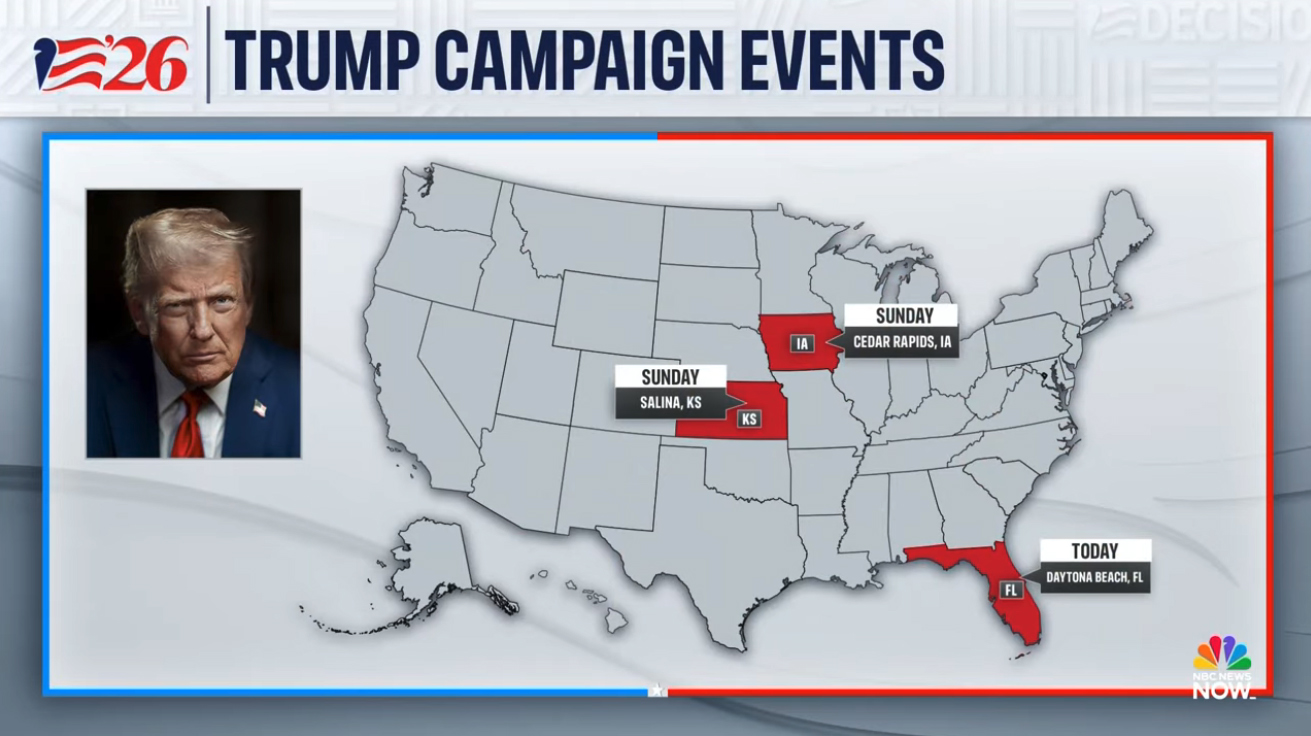
Traditional fullscreen graphics often work well on horizontal screens, but have been harder to adapt to vertical video viewports. Schwartz says the network will solve this issue by not relying on these types of graphics during the livestream, instead encouraging viewers to check out this type of visual on its website or traditional feeds.
Schwartz said NBC executives have been receptive to his ideas, including using smartphones for live reporting, dispensing with elaborate graphics when they are unnecessary or won’t work well on the screen format and moving between traditional broadcasts and more informal conversations.
Integrating NBC’s vast newsgathering resources and its decision desk into a separate livestream could model how networks use social video during other major news events, particularly when audiences want both authoritative information and a closer connection to journalists covering a story.
For Schwartz, the opportunity is especially meaningful because the technology now makes it possible to share experiences that have always been part of reporting but rarely visible to audiences.
“We’ve been gathering the news in the same way for decades,” Schwartz said. “We just haven’t always shown what that looks like in such an intimate way.”
Schwartz’s enthusiasm for experimenting with new technology and storytelling formats has driven much of NBC News’ approach to digital journalism.
He describes himself as the network’s resident ideas guy, frequently proposing new ways to connect with audiences and challenging traditional assumptions about how television news should be produced.
“I always seem to find myself as the ideas guy,” Schwartz said, noting that he’s become known around the network for his steady streams of suggestions. Those ideas range from connecting with correspondents through their phones to eliminating elaborate graphics packages when a simpler presentation might better serve the story.
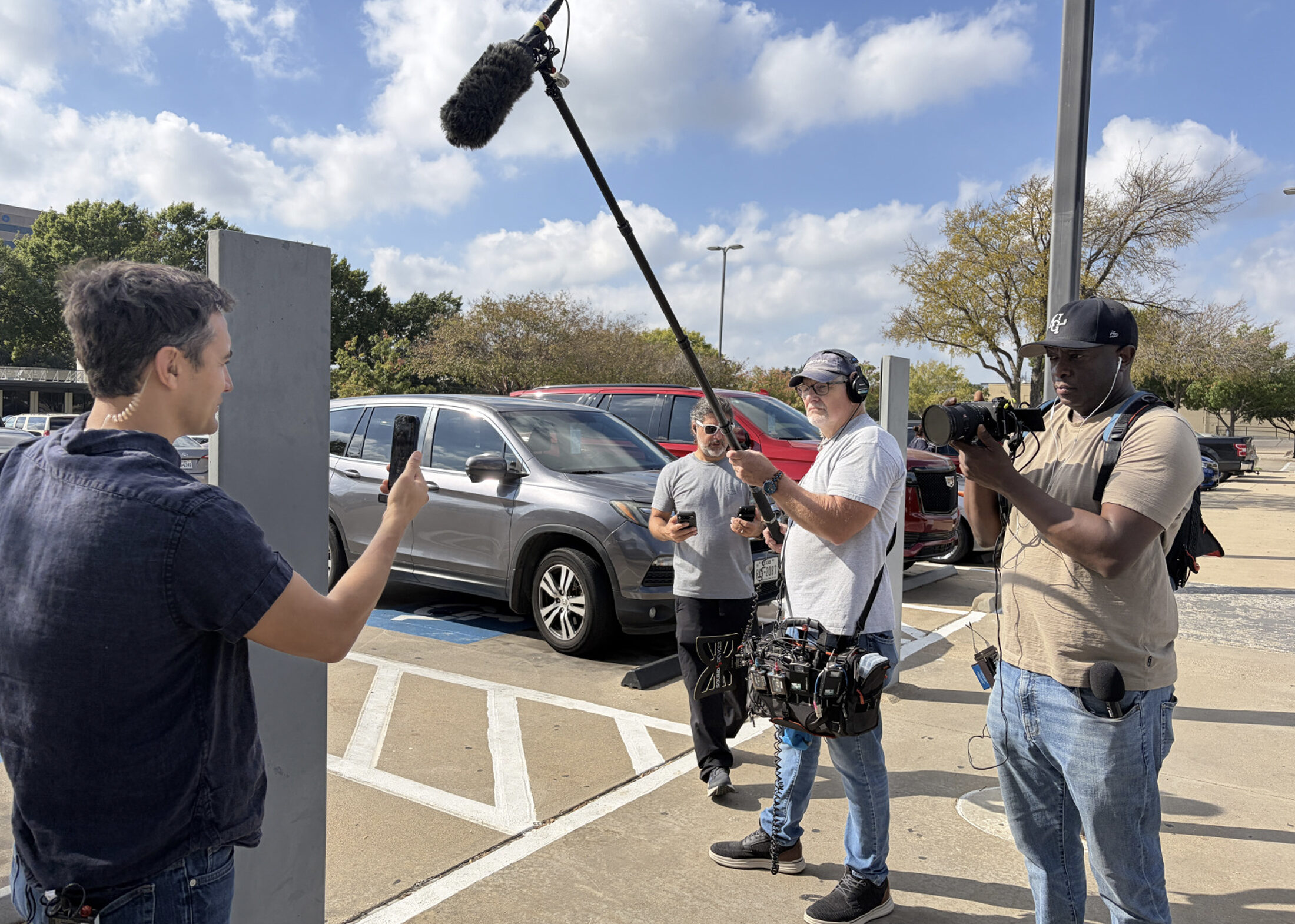
Schwartz said NBC has given him considerable freedom to explore those concepts, allowing him to test unconventional approaches while maintaining the network’s journalistic standards. Rather than encountering resistance to his proposals, he said executives have generally encouraged him to experiment and see what works.
The upcoming election coverage reflects that creative flexibility. What began as a collection of ideas about mobile reporting, livestreaming and audience interaction is becoming a coordinated production involving correspondents across the country and a control room in New York. Schwartz credits NBC’s willingness to embrace experimentation for making those efforts possible.
“NBC has been a great home for that because so far they’ve been very, very receptive,” Schwartz said.

tags
2026 Election, Gadi Schwartz, LiveU, NBC, NBC News, NBC News Now, November 2026 Midterm Elections, OTT, Stay Tuned, Stay Tuned Now, streaming, TikTok, Twitch, youtube
categories
Elections, Heroes, Online and Digital Production, Social Media