

CNN refinishes D.C. studio with warmer tones for election night
Weekly insights on the technology, production and business decisions shaping media and broadcast. Free to access. Independent coverage. Unsubscribe anytime.
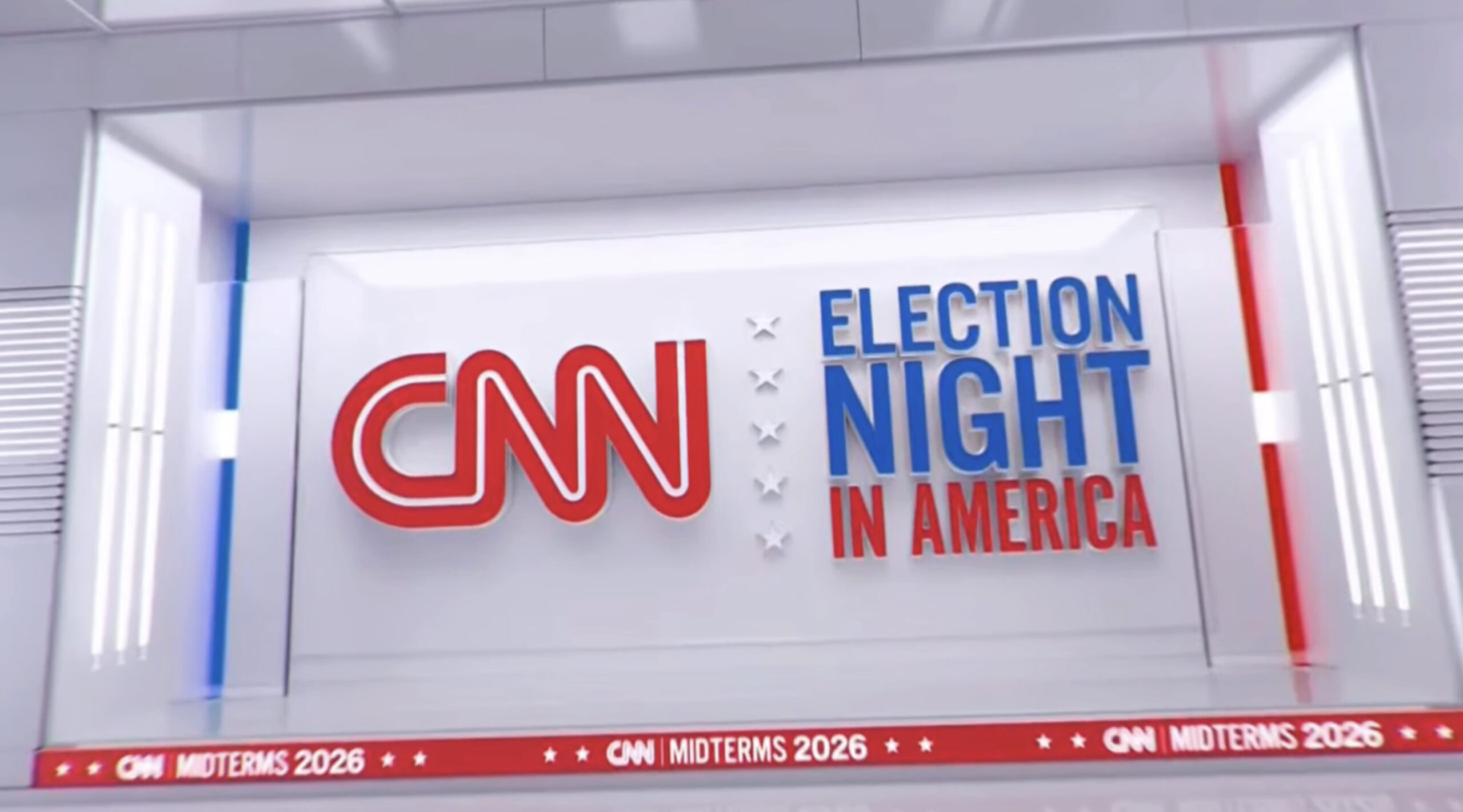
CNN largely bucked the industry trend of relying on augmented reality and virtual environments for 2026 election coverage, instead leaning on video wall graphics alongside a few simple but high-impact set changes.
The video-wall-heavy approach to displaying results and other graphics followed trends the network has used for both its election and everyday news coverage for the past few years.

Most coverage originated from studios A and B in the network’s Washington, D.C., bureau, a sprawling, multi-venue space already packed with video walls and panels.
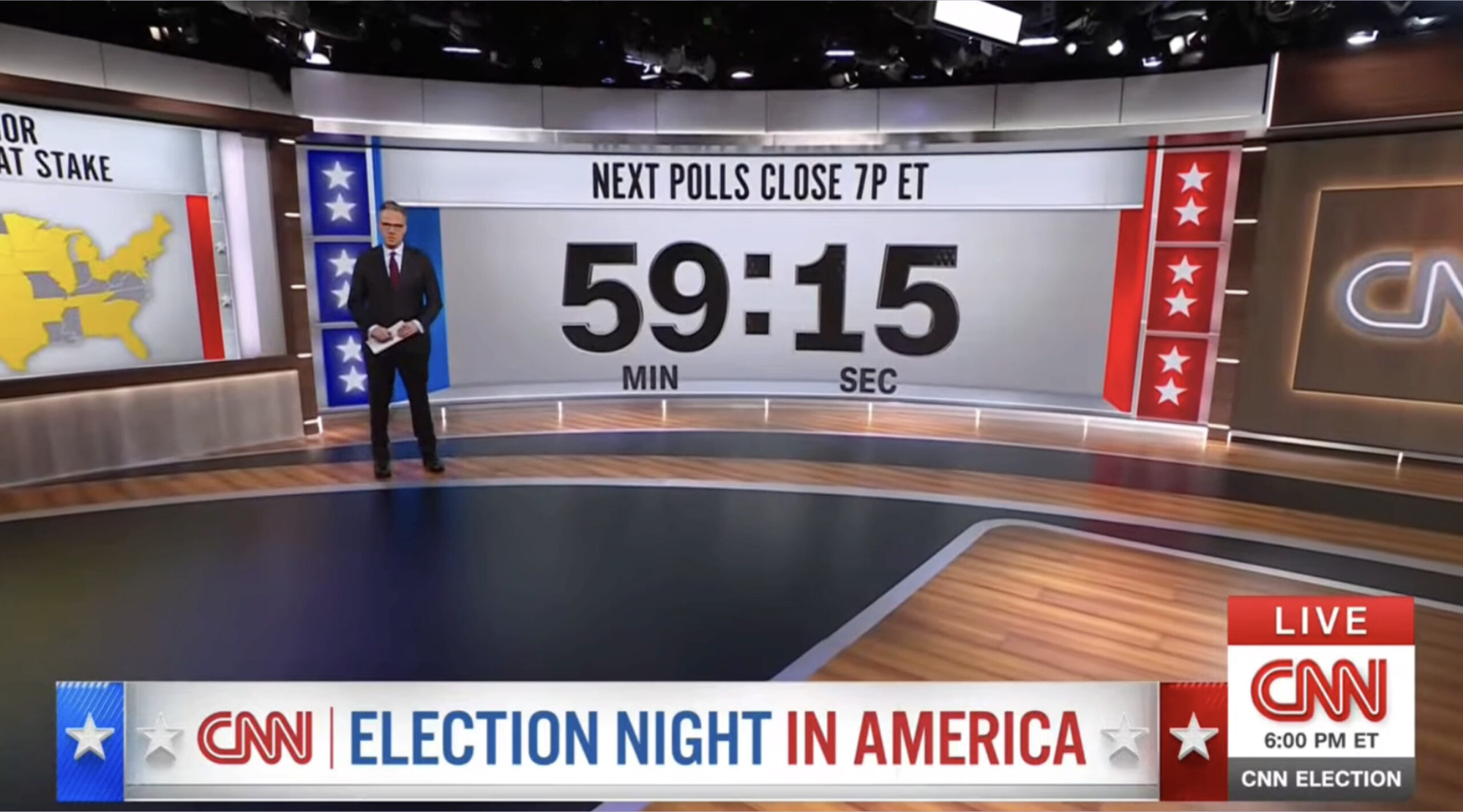
CNN updated the studio with warmer wood tones and other organic textures, replacing the silver and gray finishes that normally adorn “The Situation Room” or “The Lead.”
The space was also devoid of the network’s signature bold red color — aside from appearing, in another role, in the election graphics.

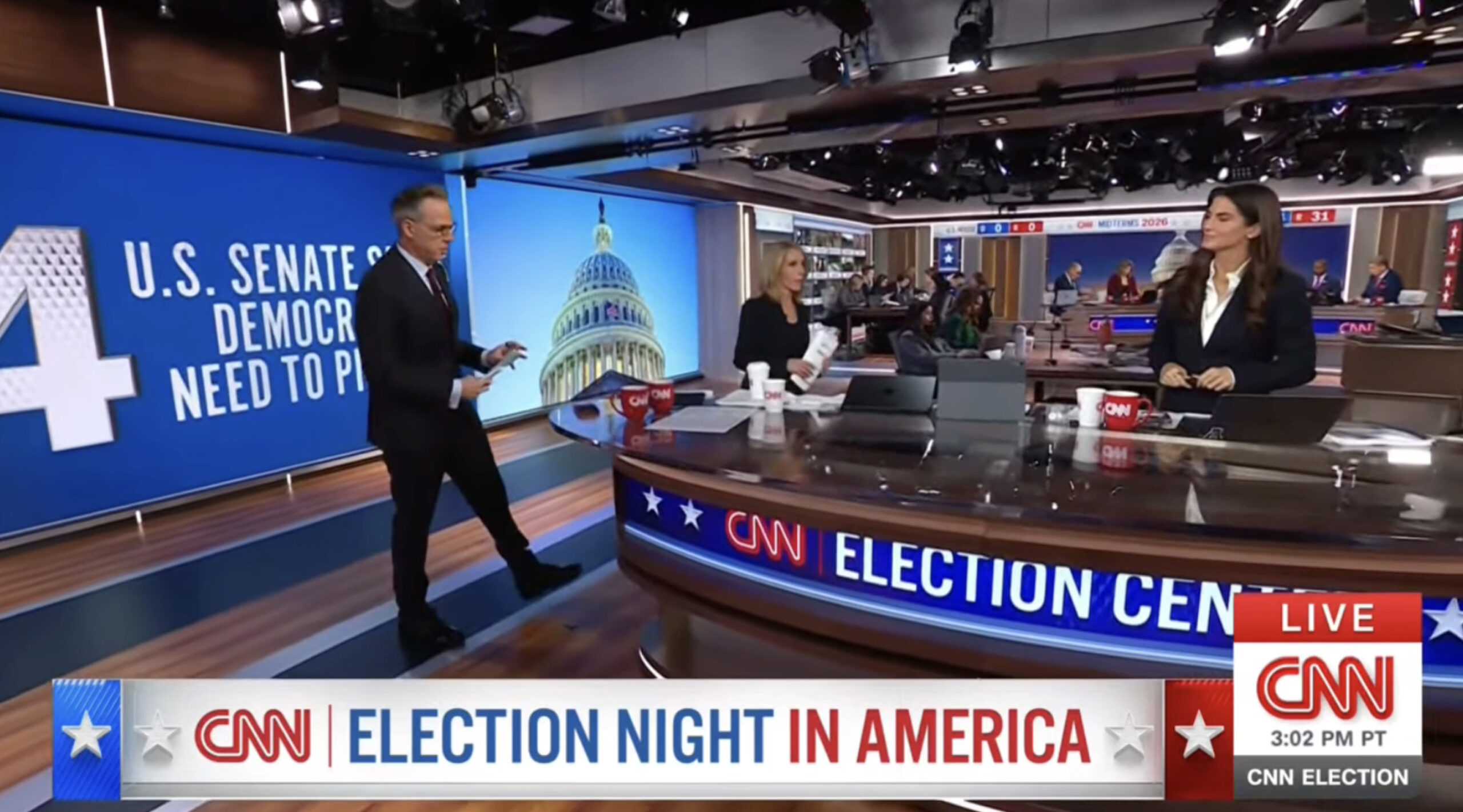
The setup included multiple venues around a central oval standing-height desk that served as a sort of home base for the network’s primary anchors. Because of its position, other areas, including on-camera venues and on-set workspaces, were visible behind anchors when they stood around the desk.
Other venues focused on analyst panels, exit polling (rebranded as voter polls), interactive data presentations and other coverage elements and were set up around the space. Using handheld cameras, viewers got sweeping views of the studio as the network shifted through segments and talent.
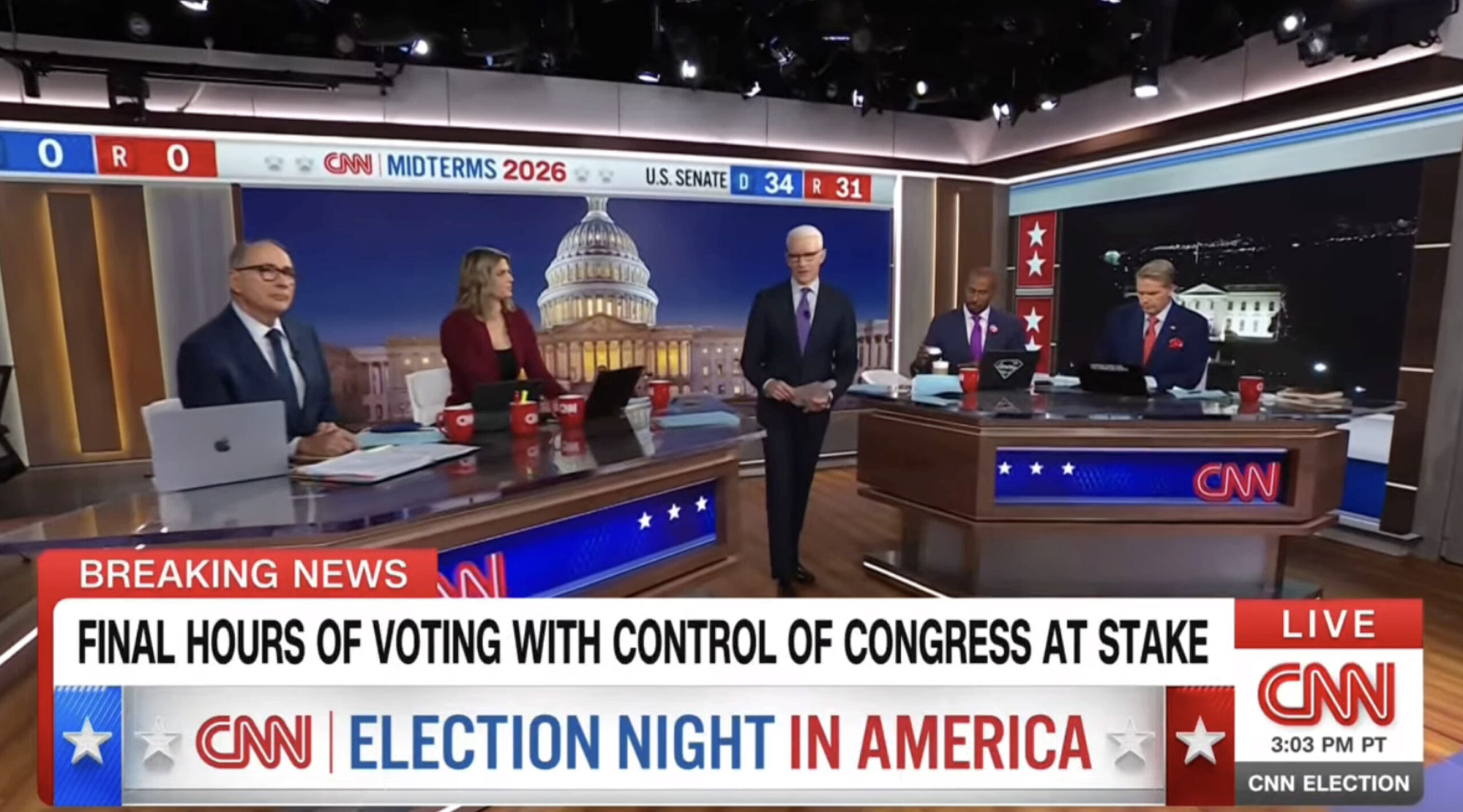
This venue, shown here with anchor Anderson Cooper, included two separate polygonal desks that combined silver and wood-toned surfaces. Instead of sitting at a desk with the panel members, this setup allowed him to stand between them. Some of the background elements are virtual set extensions, including the far left wood panel and headers.
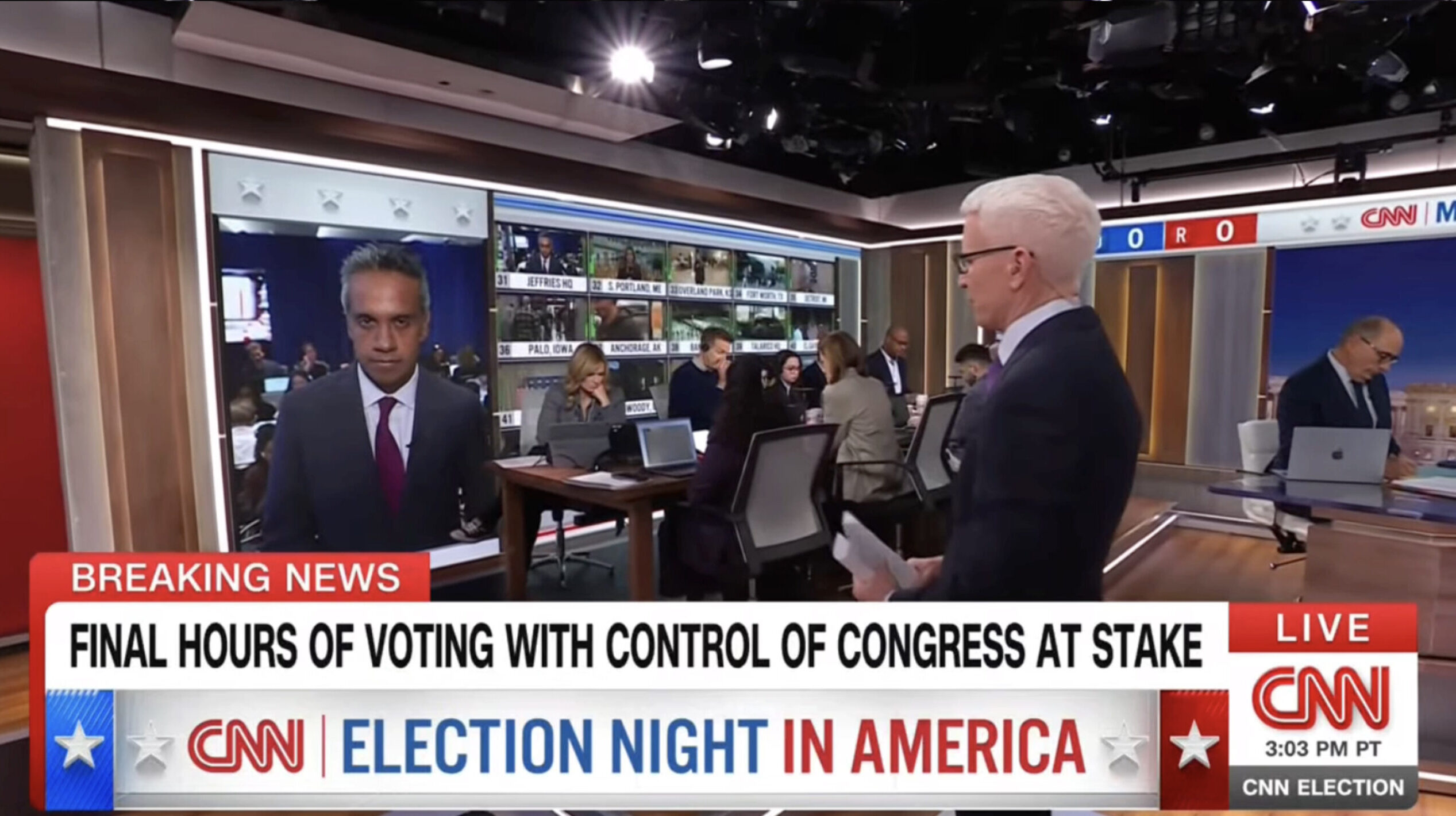
The setup also let Cooper walk seamlessly to the open work area camera left of the panel, which the network dubbed the ‘Voting Desk,’ and toss to field reports. This space drove home the notion that it was used to monitor voting across the country with an array of remote feeds in the far background.
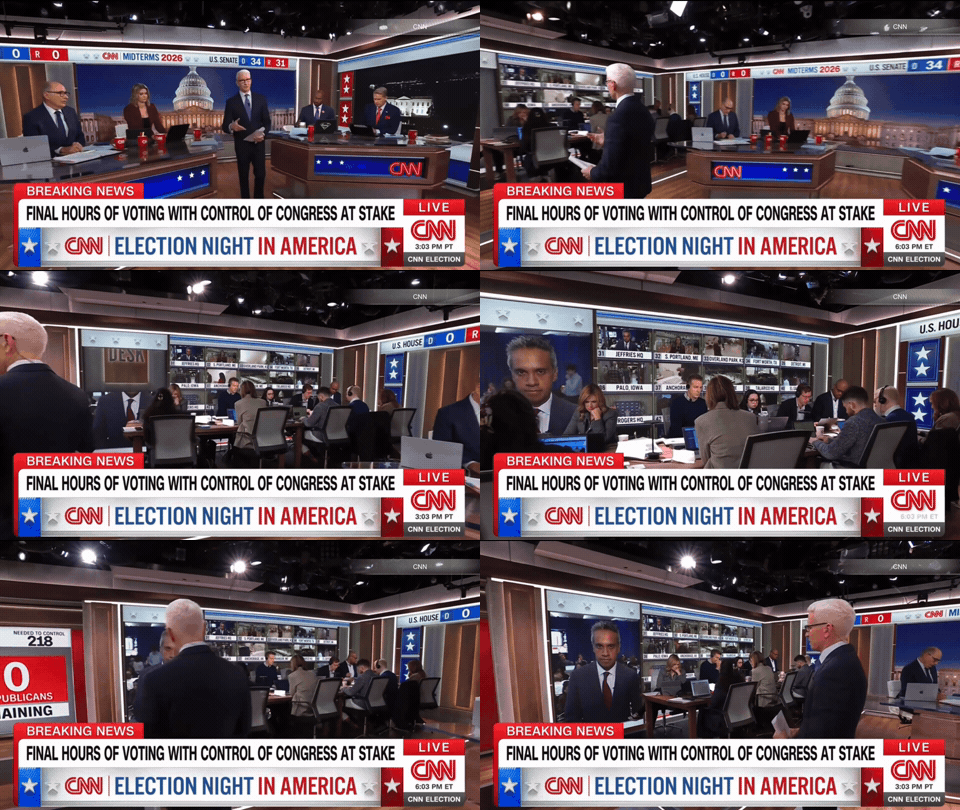
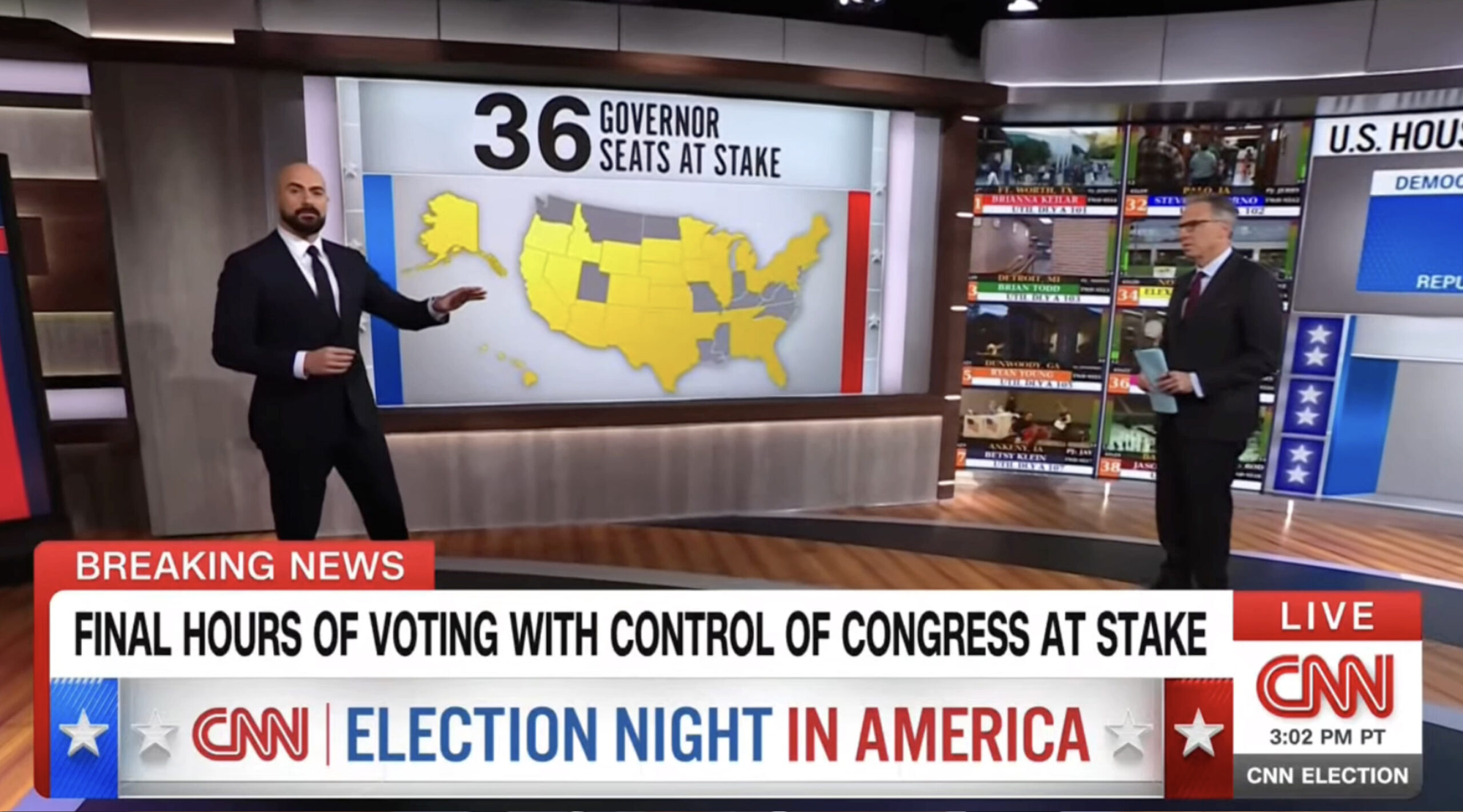
All the way on the other side of the studio from the Voting Desk and panel area was an additional video wall framed out with hard scenic, shown here with Jake Tapper tossing to Boris Sanchez.
CNN largely stuck with the election graphics package it introduced in 2024. Overall, that look was heavy on sleek 3D space with white or gray surfaces, metallic and glass elements accented with bold red and blue.
By combining these graphics with the updated set, the network created a significantly different look and feel for its coverage without completely overhauling its graphics package.
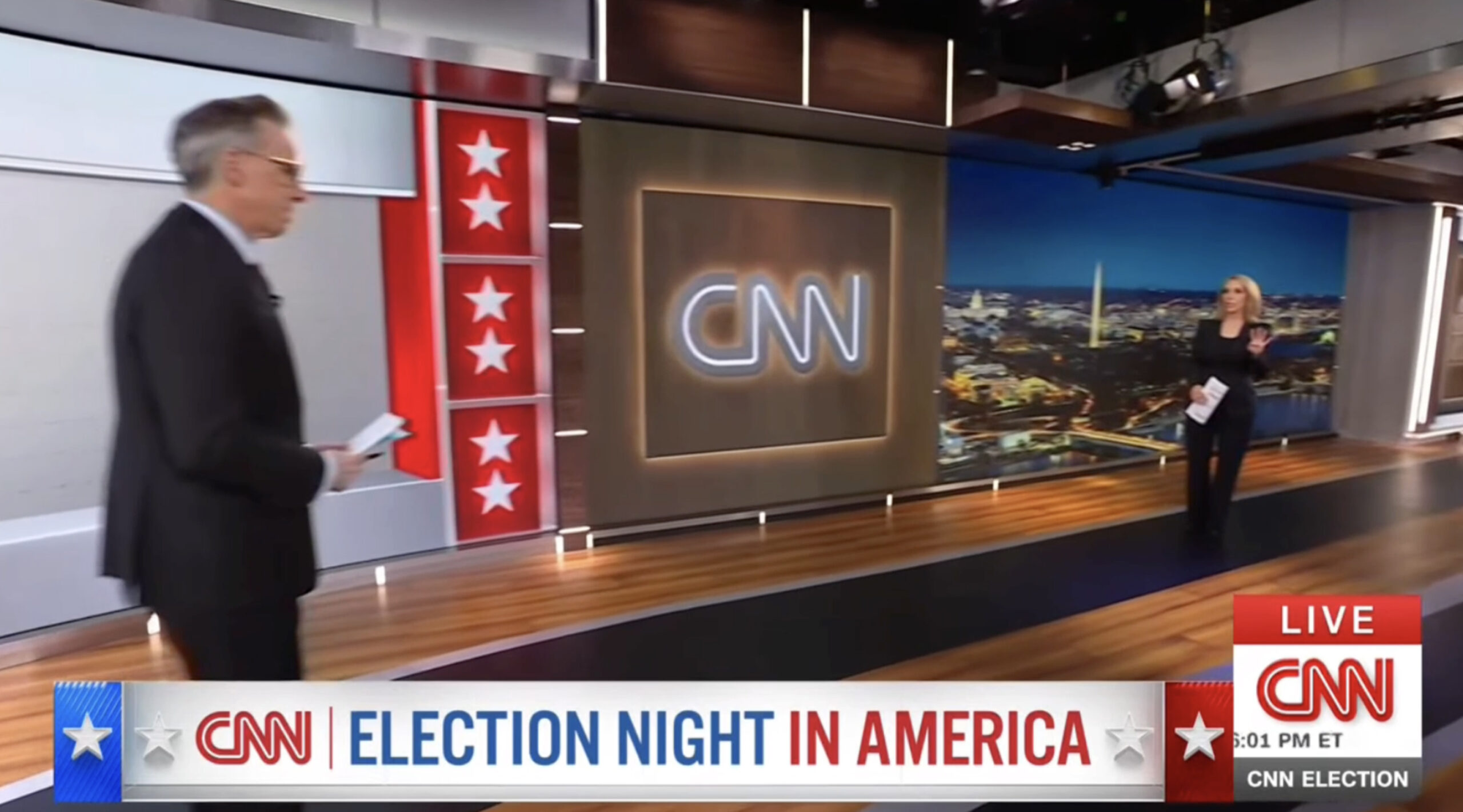
The network also used the flat floor-to-ceiling video wall to showcase its logo on a wood virtual set extension before switching to an election-specific graphic behind Dana Bash, shown here with Tapper.
In a broader sense, the switch to wood tones is interesting for the network, especially if it might signal a new direction in its on-air look.
After investing heavily in its Hudson Yards studios, stocking them and other facilities with massive amounts of seamless LED and largely sleek hard scenic elements, the network has been making other shifts away from this architectural design language, including having “The Source” move to a newsroom set, “Anderson Cooper 360” originating from in front of a production space rather than its icy blue looping wall graphics of the globe.
It’s not clear if the network might continue in this direction, including possibly leaving some of the updated surfaces permanently or converting other spaces with similar looks to shift away from the ultra-sleek, stark European-inspired look many of its sets had been channeling, though it’s worth noting that the updated floors in Washington, D.C., didn’t include any election-specific imagery such as stars or red, white and blue accents as the network has done in the past.
Such strategies could help the network develop a more distinctive look that relies less on digital backgrounds and virtual set extensions, which others have begun to rely on.

tags
2026 Election, 2026 Election Coverage Roundup, CNN, The Source with Kaitlan Collins
categories
Broadcast Design, Broadcast Industry News, Cable News, Elections, Heroes