

Tegna launches mobile app redesign with vertical video, personalized feeds
Weekly insights on the technology, production and business decisions shaping media and broadcast. Free to access. Independent coverage. Unsubscribe anytime.
Tegna has begun rolling out redesigned mobile apps across its 51 local television markets, with beta testing showing video consumption increased tenfold.
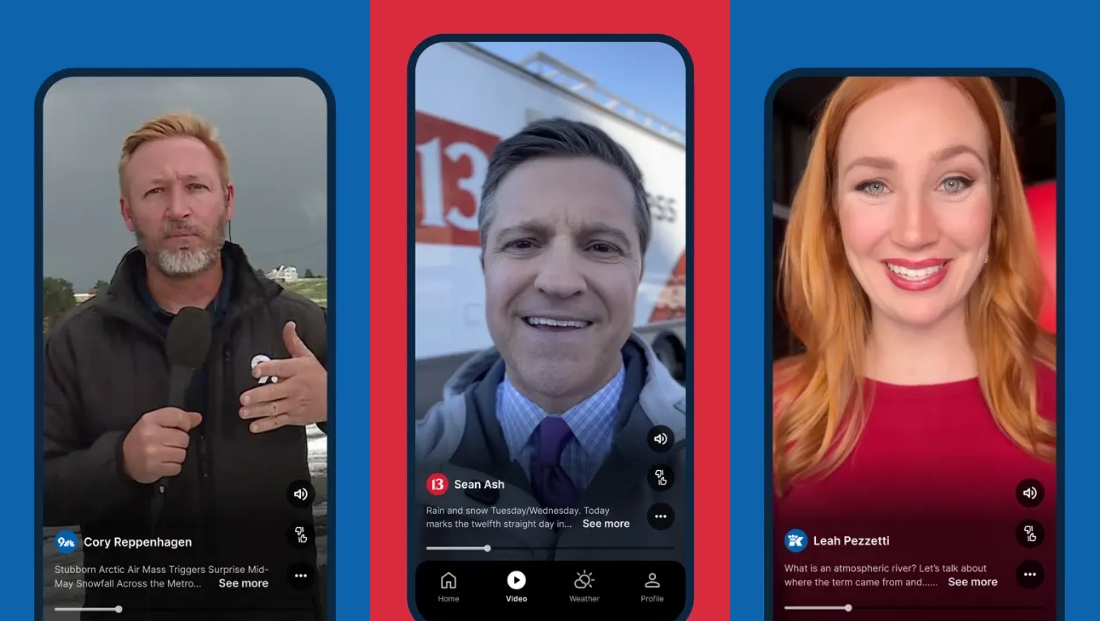
The apps, which launched in beta in four markets and will be available across all Tegna stations by mid-February, deliver more than 1,000 daily videos from local journalists and meteorologists in a vertical scrolling feed. The redesign brings together local journalism with what consumers in focus groups most requested — formats suited for mobile consumption.
“They want that format. They want easy-to-digest and relatable, but they don’t want it from the random TikTok person,” said Adrienne Roark, chief content officer at Tegna. “They want it from journalists that they trust. They want it from local journalists that they know.”
The app launch coincides with what Roark described as a transformation of Tegna’s newsrooms from show-based operations to story-centric workflows.
“Newsrooms have been set up the same for decades. It’s always been set up around shows. Very linear,” Roark said. “What we realized is that’s not how the audience is operating anymore. The audience is story-based.”
Increasing user engagement
Dhanusha Sivajee, chief experience officer at Tegna, said focus groups and user research identified four specific features users wanted. The first was access to journalists in more relatable formats, such as in the community, not behind the anchor desk.
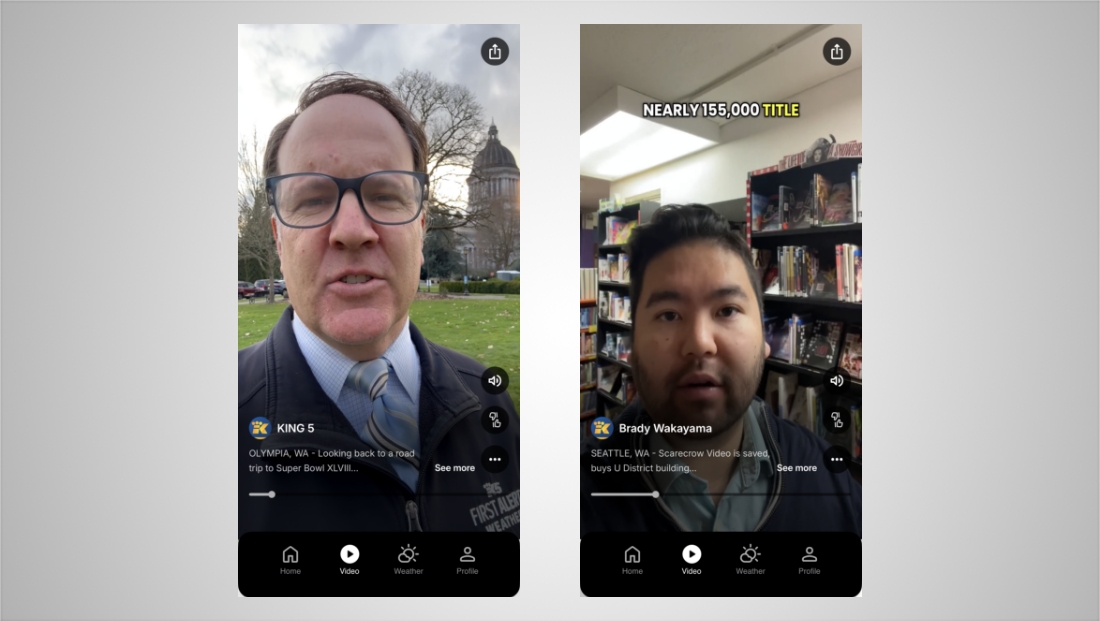
“I trust your experts, your reporters, your journalists and your meteorologists, but I really want to hear from them in a more relatable way, in a format that works for me,” Sivajee said, describing user feedback.

Users also wanted the ability to access quick updates while going deeper into topics when desired. The app now structures content around individual stories as the core unit, with related content and context available for those who want more information.
“We know people are picking up their mobile phones over 200 times a day. They’re watching mobile video for over two hours a day,” said Sivajee.
The third element was personalization, both through user-selected preferences and passive learning based on engagement patterns. The fourth was what Sivajee described as “delightful design and user experience” that makes the app something users want to stay in rather than simply check.
“The numbers are showing that design, user experience, plus a set of features that I’ve told you about are keeping people coming back more frequently,” Sivajee said.
The new app has seen user sessions rise 40 percent compared to the previous design.
Story-centric approach replaces linear thinking
The newsroom transformation Roark described represents what she called “turning a battleship,” shifting mindsets and workflows from linear thinking to multi-platform operations.
“We start every day now with what’s the story and then how should we tell it and then what’s the best screen to get it on,” Roark said. The approach adjusts how newsrooms are organized and how teams work, allowing stories to be updated throughout the day rather than waiting for scheduled broadcasts.
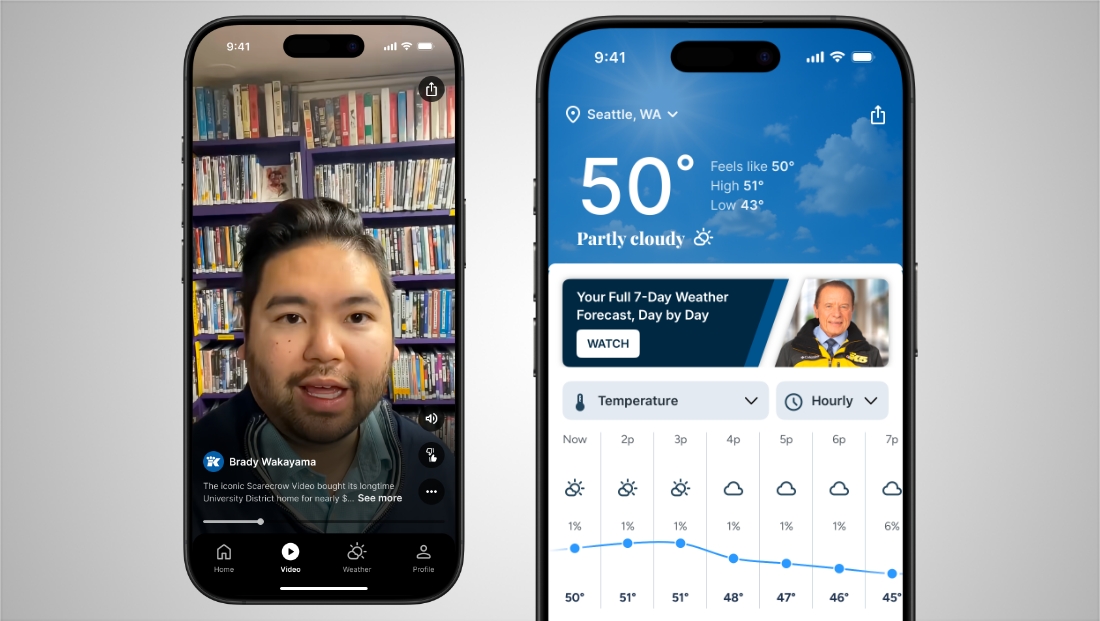
“We’re not waiting for just the six o’clock news anymore. We’re telling the story as it’s going, and this app is a great way to do that,” Roark said. “The teams — it’s not just anchors and reporters. It’s all of our journalists are involved in this. They love it because they’ve been really involved in these videos. It’s very personal for them and it’s a different way for them to tell the story.”
“What the app does for users, and what it also excites the journalists about, is that you can stay connected to that story 24/7 as it unfolds,” said Sivajee. “We’re updating the content as the story unfolds.”
The short form videos run between 45 seconds and a minute on average, though length varies based on editorial needs. The videos may provide an update on a breaking story, preview what’s coming or simply provide visibility into the community.
Roark said the story-centric approach treats each piece of content as an asset that can reach audiences multiple times across platforms.

“How do I get that asset, that incredibly important thing that we do, how do I get that in front of as many people as possible? As opposed to in the strictly linear world, a lot of times that story only airs once or maybe twice and then that’s it,” she said. “I want to get our stories in front of as many people as possible.”
To facilitate this, Tegna is using proprietary artificial intelligence technology that helps deliver over 1,000 video clips daily to the apps.
The app also closely integrates with the new motion graphics package rolling out to Tegna stations. Dubbed “Pixel Lens,” the broadcast design package uses a square indicator that appears when you first load the new app, highlighting the tagline “stories that move” along with a list of local communities and the larger region.

Personalization drives user engagement
A core part of the new app is the personalization system, which will further refine the mix of stories a user sees and engages with over time.
For example, users can select topics of interest such as local economics, politics, crime or sports. The system also builds profiles based on engagement patterns, tracking which stories, people and locations users access, with the user also able to thumbs-up or thumbs-down stories.
Sivajee described it as a pyramid, with users defining the types and topics of content they’re interested in at the base.
“But then over time, as a user engages, and they’re drilling down onto a town hall meeting in a specific county, we’ll know that you like X, Y and Z,” said Sivajee, explaining how the pyramid narrows to specific interests as users engage more. This builds data graphics that extend beyond the broad, general categories to more specific subjects.
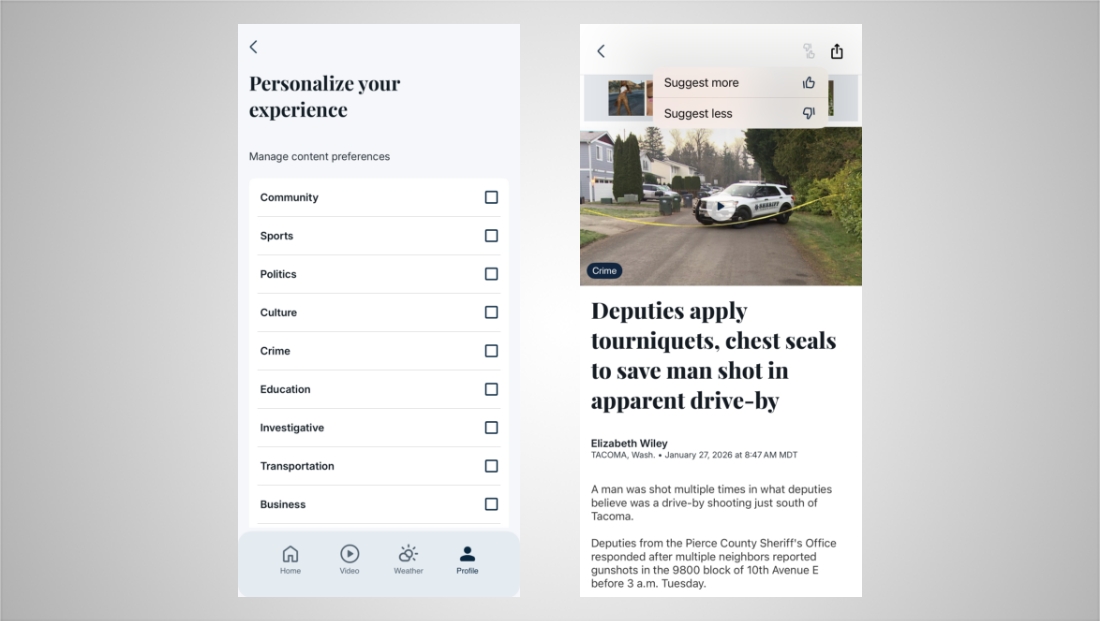
“We’re getting down to building out individual graphs… So we know exactly the topics, the people, the places at all levels,” she said.
Sivajee described Tegna’s approach as mixing product and technology together to serve the audience.

“It is not just about the content. It is, obviously, I think our content is amazing and Adrienne is here making it better and better, but it’s also about the product and technology,” she said.
The app also includes new advertising formats designed for vertical video.
“We’re working with our advertisers and creating new premium integrated ad experiences within that vertical scroll,” Sivajee said, including standard ad units and native advertising within the video feed.
Early user feedback has focused on the personal connection with journalists and increased content frequency, Roark noted.
“They love the fact that it feels more intimate, it’s very much more personal — the engagement with the anchors and the reporters and the journalists,” she said, noting the app brings viewers closer to the reporters and the story. Users have also noted the ability to stay connected to stories throughout the day.
“They’re like, wow, we see you all the time now,” Roark said.
“I think we’ve taken a lot of user input into this. Our audience loves our brands, loves our local newsroom teams, but they just needed to be able to access and hear from them in a different way, right, in a more delightful way and on their phones,” said Sivajee.
The new station apps are available in the Apple App Store and Google Play Store. Beta markets include Atlanta, Denver, Indianapolis and Seattle.

tags
Adrienne Roark, Dhanusha Sivajee, mobile app, mobile apps, Tegna
categories
Heroes, Local News, Mobile Apps, Online and Digital Production