

NBCU cancels ‘Access Hollywood,’ three other shows, exiting first-run syndication business
Weekly insights on the technology, production and business decisions shaping media and broadcast. Free to access. Independent coverage. Unsubscribe anytime.
NBCUniversal Syndication Studios is taking the dramatic step of exiting the first-run syndication market completely by cancelling its remaining four shows in the genre.
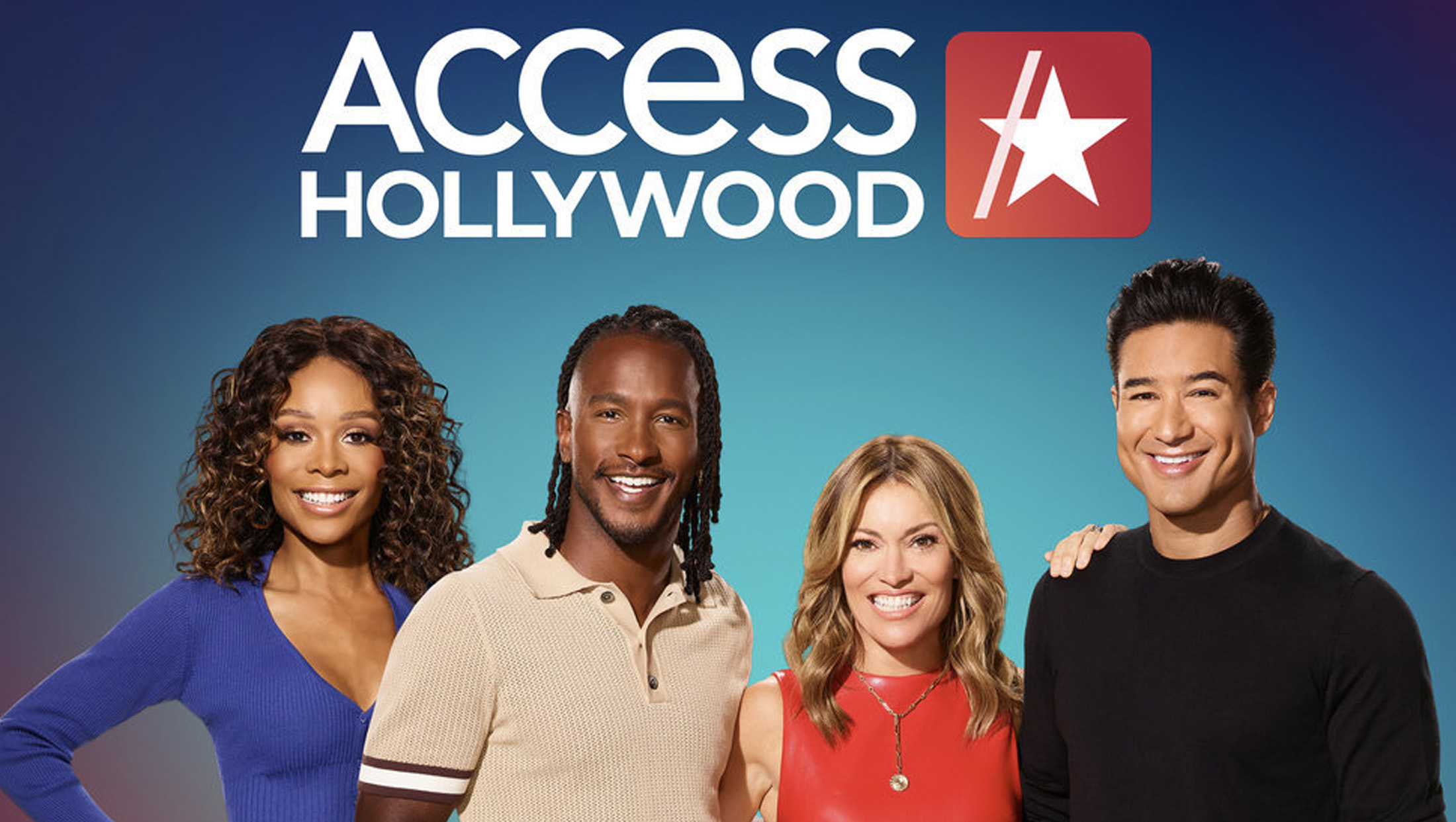
“Access Hollywood,” “Access Live,” “The Steve Wilkos Show” and “Karamo” are all expected to end by the end of the summer of 2026.
The move, while sweeping, is not surprising. Syndicated television, which was once a highly lucrative business, has been contracting for some time in favor of streaming, digital and social media content.
For NBCU, wrapping up production on its remaining syndicated shows follows the announcement that “The Kelly Clarkson Show,” the division’s crown jewel, would end after seven seasons. The decision to end the show was largely framed around host Kelly Clarkson’s desire to spend more time with her family, and while the show continued to perform well in the ratings and on digital, it’s likely its audience and revenue were following the linear TV landscape’s overall shrinking trend.
“Kelly” was “sold” directly to NBC’s owned stations in major markets as well as to stations owned by other companies, including non-NBC affiliates.
NBCU has not announced how it will fill the spots vacated by the now-canceled shows on its owned stations. In the past, these stations have opted to offer additional local news or switched to airing “Dateline” repeats. Stations with other owners will also need to find replacement programming.
Decline in syndication business
A variety of factors have led to the syndication slump, including declining linear viewership as viewers shift to mobile, social and digital for content. This, in turn, means fewer people are watching the shows overall. Those who still watch often use DVRs to skip commercials, reducing their effectiveness as marketing tools for advertisers.
Local TV stations, which once relied on syndication to fill their schedules and meet federal programming requirements, have continued to shift these slots to other fare, including local newscasts.

Many of the syndicated shows that remain are licensed through barter arrangements, meaning stations don’t pay any money up front for the rights to carry them. Instead, a few commercial slots are held back for the syndication company to sell, with the revenue covering production costs and, hopefully, making a profit.
The barter model is appealing to stations since it reduces expenses and they can pocket all of the money from ads they manage to sell, but it’s proving largely unsustainable for the companies that produce the shows who are, in turn, not able to charge as much for their ad spots, thanks to overall shrinking audiences and shifts in marketing strategies.
In addition, some TV station ownership groups have also begun producing their own shows to fill schedules, a strategy that allows them to spread the production costs across all of the stations it owns while also holding on to more ad revenue.
Syndicated programming, particularly talk shows, also use sponsored segments to generate additional “DVR-proof” revenue. These can range from segments offering viewers deals and bargains on sponsored products, game or recognition segments where a sponsor provides a prize, on-air sponsor mentions within the programming and even paid content masquerading as a video package or interview.
However, these strategies have been met with mixed results and, with viewership shrinking, marketers are less likely to see value since even the best sponsored segment doesn’t deliver value if fewer people are watching to begin with.
Alternative content sources
First-run syndication, which largely centers around pop culture or tabloid news, game shows and talk, has also seen its audience eroded by digital offerings such as influencers, social media creators and podcasts, many of which offer content that appeals to the same type of viewers — and often in a shorter, more compact format that’s easier to view on the go or during a break in busy lives.
NBCUniversal’s syndication division is expected to remain open, but will focus on distributing repeats of shows such as “Law & Order,” “Dateline,” “Maury” and “Jerry Springer.” It also plans to continue to selling repeats of “Steve Wilkos” and “Karamo.”
However, these programs are not considered first-run since they have already aired on network TV or elsewhere in syndication. In some cases, NBCU does repackage content from these shows to remove segments that are out of date or no longer relevant or accurate.
Beginning of the end for syndication?
NBCUniversal’s effective shuttering of its first-run syndication business is likely not the first.
It’s likely that more syndicated shows will either be canceled, shift to streaming or become digital-only brands as the market continues to evolve. Notably, however, streamers haven’t been quick to snap up canceled syndicated programs or launch their own talk shows or entertainment and tabloid newsmagazines, largely because social media and podcast platforms are flush with this type of content.
Other major syndicated shows, including the popular “Jeopardy!” and “Wheel of Fortune” game shows, have been preparing to exit syndication for years.
These two shows, which are owned by Sony Pictures Television and distributed by CBS Media Ventures, updated their agreements with stations to allow the show to be shown on streaming services, with some restrictions. The shows are then expected to exit traditional linear distribution altogether in favor of finding exclusive homes on streaming.

Even “Judge Judy” — once a powerhouse of syndication — exited the space in 2021, with arbiter Judith Sheindlin opting to launch a similar streaming show with Amazon.
Meanwhile, Debmar-Mercury announced the end of “Sherri,” its daytime talk show featuring Sherri Shepard, earlier in 2026,
With the end of NBCU’s four shows, the first-run syndication market still has names such as “Live with Kelly and Mark,” “The Jennifer Hudson Show,” “Tamron Hall,” “The Drew Barrymore Show,” “Hot Bench,” “Inside Edition” and “Entertainment Tonight.”
Notably, many of the remaining shows are either one of the sole remaining offerings in their respective formats or cater to specific audiences with differentiated formats.
One of the reasons for the explosion of syndication was that, once a successful format was found, there was demand for at least several similar shows, since typically only one station per market could air each title. This spawned numerous other shows, though not all were ultimately successful.
In the shifting broadcast landscape, it’s perhaps possible that one major player in each genre may continue to be produced and distributed via syndication. That, however, will likely be heavily driven by how linear television evolves as a whole.

tags
Access Hollywood, Access Live, Karamo, NBCUniversal Syndication Studios, syndication, The Steve Wilkos Show
categories
Broadcast Business News, Featured, Programming, Syndication